

Call Us:
(03) 7037 0931
M-F 9am to 5pm

Chess is having a moment, with millions worldwide discovering the thrill of the sixty-four squares all over again. Whether you're drawn to the timeless strategy or just want a fun way to boost your brainpower, learning the basics of chess game is a smart move. In this guide, we'll break everything down into easy steps, from understanding the rules and pieces to picking up essential strategies and using the latest online tools. Ready to dive in? Let's start your journey to mastering chess fundamentals together.
Chess begins with the board, and knowing how everything fits together is the real foundation of the basics of chess game. Before you make your first move, understanding the board, pieces, and setup will make everything feel much less intimidating.
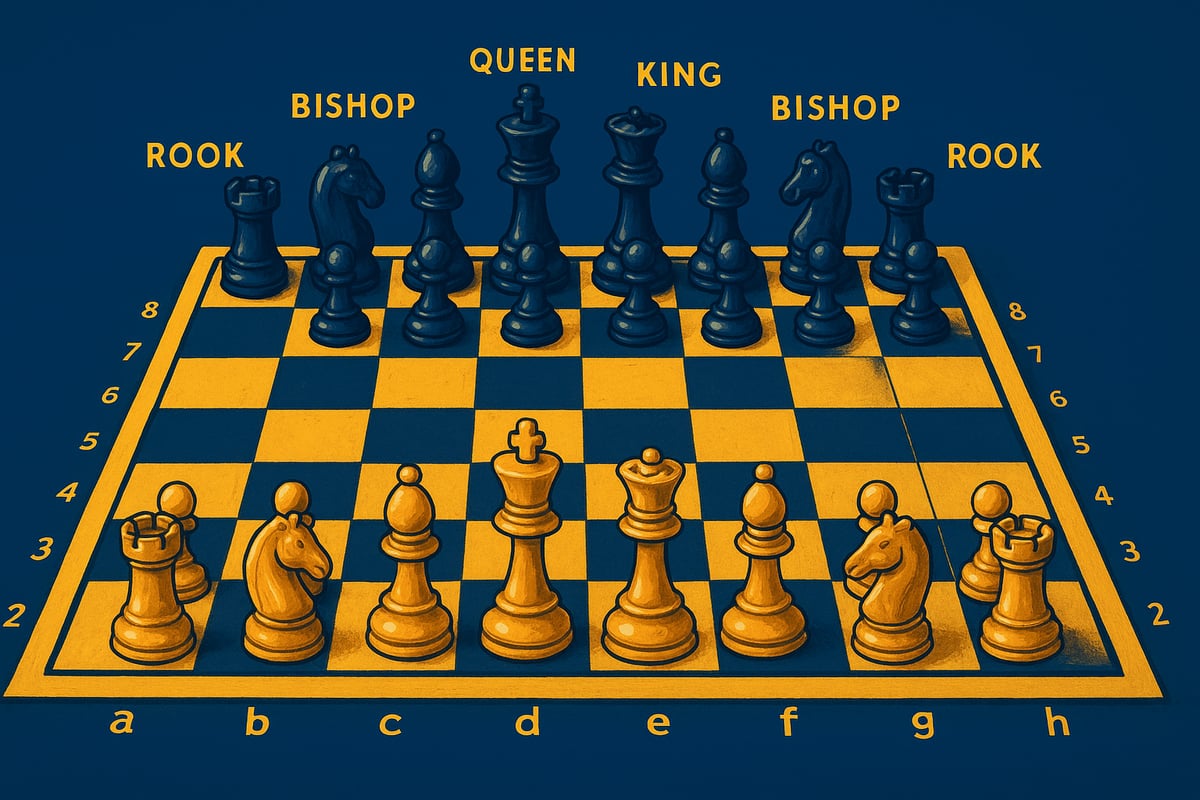
The chessboard is a square grid made up of 8 rows and 8 columns, creating 64 squares that alternate between light and dark. Columns are called files (a to h, left to right), and rows are called ranks (1 to 8, bottom to top from White’s perspective).
When learning the basics of chess game, you’ll hear about algebraic notation. This is the system used to record moves, like e4, which means moving a pawn to the e-file and fourth rank. Always make sure the rightmost bottom square is white when setting up the board, as this helps avoid confusion.
There are six types of pieces, each with their own way of moving and importance. The king moves one square in any direction and must be protected at all costs. The queen is the most powerful, gliding as far as she likes in any direction. Rooks move straight along ranks or files, and are key players in castling. Bishops move diagonally, each sticking to their own colour. Knights hop in an L-shape, jumping over other pieces. Pawns move forward one square, capture diagonally, and can promote on the last rank.
If you’re new, check out a Staunton chess pieces guide to get familiar with the classic shapes used in almost every tournament. Mastering these basics of chess game pieces is your first step to confidence at the board.
Each piece in the basics of chess game has a standard value which helps you make smart trades. Pawns are worth 1 point, knights and bishops 3, rooks 5, and the queen 9. The king doesn’t get a value because if he’s captured, you lose.
These values guide your decisions. For example, trading a bishop (3 points) for a rook (5 points) usually benefits you. Use this as a rule of thumb, but remember, value can change depending on the position and what’s happening in the game.
When you’re learning the basics of chess game, setting up the board correctly is crucial. Place the board so that a white square is on your right-hand side. Next, line up the pieces: rooks in corners, knights next to them, then bishops, queen on her colour, and king in the last spot. Pawns fill the whole second rank.
A handy memory trick is “queen on colour.” If you’re playing White, your queen goes on the white square. Beginners often mix up the king and queen or flip the board, so double-check before you start.
Chessboard coordinates help you talk about positions and follow games. Each square has a unique name, like Nf3, which means a knight moves to the f3 square. Using these coordinates is essential for reading books, watching videos, or analysing your own games.
Notation is a big part of the basics of chess game, letting you review your play and learn from others. Over time, you’ll get used to thinking in coordinates, and it’ll make following chess content way easier.
Learning the basics of chess game play is like unlocking a new world of strategy and fun. It all starts with understanding the simple rules that guide every match. Whether you’re just moving your first pawn or dreaming of checkmating a grandmaster, these fundamental principles set you up for success.
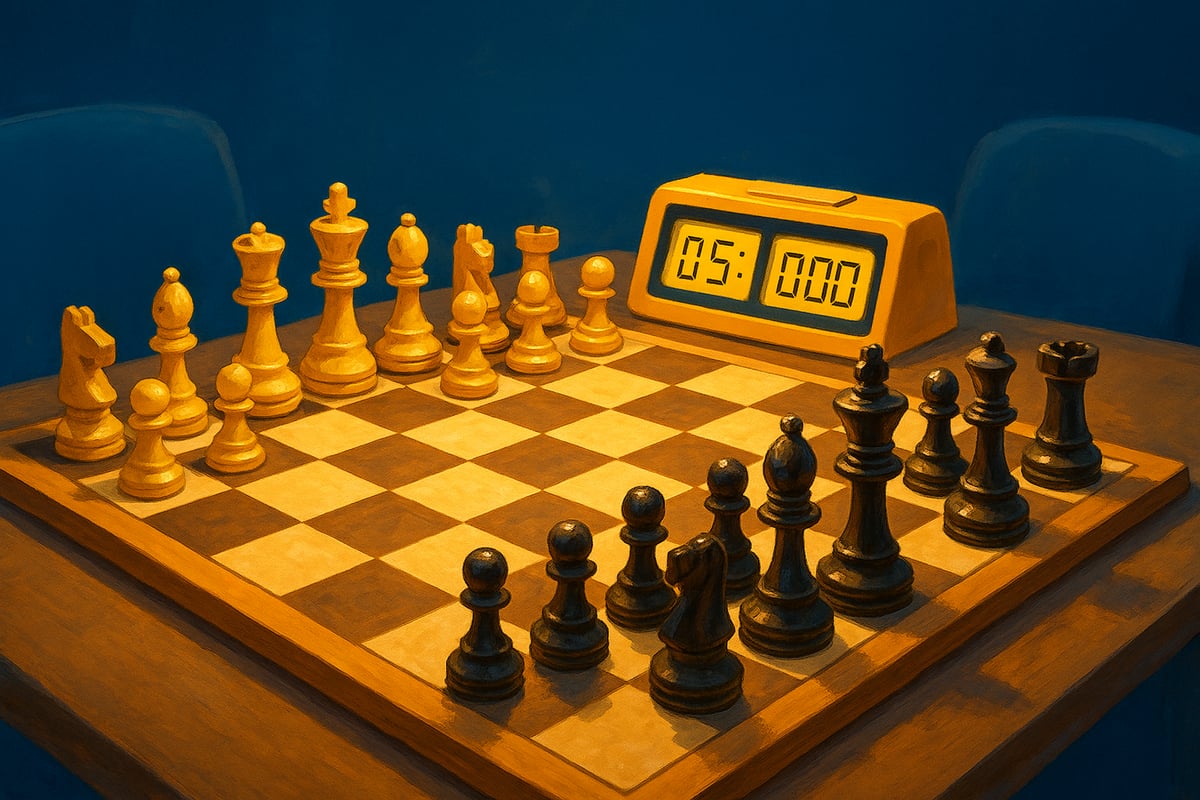
The ultimate goal in the basics of chess game play is simple—checkmate your opponent’s king. That means placing their king under direct threat of capture, with no way for them to escape.
If a king is under attack, it’s called “check.” The player must get out of check right away. If there’s no legal move to stop the threat, it’s “checkmate,” and the game ends. Sometimes, neither player can win, and the match ends in a “stalemate” or draw. This happens if a player can’t make a legal move, but their king isn’t in check.
Understanding these outcomes is key. Check, checkmate, and stalemate are the building blocks of every chess match.
Every basics of chess game session starts with White making the first move. This small advantage can shape the whole match. The most common opening moves are e4, d4, Nf3, and c4. These moves help control the centre of the board and open lines for your pieces.
Did you know that over 80 percent of grandmaster games kick off with either e4 or d4? These openings set the stage for balanced, tactical play. If you’re learning, try starting with these proven moves.
Focusing on strong openings helps you develop your pieces quickly and prepares you for the middle game.
Players take turns in the basics of chess game, moving one piece at a time. Only legal moves are allowed—meaning you can’t put your own king in check, move through other pieces (except knights), or make impossible moves.
In official events, if you make an illegal move, you might get a time penalty or even lose the game. Tournament matches also use chess clocks to keep things fair and exciting. If you’re curious about timing, check out chess clocks and timing basics for more info on how clocks shape competitive play.
Taking turns and knowing what’s allowed keeps the game fair and challenging for everyone.
Some rules in the basics of chess game add extra excitement. Castling lets you move your king and a rook at the same time, but only if neither has moved before, there are no pieces between them, and your king isn’t in check. It’s a great way to keep your king safe.
En passant is a special pawn capture. If an opponent’s pawn moves two squares forward and lands next to yours, you can capture it as if it had moved only one square. It’s a move that surprises many beginners!
Pawn promotion happens when your pawn reaches the other side of the board. You can swap it for a queen, rook, bishop, or knight—most players pick a queen.
These unique moves make every basics of chess game more dynamic and strategic.
Not every basics of chess game ends with a winner. About 30 percent of top-level matches finish as a draw. Here are common draw scenarios:
| Draw Type | How It Happens |
|---|---|
| Stalemate | No legal moves, king not in check |
| Threefold Repetition | Same position occurs three times |
| Fifty-Move Rule | 50 moves without a pawn move or capture |
| Insufficient Material | Not enough pieces to force checkmate |
A famous stalemate in the 2021 World Cup showed how even the pros can end up in a draw.
Knowing when a draw is possible helps you play for the best outcome, even in tough positions.
In the basics of chess game, etiquette matters as much as tactics. The “touch-move” rule says if you touch a piece, you have to move it (if it’s a legal move). This rule is strictly enforced in tournaments.
Good sportsmanship means respecting your opponent and the game. Whether you’re playing online or face-to-face, fair play keeps the experience fun for everyone.
Sticking to these rules and showing respect will make you a better player, both on and off the board.
Starting your journey with the basics of chess game openings is like learning the rules of the road before you drive. Openings lay the groundwork for everything that follows, so getting them right is crucial. If you master these principles, you'll set yourself up for a strong and confident start every time.
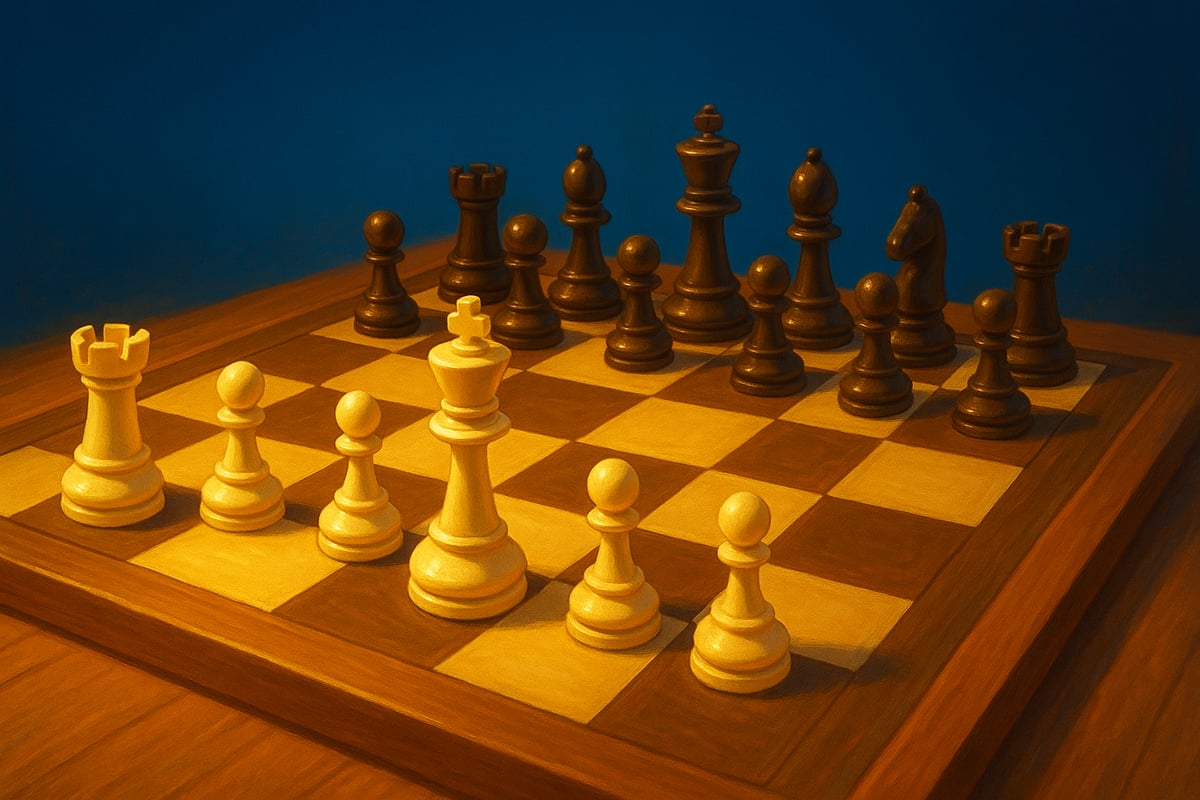
If you want to get ahead in the basics of chess game strategy, focus on the centre squares: e4, d4, e5, and d5. Controlling these squares gives your pieces more mobility and access to the board.
Openings like the Italian Game or the Queen's Gambit revolve around these central battlegrounds. By placing your pawns and pieces here, you gain space and make it harder for your opponent to develop comfortably.
For a deeper dive into opening fundamentals, check out this Chess opening principles guide, which breaks down the essentials step by step.
One of the golden rules in the basics of chess game play is to get your knights and bishops off the back rank quickly. This means moving them toward the centre, where they have the most influence.
Try not to move the same piece twice in the opening unless you have a really good reason. Developing all your pieces gets your army ready for action and keeps you from falling behind.
Remember: “Develop knights before bishops” is a handy rule of thumb for most positions.
In the basics of chess game openings, king safety should never be overlooked. Leaving your king in the centre can make you an easy target for early attacks.
Castling is a special move that tucks your king away and brings your rook into play. Most players castle within the first ten moves to avoid nasty surprises. Make it a habit to castle early, and you'll rarely regret it.
It can be tempting to bring your queen out early in the basics of chess game, but doing so often backfires. Your queen is powerful but also vulnerable to attacks from less valuable pieces.
If your queen gets chased around, you'll waste moves and fall behind in development. Wait until your other pieces are out and the centre is stable before unleashing your queen.
Solid pawn structure is the backbone of the basics of chess game openings. Try to avoid creating isolated or doubled pawns, as these become easy targets later.
Here’s a quick list of pawn structure tips:
A strong pawn structure will support your pieces and keep your position tough to crack.
Once you've followed the basics of chess game opening principles, your rooks should be able to see and protect each other. This usually means moving your pieces off the back rank and castling.
When your rooks are connected, they can control open files and coordinate attacks or defence. It’s a small detail that makes a big difference in your game.
Even if you know the basics of chess game openings, mistakes can sneak in. Here are some to watch out for:
Stay alert and try to spot these traps before they become a problem. Learning from your mistakes is part of the fun and growth in chess.
Once you've got the basics of chess game openings down, the middle game is where things really get interesting. Here, your pieces are out, the board is alive, and it's time to turn your plan into action. The middle game is where strategies clash, tactics shine, and creativity can outplay pure memorisation.
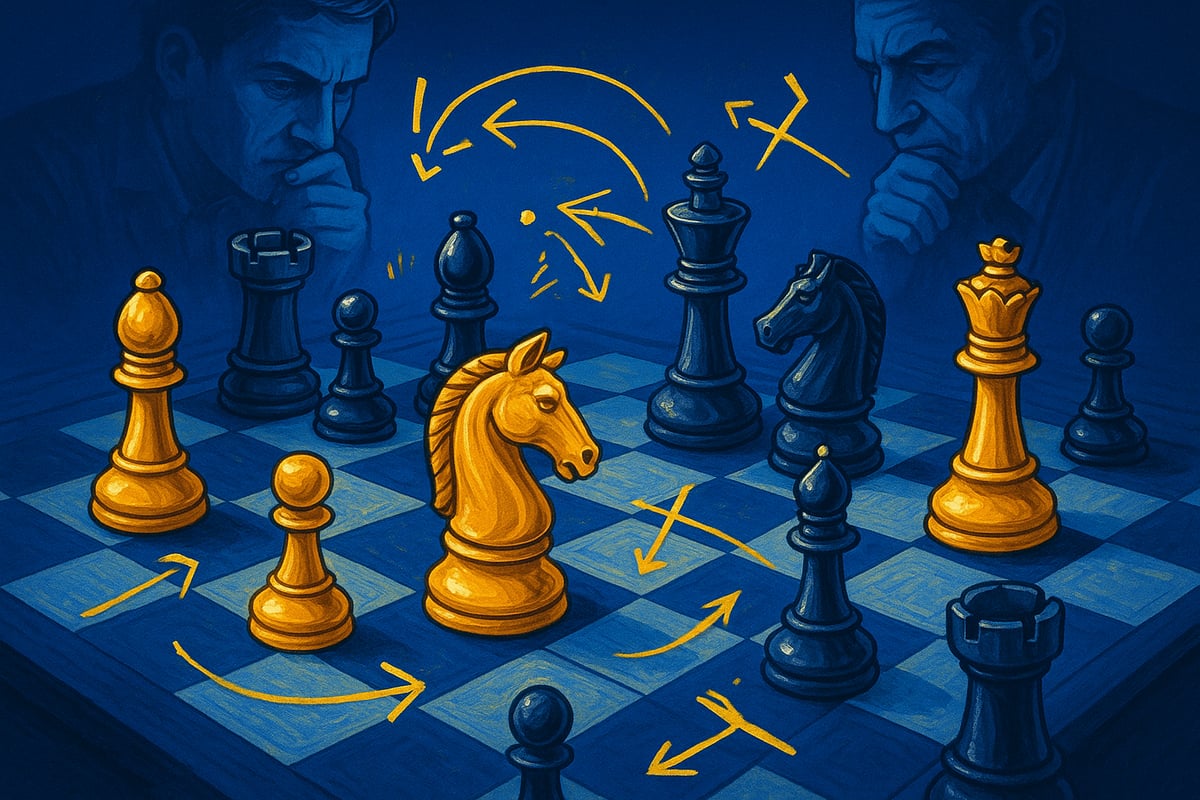
The shift from opening to middle game happens once your pieces are developed and both players have castled or secured their kings. Suddenly, the basics of chess game change focus: you're no longer just developing, you're looking for plans, weaknesses, and opportunities.
This phase is all about identifying your opponent's threats and figuring out your own ideas. You'll want to ask yourself, "What is my opponent trying to do, and how can I stop them?" Recognising this transition is key to mastering the basics of chess game.
In the middle game, knowing tactics is crucial. Let's break down three of the most common motifs:
| Tactic | Description | Example |
|---|---|---|
| Fork | One piece attacks two or more | Knight forking king and rook |
| Pin | Piece can't move due to threat | Bishop pinning knight to king |
| Skewer | Valuable piece forced to move, exposing another | Rook skewers queen and king |
Spotting these in the basics of chess game can turn a close battle into a win. Practise finding forks, pins, and skewers in your own games to sharpen your tactical eye.
Solid plans matter just as much as tactics. In the basics of chess game, you want your pieces working together, not alone. For example, lining up your bishop and queen on the same diagonal can create a powerful battery.
Deciding when to trade pieces is a key skill. If you're unsure, check out this Chess strategy: when to exchange pieces guide. It breaks down when a trade helps your plan and when it might backfire.
Good coordination means your pieces defend each other and aim at enemy weaknesses. Always ask, "Are my pieces helping each other, or are they blocking each other?"
Pawns might look small, but their structure shapes the whole middle game. Watch out for isolated, doubled, or backward pawns. These can become weak spots your opponent targets.
Here's a quick summary:
In the basics of chess game, try to keep your pawn structure healthy. Weak pawns can be a headache later, so think before you push them forward.
One of the most exciting parts of the basics of chess game is launching a king-side attack. Open files, diagonals, and piece sacrifices can all help break through your opponent's defences.
A classic example is the "Greek Gift" sacrifice, where you trade a bishop for a pawn to open the king's shield. Even if you don't pull off flashy attacks, always look for ways to pile up pressure on your opponent's king.
Make sure your own king is safe before you go all-in. Sometimes, a failed attack can leave you exposed.
Defence is just as important as attack in the basics of chess game. There are two main styles:
For example, if you spot a back rank mate threat, give your king an escape square or trade pieces to reduce the danger. Never panic—sometimes the best defence is calmly improving your own position.
Calculation is the secret weapon in the basics of chess game. Top players look three to five moves ahead, but even seeing one move deeper than your opponent can make all the difference.
Try this simple approach:
1. Identify your opponent’s threats.
2. List your candidate moves.
3. Visualise the board after each move.
4. Repeat for the next move or two.
With practice, you'll spot tactics and avoid traps. The more you visualise, the clearer your plans will become.
Chess endgames might seem intimidating, but they’re where the basics of chess game truly come alive. When the board clears and only a handful of pieces remain, every move counts. Mastering these final stages can make the difference between a win, a draw, or a heartbreaking loss.
The endgame is all about precision and understanding the basics of chess game at a deeper level. With fewer pieces on the board, the king becomes a powerful attacker, not just a piece to hide away. Statistics show that endgames occur in over 40% of classical games, so you’ll face them often.
Knowing what to do when you reach this stage can boost your confidence. It’s not just about tactics, it’s about planning ahead and making every move count.
King and pawn endgames are a classic test of the basics of chess game. Here, the concept of opposition is crucial—when your king directly faces the opponent’s, you control the action. Outflanking means getting your king around the enemy’s to shepherd a pawn to promotion.
A common scenario is king and pawn versus king. If you know the right technique, you can often force a win. These skills are a must for every chess player.
Rook endgames pop up often and are a huge part of the basics of chess game. Rooks love open files and thrive when they can cut off the enemy king. Two famous positions you’ll hear about are Lucena and Philidor—they’re like cheat codes for drawing or winning with a rook.
When deciding whether to trade pieces in the endgame, understanding chess piece relative values really helps. Rooks are powerful, but their strength relies on activity.
You can’t master the basics of chess game without knowing how to finish strong. The two most important checkmates are king and queen versus king, and king and rook versus king. These have clear, repeatable patterns you can learn.
Here’s a quick table to sum up the key patterns:
| Pattern | Pieces Needed | Moves to Mate |
|---|---|---|
| King and Queen vs King | King, Queen | 10 or fewer |
| King and Rook vs King | King, Rook | 15 or fewer |
Practise these until they’re automatic.
Not every endgame leads to a win. Sometimes you’ll need to fight for a draw, which is also part of the basics of chess game. Stalemate, fortress, and insufficient material are common ways games end peacefully.
A famous example is when a bishop and the wrong rook pawn can’t win, because the enemy king hides in the corner. Knowing these tricks can save you valuable points.
Want to boost your basics of chess game? Centralise your king as soon as the endgame starts. Active pieces (especially rooks) are usually better than passive ones. Avoid pushing pawns unless it helps your plan.
If you’re stuck, ask yourself: “Is there a way to improve my king or rook?” Little steps can make a big difference. Play through famous endgames to see these ideas in action.
Even experienced players slip up in the endgame. The most common mistakes are pushing pawns too soon or leaving your king stuck on the edge. Missing basic checkmates can turn a win into a draw.
Stay calm, double-check your moves, and remember: the basics of chess game will guide you home, especially when the pressure is on.
Getting started with the basics of chess game in 2026 has never been easier, thanks to a wave of modern learning tools. Whether you're playing on a board or online, there's something for every style and skill level. If you’re just beginning, it’s smart to pick up the right equipment, and you can check out some great chess sets for beginners to set yourself up for success.
Online platforms have totally changed how we learn the basics of chess game. Sites like Chess.com and Lichess offer free accounts, daily puzzles, and interactive lessons. You’ll find features like live games, AI opponents, and even tournaments for all levels.
These platforms make it easy to fit chess practice into your daily routine.
Chess engines are like having a coach available 24/7. Tools like Stockfish and Leela Chess Zero help you review your games and spot mistakes. They break down each move, showing you where you went wrong and what you could have done better.
You can use these engines to analyse your games and learn the basics of chess game more deeply. They’re also great for exploring new strategies and improving your tactics over time.
If you prefer learning at your own pace, there are heaps of books and video courses available. Titles like “Bobby Fischer Teaches Chess” are perfect for mastering the basics of chess game. YouTube channels and streaming platforms bring top-level tips right to your living room.
Mixing these resources keeps your learning fresh and fun.
Nothing beats the thrill of playing with others. Joining a chess club, whether online or in person, connects you with a community that shares your passion for the basics of chess game. Clubs often host friendly matches, workshops, and tournaments for all ages.
You’ll gain real-world experience, make friends, and maybe even discover a hidden talent for competition.
Keeping track of your progress is motivating and helps you stay focused. Most online platforms track your rating and stats automatically. Set small milestones, like solving 10 puzzles a day or playing five games a week, to keep your basics of chess game improving steadily.
Celebrate your achievements and adjust your goals as you grow. This approach keeps you engaged and challenged.
Chess is more than just a game; it’s a community. Join online forums, Discord groups, or local meetups to share your games, ask questions, and swap tips. The basics of chess game become more enjoyable when you learn alongside others.
Connecting with fellow players keeps you inspired and adds a social spark to your chess journey.
Leave a comment