

Call Us:
(03) 7037 0931
M-F 9am to 5pm

If you’ve ever felt the pressure of the ticking clock during a chess match, you’ll know just how crucial time management is for your game. That’s where a dgt chess timer really shines, taking your focus and strategy to the next level.
In this guide, we’ll break down everything you need to know about the dgt chess timer in 2026. You’ll get the latest on how DGT timers have evolved, what features matter most, and how to set up and use your timer like a pro.
We’ll also share advanced tips, troubleshooting advice, and real-world stories from Aussie clubs. Ready to boost your confidence and sharpen your competitive edge? Let’s dive in and become a dgt chess timer expert together.
The journey of the dgt chess timer is a story of innovation, reliability, and global impact. DGT has become the name every chess player in Australia and beyond knows when it comes to timing games. From humble beginnings to world-class tournaments, their timers are everywhere. Let’s dive into how DGT built its reputation and why their products are a staple in clubs and competitions across Australia.
DGT’s legacy started in the 1990s when they set out to revolutionise chess timekeeping. The dgt chess timer quickly became a global standard, with models like the DGT 1001 and DGT 2500 leading the charge. Their focus on innovation, accuracy, and an easy-to-use design made them a favourite in Australian chess clubs.
You’ll spot DGT timers at local tournaments, school chess programs, and even major events. The brand’s reliability and commitment to international standards have made it the trusted choice for organisers and players alike. Curious about the full story? Check out the DGT Chess Clocks Overview for a deep dive into their range and legacy.
The first digital dgt chess timer changed how games were played, making timekeeping clearer and fairer. Early models like the DGT 1001 brought digital timing to homes, schools, and clubs, offering simple count-up and count-down modes. As the years rolled by, DGT introduced advanced features such as bonus and delay options, giving players more control over their games.
Clear displays, intuitive buttons, and robust designs became hallmarks of the brand. Plus, DGT timers aren’t just for chess. You’ll find them in Scrabble, Go, and other two-player games, proving their versatility and appeal to a wide audience.
The dgt chess timer stands out in the Aussie market thanks to its simplicity, durability, and pinpoint accuracy. Compared to other brands, DGT offers a user-friendly experience that appeals to both beginners and seasoned pros.
Chess federations and clubs across Australia endorse DGT timers, and you’ll see them in action during major tournaments. Real customer reviews rave about how easy they are to set up and how long they last. Local case studies show that DGT timers have become a standard at major Australian events, cementing their reputation.
Fast forward to 2026, and the dgt chess timer continues to evolve. Recent updates include brighter displays, longer battery life, and smarter controls. There’s a growing demand for timers that are affordable and accessible to everyone, from school clubs to elite competitions.
DGT now listens closely to user feedback, rolling out new features that make setup and operation even smoother. Their timers are showing up more in educational programs and chess clubs, keeping up with technology trends and the needs of the Australian chess community.
Let’s take a closer look at the dgt chess timer models you’ll find in Aussie clubs, tournaments, and living rooms. Whether you’re just starting out or gearing up for top-level competition, there’s a DGT timer to match your style. Here’s how the top picks stack up for 2026.
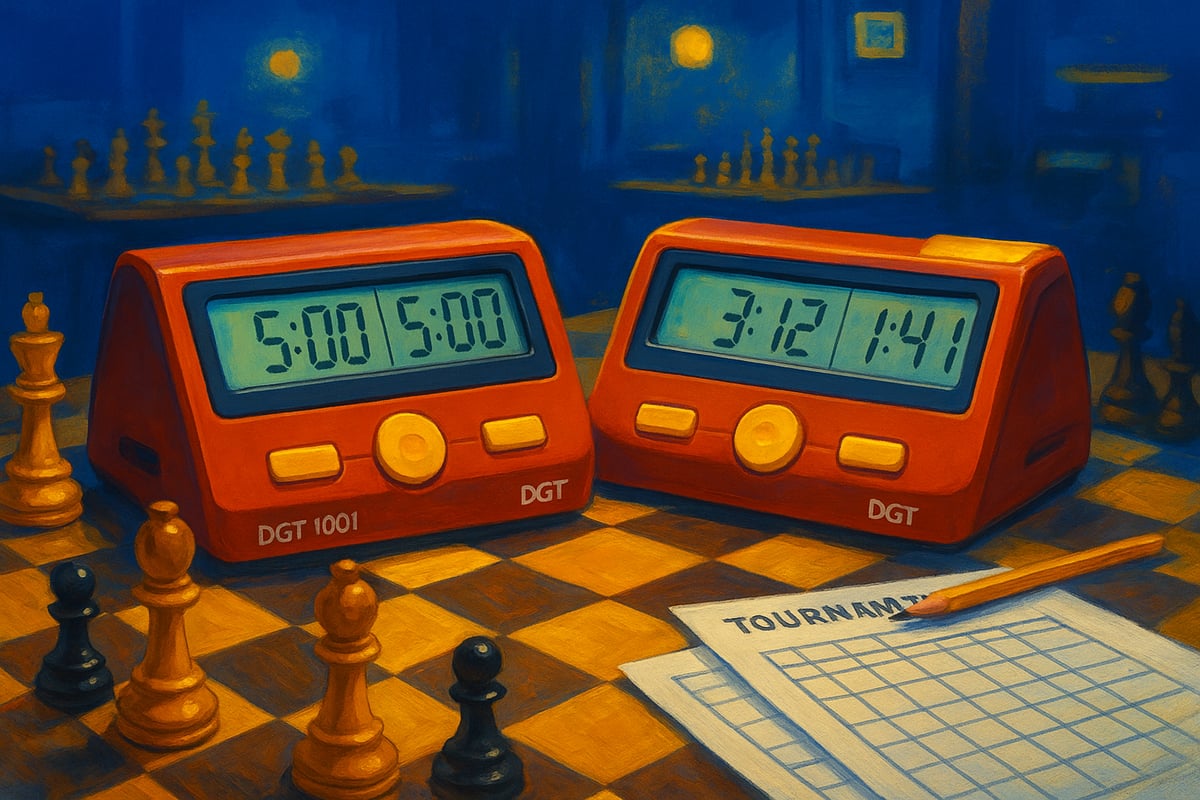
The dgt chess timer 1001 is all about making chess timing easy for everyone. It’s got a universal count-down and count-up feature, making it perfect for rapid games, blitz, weekend club sessions, or even just a casual match at home.
You’ll find a big, clear display that’s easy to see from across the table. The ABS plastic housing keeps it lightweight and tough, so it’s safe in school bags or club storage. With a battery life of about two years (thanks to a single AA battery), you won’t be scrambling for spares every term.
Schools and community clubs love how quickly new players pick it up. No confusing bonus or delay settings, just simple timing that gets games started fast.
If you’re aiming for tournament play, the dgt chess timer 2500 and other advanced models offer the features serious competitors need. The DGT 2500 comes with bonus and delay time options, making it FIDE-ready and suitable for rated events.
The display is sharper, and the buttons feel more responsive, so you can focus on your moves, not the clock. The build is sturdier to handle the hustle of club championships and travel. Compared to the 1001, you get more timing modes and a professional look.
Aussie clubs often choose the DGT 2500 for big events. Want to see all the features in detail? Check out the DGT 2500 FIDE approved chess clock for a full rundown.
Here’s a quick table to help you see the differences between the dgt chess timer 1001 and 2500:
| Feature | DGT 1001 | DGT 2500 |
|---|---|---|
| Timing Modes | Count-up, count-down | Count-up, count-down, bonus, delay |
| Display | Large, basic | Enhanced, multi-info |
| Battery | 1 x AA (2 yrs) | 2 x AA (longer life) |
| Size | Compact | Larger, sturdier |
| Price Range | Budget-friendly | Mid to high |
| Best For | Beginners, schools | Clubs, tournaments |
Aussie players say the 1001 is unbeatable for sheer simplicity, while the 2500’s features are a must for official events.
Picking the right dgt chess timer comes down to your experience, budget, and where you’ll use it. If you’re new to chess, or just want something for home or school, the 1001 is a safe, affordable bet.
Competitive players or those aiming for club championships will benefit from the extra functions of the 2500. Coaches often recommend starting simple, then upgrading as your skills grow. Beginners love the 1001 for its plug-and-play feel, while seasoned players find the 2500 a game-changer once they start playing in rated events.
Ready to grab your own dgt chess timer? Trusted retailers like Board Game Central stock a full range, often with local warranty and support. Prices start under $50 for the 1001, while advanced models like the 2500 run higher but come with extra features.
Always check for authenticity—genuine DGT timers have clear branding and instructions. Look for seasonal discounts or club deals, especially around tournament season, to snag the best price and peace of mind.
Getting your dgt chess timer up and running is a breeze, and with a little know-how, you’ll be ready to hit the clock in no time. Whether you’re unboxing a brand new timer or just want to brush up on the basics, follow these steps to make setup smooth and stress-free.
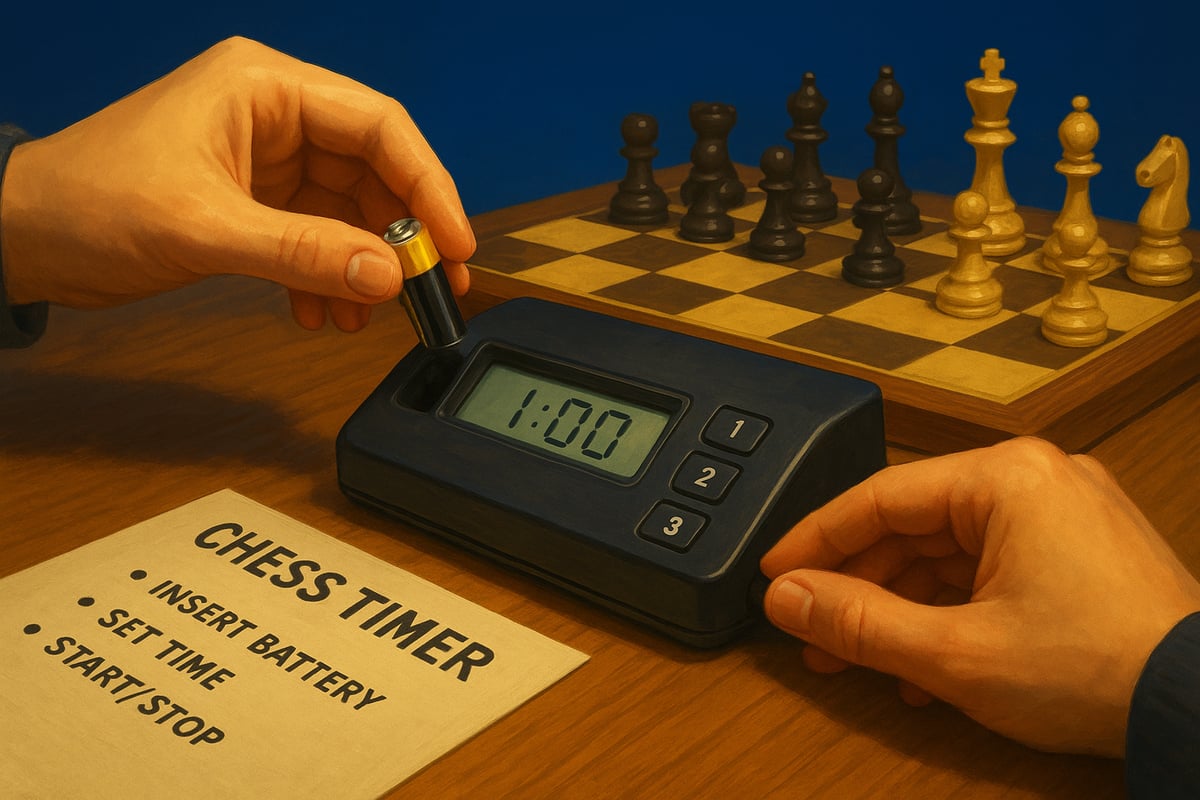
When you first open your dgt chess timer box, you’ll usually find the timer itself, a battery (often AA), and a simple instruction leaflet. Start by sliding off the battery cover and popping in the AA battery, making sure the positive and negative ends match the markings inside.
Power on the timer and check if the display lights up clearly. Most models like the DGT 1001 white digital chess clock will show zeros or a default time setting. You can reset to zero by holding down the reset button for a couple of seconds.
Setup is super quick—most folks have their dgt chess timer ready to go in under two minutes. It’s really that easy.
Time to set your dgt chess timer for the type of game you want. For count-down mode, press the mode button until the timer flashes, then use the plus and minus buttons to set your desired time (like 15 or 30 minutes).
To switch to count-up mode, press the mode button again until the display changes. This is great for casual games or puzzle solving where you just want to track how long you’re thinking.
Some timers have a buzzer option for when time runs out. You can turn this on or off by holding the mode button until the buzzer symbol appears. For a classic rapid game, set both sides to 15 minutes and you’re set.
Ready to play? Hit the start button on your dgt chess timer and the first player’s clock will start ticking down. When you finish your move, press your side of the timer to switch turns—easy as pie.
If you need a break or there’s a dispute, press the pause button. To reset for a new game, hold down the reset button until both clocks show your chosen starting time.
Ran into trouble? If the timer doesn’t start or pause as expected, check the battery or make sure both buttons are pressed firmly. In club tournaments, pausing the clock is handy for sorting out disputes without losing time.
For best results, keep your dgt chess timer front and centre between the boards so both players have a clear view. Store it in a dry spot away from direct sunlight or moisture to keep it in top shape.
Wipe down the surface with a soft, slightly damp cloth—ABS plastic is tough, but gentle cleaning keeps it looking sharp. If you’re running a school club, you can share one timer between several boards by rotating games.
Many school programs streamline their workflow by assigning one person to manage the timers, making everything run like clockwork.
If your dgt chess timer display is faded or buttons aren’t responding, try swapping in a fresh AA battery. Sometimes, dust can get under the buttons, so a gentle tap or compressed air can help.
If the timer isn’t keeping time accurately, double-check your settings and make sure you’ve selected the correct mode. For persistent issues, reach out to your local retailer or DGT support for help.
A common hiccup is a non-responsive start button—usually fixed with a battery change or a quick reset. With a little care, your dgt chess timer will keep your games running smoothly for years to come.
Getting the most out of your dgt chess timer is about more than just pushing buttons. It's about building habits, sharpening your instincts, and using every second wisely. Whether you're a casual player or pushing for tournament glory, these tips and tricks will help you master your timer and boost your chess game.
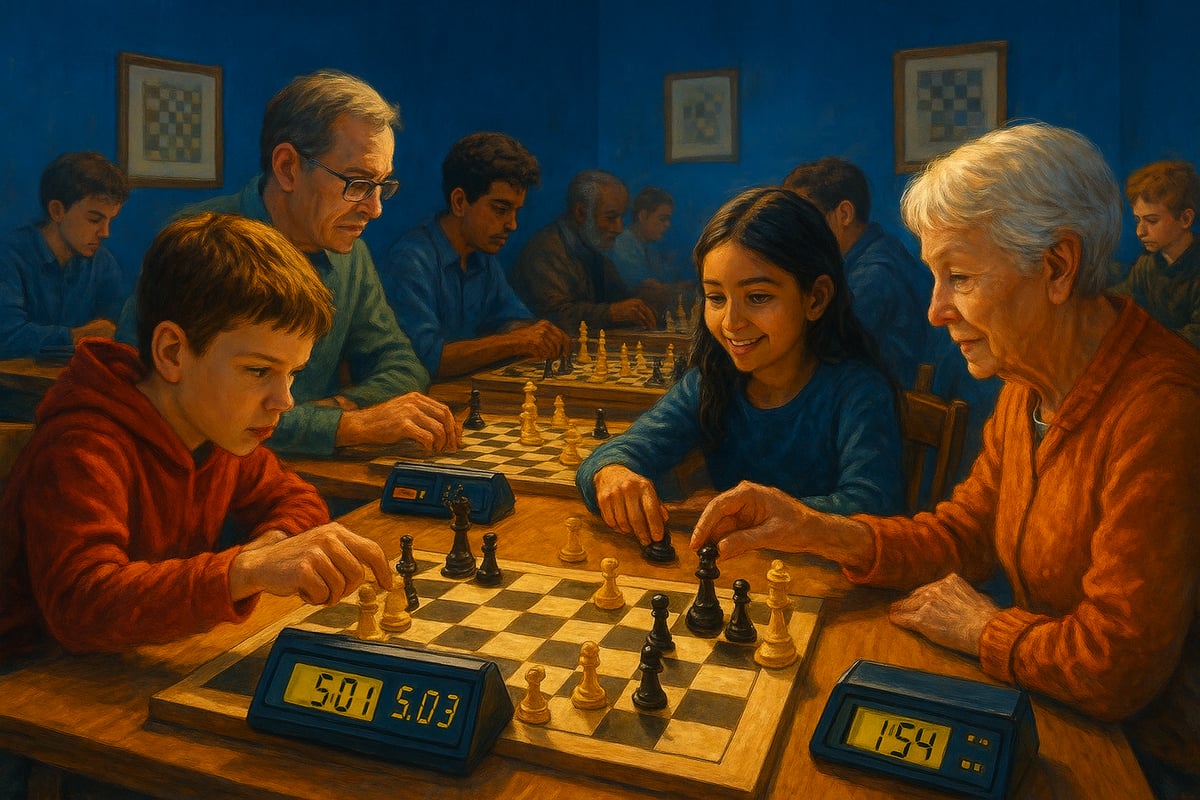
If you're just starting out or playing at your local club, the dgt chess timer can transform your approach to time management.
Start by experimenting with different time controls. Try blitz, rapid, and classical formats to see where you feel most comfortable. Use the timer to pace your moves and avoid rushing critical decisions.
Here are a few practical strategies:
With regular use, you'll notice your confidence grow, and you'll feel more in control during tense moments.
For those diving into tournaments, the dgt chess timer becomes a tactical weapon. Advanced models, like the DGT2500 Official FIDE Chess Clock, offer bonus and delay features to simulate real-world event conditions.
Mastering increment and delay settings lets you adapt your playstyle. For example, use delay to buy time in complex endgames or increment to avoid flagging in sharp positions.
Tips for advanced users:
These techniques can give you a real edge in club championships and FIDE-rated events.
Even seasoned players slip up with the dgt chess timer. The most common blunder is forgetting to press the timer after making a move, which can lead to unnecessary time losses.
Other pitfalls include:
To avoid these mistakes:
By staying mindful, you can sidestep these issues and focus on your chess.
Want to level up your practice sessions? The dgt chess timer is perfect for structured training. Set up drills with strict time controls to simulate tournament pressure.
Ideas for using your timer in training:
Many Australian clubs and schools use the dgt chess timer for coaching sessions, helping players build discipline and confidence under time pressure.
Across Australia, players and organisers have seen real improvements thanks to the dgt chess timer. Junior clubs report sharper focus and fewer disputes when timers are used consistently.
A Sydney school chess club found that using the dgt chess timer in every match led to noticeable growth in their students' time management skills. Tournament organisers note smoother events and happier players.
From local community clubs to national championships, the dgt chess timer has become an essential tool for boosting performance and enjoyment at every level.
Keeping your dgt chess timer in top shape means less stress and more focus on your game. A bit of regular care makes a massive difference, whether you use it at home, school, or in a club. Let’s break down the essentials so your timer lasts years and always performs at its best.
The dgt chess timer is designed for reliability, but its performance depends on a healthy battery. Most models run for about two years on a single AA battery, making them super low maintenance.
To keep things running smoothly, check the timer’s display every few months. If it dims or becomes unresponsive, it’s probably time for a fresh battery. Always use a quality AA battery for the best results. Here’s a quick guide:
| Step | Action |
|---|---|
| 1 | Turn off your timer |
| 2 | Open battery cover |
| 3 | Remove old battery |
| 4 | Insert new AA battery |
| 5 | Close cover and test |
In schools, a yearly battery check is a smart routine to keep every dgt chess timer ready for action.
With a bit of care, your dgt chess timer will look and feel like new for years. ABS plastic is tough, but it still likes a gentle touch. Wipe the timer with a soft, slightly damp cloth—never use harsh cleaners. Avoid getting water in the buttons or display.
When you’re not using the timer, store it somewhere dry and cool. Extreme heat or cold can mess with the electronics. If you run a club, keep timers in a box or drawer to avoid accidental drops or dust build-up. Regular cleaning and safe storage are key to a long-lasting dgt chess timer.
Even the sturdiest dgt chess timer can hit a snag now and then. Common problems include faded displays or sticky buttons. If the screen gets hard to read, try swapping the battery first. For unresponsive buttons, gently clean around them with a cotton tip.
Most issues are quick fixes, but if you’re stumped, check the official DGT2010 Manual (English) for troubleshooting tips. If problems persist, you may need to contact your retailer or consider a replacement. Regular check-ups keep your dgt chess timer in top shape for every match.
Every dgt chess timer comes with a standard warranty, so you’re covered if something major goes wrong. When you have trouble, reach out to trusted retailers like Board Game Central for help. They can guide you on spare parts, repairs, or warranty claims.
If you’re unsure about how to operate or reset your timer, the How to Operate a Chess Clock guide is handy for quick tips. Keep your purchase info and manual in a safe spot. This way, you’re always ready to solve problems and keep your dgt chess timer working like new.
Who says the dgt chess timer is just for chess? These timers have quietly become secret weapons for all sorts of board games and brain teasers. If you love a bit of friendly competition outside the 64 squares, you’ll find loads of ways to put your timer to good use.
The dgt chess timer isn’t just for chess clubs. It’s a must-have for Scrabble fans who want to keep things moving, or Go enthusiasts who crave a competitive edge. With easy count-up and count-down modes, it adapts to any two-player game.
You can even set bonus time for word games using a model like the DGT 1002 bonus chess timer, which adds a fun twist to each round. Puzzle contests are another big hit, letting you track who solves challenges the fastest.
Game night just got a whole lot more exciting.
Teachers and coaches have discovered the dgt chess timer is a brilliant classroom tool. It encourages students to think on their feet and manage their time—skills that go way beyond the games themselves.
You’ll see timers in school chess programs, classroom tournaments, and even during logic puzzles. Kids love the challenge, and teachers love how it keeps everyone focused and fair.
The timer is simple to set up and tough enough to survive the school bag shuffle.
Community groups and clubs have embraced the dgt chess timer for all sorts of events. Whether you’re running a local chess festival or a mixed board game night, it keeps everything running smoothly.
Organisers love how easy it is to set up multiple timers, switch between time controls, and share one device across several boards. It’s a real game-changer for keeping things moving and making sure everyone gets a fair shot.
If you’re planning a big event, these timers are a must for hassle-free play.
In 2026, the dgt chess timer is more versatile than ever. User feedback has inspired DGT to keep improving their products, making them even better for all sorts of games and group activities.
There’s a growing trend towards multi-purpose timing, and advanced models like the DGT 3000 limited edition chess clock are leading the way in both looks and features. Community centres now use timers for everything from trivia nights to after-school programs, and users love the reliability.
No matter the game, these timers are ready to keep the fun (and competition) going strong.
Leave a comment