

Call Us:
(03) 7037 0931
M-F 9am to 5pm

There's something brilliantly practical about a folding chess board. Whether you're packing for a weekend getaway, heading to a mate's place for a casual game, or simply tight on space at home, these clever designs solve the eternal problem of balancing quality with convenience. They've been around for centuries, evolving from simple hinged wooden boxes to sophisticated modern designs that rival fixed boards in beauty and playability. Today's folding chess boards offer everything from budget-friendly travel options to exquisite handcrafted pieces worthy of serious collectors.
The beauty of a folding chess board lies in its dual nature. When closed, it's compact, protective, and easy to transport. When open, it transforms into a proper playing surface that doesn't compromise on the game experience. This versatility has made them popular across generations.
The Metropolitan Museum of Art explores the history and evolution of folding chess boards, highlighting how medieval craftsmen created these ingenious designs centuries ago. The hinged format wasn't just about portability back then. It also protected valuable playing pieces during storage and helped keep track sets together.
Modern players appreciate folding boards for different reasons:
Early folding chess boards were functional rather than fancy. Simple wooden planks connected by leather hinges did the job but weren't much to look at. As chess spread across social classes and continents, craftsmen began treating these boards as canvases for their skills.
By the 19th century, folding boards featured intricate inlay work, exotic wood combinations, and precision-cut squares that rivalled permanent boards. The hinge mechanisms improved too, moving from basic leather straps to sophisticated brass hardware that lasted generations.

Not all folding chess boards are created equal. The materials determine everything from durability to playing experience to aesthetic appeal. Here's what you'll typically find in 2026:
Wood remains the gold standard for quality folding chess boards. Different timbers create distinct looks and characteristics:
| Wood Type | Appearance | Durability | Price Range |
|---|---|---|---|
| Walnut & Maple | Classic contrast, warm tones | Excellent | Mid to high |
| Rosewood | Rich, dark grain | Superior | High |
| Sheesham | Rustic character | Very good | Budget to mid |
| Ebony & Boxwood | Traditional, striking | Excellent | Premium |
The foldable chess boards collection at Sterling Chess showcases how premium timbers elevate the entire chess experience. You're not just getting a portable board. You're getting a piece of functional art.
Innovation hasn't stopped with traditional woods. Contemporary designers explore alternatives:
Each material serves different needs. A serious tournament player travelling to competitions has different requirements than someone wanting an elegant board for the study that folds away when guests visit.
Folding chess boards come in surprisingly varied dimensions. Getting the size right matters more than you might think.
Tournament regulation: 50-55cm when opened, with 5-6cm squares. These match official FIDE specifications and work beautifully with standard Staunton chess pieces.
Medium boards: 40-45cm opened. Ideal for home play where you want substance without dominating the coffee table.
Travel compact: 25-35cm boards fit in backpacks and briefcases. Great for parks, cafes, or camping trips.
Miniature sets: Under 20cm. More novelty than serious play, but charming for collectors.
Your piece size should complement the board. The king's base diameter typically equals 75-80% of the square size. Too large, and pieces crowd each other. Too small, and the board looks empty and unbalanced.
One of the cleverest aspects of a quality folding chess board is the integrated storage. When you close the board, the interior becomes a secure compartment for your pieces.
Different designs handle storage differently:
The best designs consider weight distribution. You don't want all your heavy pieces on one side, making the closed board awkward to carry. Thoughtful layouts balance the load and prevent rattling.
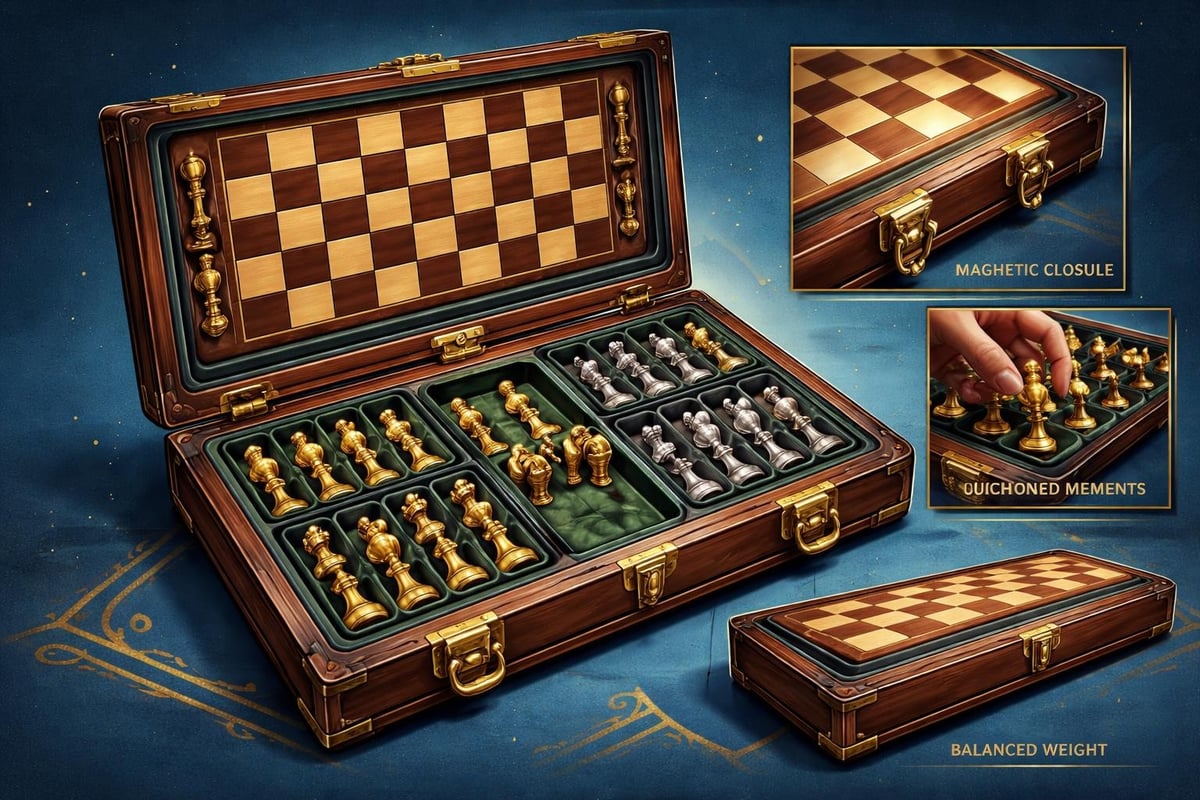
That central hinge determines whether your folding chess board remains flat during play or creates an annoying ridge. It's worth understanding the options.
Recessed brass hinges: Traditional, durable, and when properly installed, nearly invisible during play. They create minimal disruption to the playing surface.
Piano hinges: Continuous metal strips running the full length. Extremely sturdy but can create a more noticeable seam.
Leather or fabric hinges: Flexible and traditional, though they may stretch over years. Historical folding designs used similar techniques for various folding furniture.
Modern composite hinges: Some contemporary designs use engineered materials that combine strength with flexibility.
The gap matters too. High-quality boards minimize the space between halves when opened. You shouldn't lose pieces down the crack or feel significant unevenness when moving across the centre.
Chess.com explores the aesthetics of folding chess boards, emphasizing how modern designs balance beauty with practical playability. This balance defines the difference between a adequate board and an exceptional one.
Think about where you'll use the board most. A board destined for serious tournament practice might prioritize clear square definition and glare-free surfaces. One meant for display in your home office can lean into decorative elements:
Some folding boards become conversation pieces. Others fade into the background, letting the game take centre stage. Neither approach is wrong. It's about matching the board to its purpose.
Regardless of aesthetics, the actual playing surface needs attention. Look for:
The wood chess boards collection demonstrates how premium finishes enhance playability while maintaining natural wood beauty.
A well-maintained folding chess board can last decades. The hinged design actually requires slightly different care than fixed boards.
Cleaning: Wipe with barely damp cloth, never soaking wet. Excess moisture can affect hinges and warp wood.
Conditioning: Apply appropriate wood care products 2-3 times yearly. Caring for wooden chess boards requires understanding your specific wood type.
Hinge maintenance: Check brass hinges periodically for tightness. A tiny drop of appropriate oil keeps them operating smoothly.
Storage position: Store folding boards flat or upright, never at odd angles that stress the hinges.
| Problem | Cause | Solution |
|---|---|---|
| Boards won't lay flat | Warped wood or loose hinges | Gentle weights while open, tighten screws |
| Gap widening | Hinge wear | Professional repair or replacement |
| Surface scratches | Normal use | Light sanding and refinishing |
| Loose pieces in storage | Worn compartments | Add felt padding |
For valuable or heirloom chess boards, professional restoration maintains both value and usability. Don't attempt aggressive repairs on premium boards yourself.
The whole point of many folding chess boards is portability. But "travel-friendly" means different things to different players.
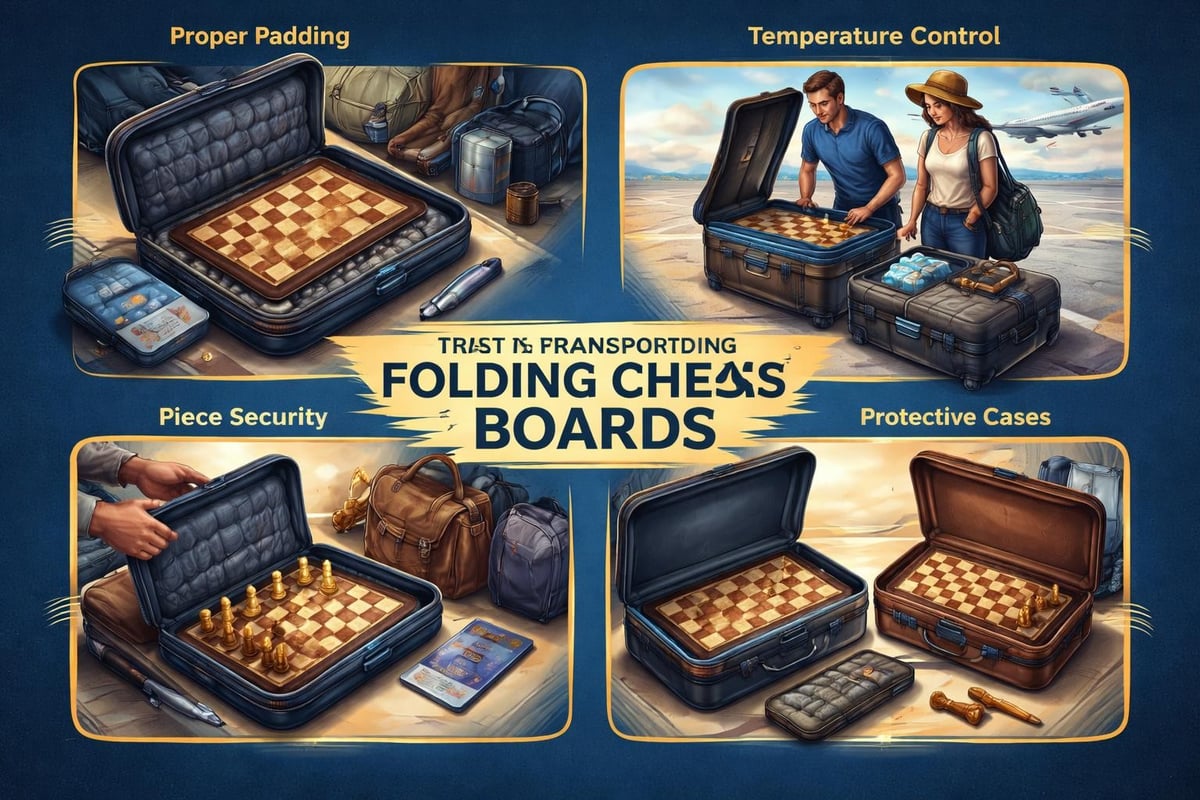
If you're flying with your chess set, size and weight matter. Most folding boards fit in checked luggage without issues, but carry-on requires more thought. Boards under 35cm typically pass security without questions.
Protect the board inside your luggage:
Car transport is easier but still deserves care. Temperature extremes damage wood boards. Don't leave them in hot boots for extended periods. A dedicated bag or case adds protection and makes carrying easier.
For regular club play or outdoor games, consider having a dedicated travel board separate from your premium home set. The travel chess sets at Sterling Chess include options specifically designed for frequent transport.
A folding chess board doesn't exist in isolation. The pieces you pair with it dramatically affect the overall experience.
We touched on this earlier, but it bears repeating: piece size must suit square size. Here's a quick reference:
Beyond measurements, consider piece style. Traditional Staunton designs suit classic wooden boards. Modern boards might pair better with contemporary piece interpretations. Theme chess sets require careful board matching to maintain aesthetic cohesion.
Folding boards have weight limits for their storage compartments. Heavy metal chess pieces might require reinforced boards or separate storage solutions. Standard wooden pieces rarely cause issues.
Modern folding chess boards incorporate clever extras that enhance usability.
Algebraic notation around the board edges helps players record games and discuss positions. Not every board includes this feature. Decide if you want it before buying.
Some boards offer:
Tournament players generally prefer coordinate markings. Casual players might find them distracting.
Magnetic chess boards include embedded magnets that hold pieces firmly in place. This feature shines for:
The trade-off? Magnetic boards typically cost more and pieces must have metal bases or magnetic responding elements.
Some designers push boundaries. Origami-inspired folding chess sets demonstrate how traditional concepts evolve through creative thinking. While not always practical for serious play, these innovations keep chess equipment fresh and interesting.
Folding chess boards span a vast price spectrum. Understanding what drives cost helps you make informed decisions.
Entry-level boards get you playing affordably. Expect:
These work perfectly for learning, casual play, or children's first quality sets. Don't expect heirloom durability, but they serve their purpose well.
This sweet spot offers genuine quality without extreme prices. Look for:
Most serious players find excellent options here. The boards look good, play well, and last years with proper care.
Top-tier folding boards become treasured possessions. Features include:
These boards appreciate in value and get passed down through families. The luxury chess boards collection includes examples that blur the line between gaming equipment and fine furniture.
Certain situations perfectly suit a folding chess board design:
Teaching environments: Chess clubs and schools benefit from boards that store efficiently and deploy quickly. The built-in piece storage prevents losses.
Multi-purpose spaces: Homes where the dining table serves many functions appreciate boards that clear away completely between uses.
Gift giving: A complete set in one attractive package makes an impressive present. Everything the recipient needs arrives together.
Building a collection: Enthusiasts might own several boards for different purposes. A quality folding board handles everyday playing while preserving premium fixed boards for special occasions.
Travelling players: Tournament participants and chess coaches who move between venues need reliable, portable equipment that maintains playing standards.
Quality varies enormously in folding chess boards. At Sterling Chess, every board undergoes careful evaluation before joining the collection. We stock folding boards that meet exacting standards for craftsmanship, playability, and longevity.
Our team understands that choosing a folding chess board involves balancing multiple factors. Size, materials, budget, intended use, and personal aesthetic preferences all influence the decision. We're here to help you navigate these choices, whether you're buying your first quality board or adding to an established collection.
The right folding chess board becomes more than equipment. It's an invitation to play, a beautiful object in its own right, and a companion for countless games ahead.
Whether you're drawn to traditional wooden designs or exploring modern innovations, a quality folding chess board combines convenience with uncompromised playing experience. The versatility of these elegant designs has kept them relevant for centuries, and today's options offer better quality and variety than ever before. At Sterling Chess, our curated selection of folding boards ensures you'll find one that suits your style, space, and playing needs perfectly. Our specialists are always ready to guide you toward the board that'll become your go-to choice for years of enjoyable games.
Leave a comment