

Call Us:
(03) 7037 0931
M-F 9am to 5pm

There's something magical about running your fingers across a beautifully crafted chess piece, feeling the subtle curves and details that only human hands can create. Hand carved chess sets represent more than just game equipment - they're functional art pieces that transform every match into an experience. Whether you're a serious collector, a dedicated player, or someone searching for a meaningful gift, understanding what makes these sets special can help you appreciate the craftsmanship involved and choose a set that'll be treasured for generations.
The difference between mass-produced and hand carved chess pieces is immediately obvious the moment you pick one up. Each piece carries the mark of its maker, with subtle variations that give your set unique character. Unlike factory-made sets stamped from moulds, hand carved pieces start as blocks of premium hardwood that skilled artisans transform into miniature sculptures.
The process demands patience, precision, and years of experience. Carvers must understand not just woodworking techniques, but also the game itself - knowing how each piece should feel in your hand during play, how it should balance on the board, and how the details should catch the light.
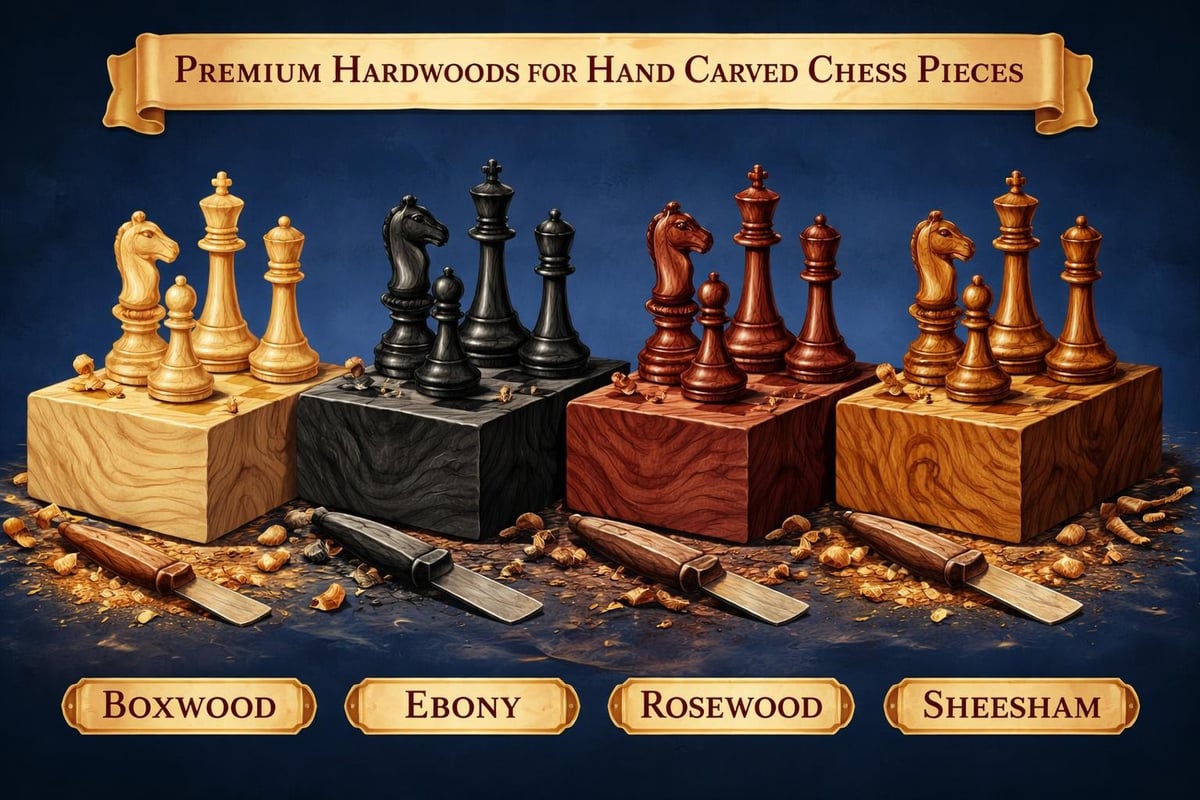
Traditional hand carved chess sets rely on specific hardwoods chosen for their durability, grain patterns, and workability. Premium wooden chess sets typically feature combinations of light and dark woods that create stunning visual contrast.
Popular woods for light pieces:
Common choices for dark pieces:
Each wood species brings different characteristics to your set. Boxwood and ebony combinations have been the gold standard for Staunton chess sets since the mid-1800s, offering the perfect balance of workability for carvers and aesthetic appeal for players.
Creating hand carved chess pieces is a multi-stage journey that can take weeks or even months for a complete set. Master carvers typically work from rough-turned blanks that have been shaped on a lathe to approximate dimensions. From there, the real artistry begins.
The knight is always the most challenging piece to carve. Its intricate mane, flowing curves, and expressive features demand exceptional skill. The art of hand-carved chess pieces showcases how artisans spend hours on each knight alone, using specialized carving tools to create depth, character, and movement.
The entire process requires constant attention to symmetry and proportion. A skilled carver knows that each piece in the set must harmonize with the others while maintaining its individual character.
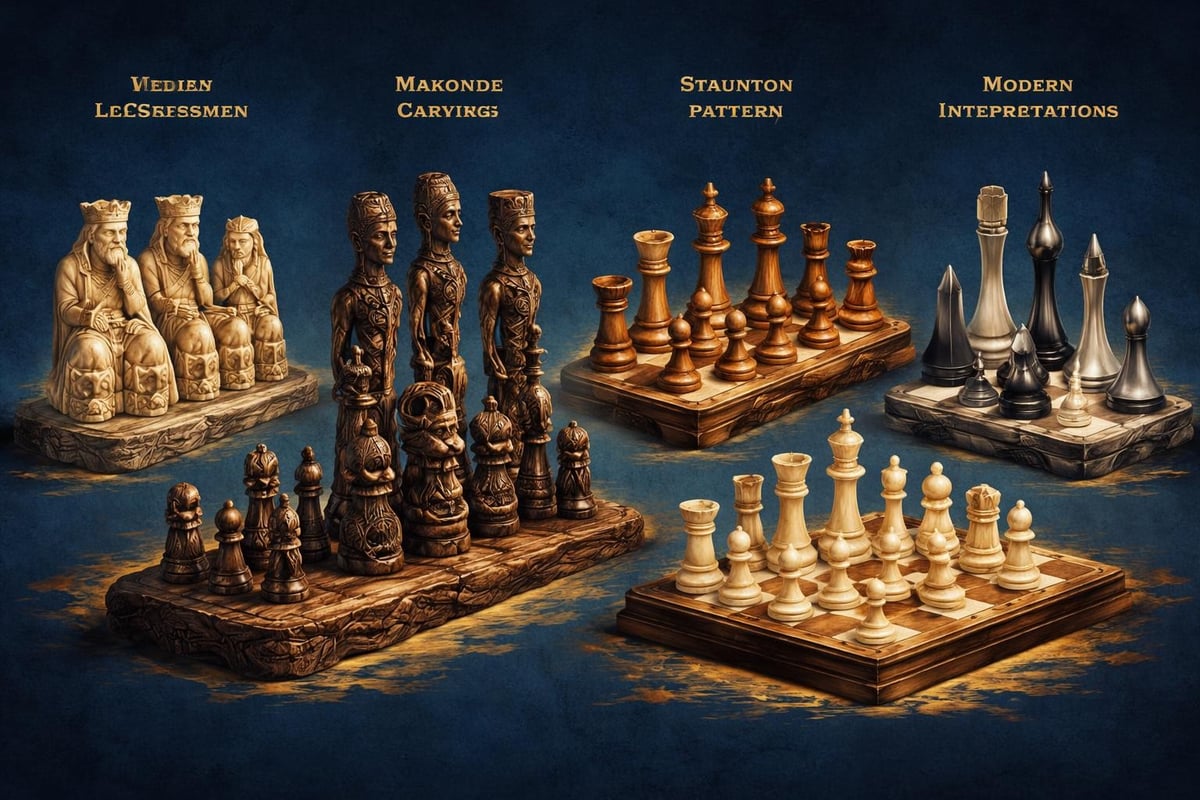
Hand carved chess has a rich heritage stretching back centuries. Some of the most famous chess pieces ever discovered are the Lewis chessmen, intricate 12th-century walrus ivory pieces found in Scotland. These remarkable artifacts showcase medieval craftsmanship and remind us that chess sets have always been more than just playing equipment.
Different cultures developed distinctive carving styles that reflect their artistic traditions. The Makonde chess set demonstrates African craftsmanship through stylized human and animal forms, while Asian carvers often incorporate regional motifs and symbolism.
| Historical Style | Origin | Key Characteristics |
|---|---|---|
| Lewis Chessmen | 12th century Scotland | Walrus ivory, expressive faces, Norse influence |
| Makonde Sets | East Africa (Tanzania/Mozambique) | Ebony wood, elongated figures, tribal aesthetics |
| Chinese Carved Sets | Imperial China | Symbolic designs, red and natural wood contrast |
| European Staunton | 1849 England | Standardized proportions, turned and carved details |
The Staunton pattern, designed in 1849 and named after chess master Howard Staunton, became the international standard. Today's luxury chess sets often honour this classic design while incorporating contemporary materials and finishing techniques.
Not all hand carved chess pieces are created equal. Understanding quality markers helps you distinguish exceptional craftsmanship from mediocre work. Spotting a high-quality handmade wooden chess set requires examining several key factors.
Weight and balance matter tremendously for playability. Premium pieces should feel substantial in your hand, with proper weighting that keeps them stable during games. Many carvers add lead or brass to achieve the perfect balance.
Detail consistency across all 32 pieces shows the carver's skill level. While minor variations are expected (and part of the charm), overall proportions and detail quality should remain consistent throughout the set.
The base diameter of your king should be approximately 40-50% of the square size on your board. This proportion ensures pieces look balanced without overcrowding the playing surface.
Hand carved chess pieces require thoughtful maintenance to preserve their beauty for decades. Wood is a living material that responds to its environment, so proper care extends far beyond occasional dusting.
Keep your set away from direct sunlight, which can fade colours and dry out the wood. Temperature and humidity fluctuations cause wood to expand and contract, potentially leading to cracks. Aim for stable conditions around 18-24°C with 40-60% relative humidity.
Regular maintenance tasks:
If your pieces develop a dull appearance over time, a gentle buffing with a clean microfiber cloth can often restore their lustre. For deeper cleaning, use products specifically designed for fine woodwork rather than household cleaners that might damage the finish.
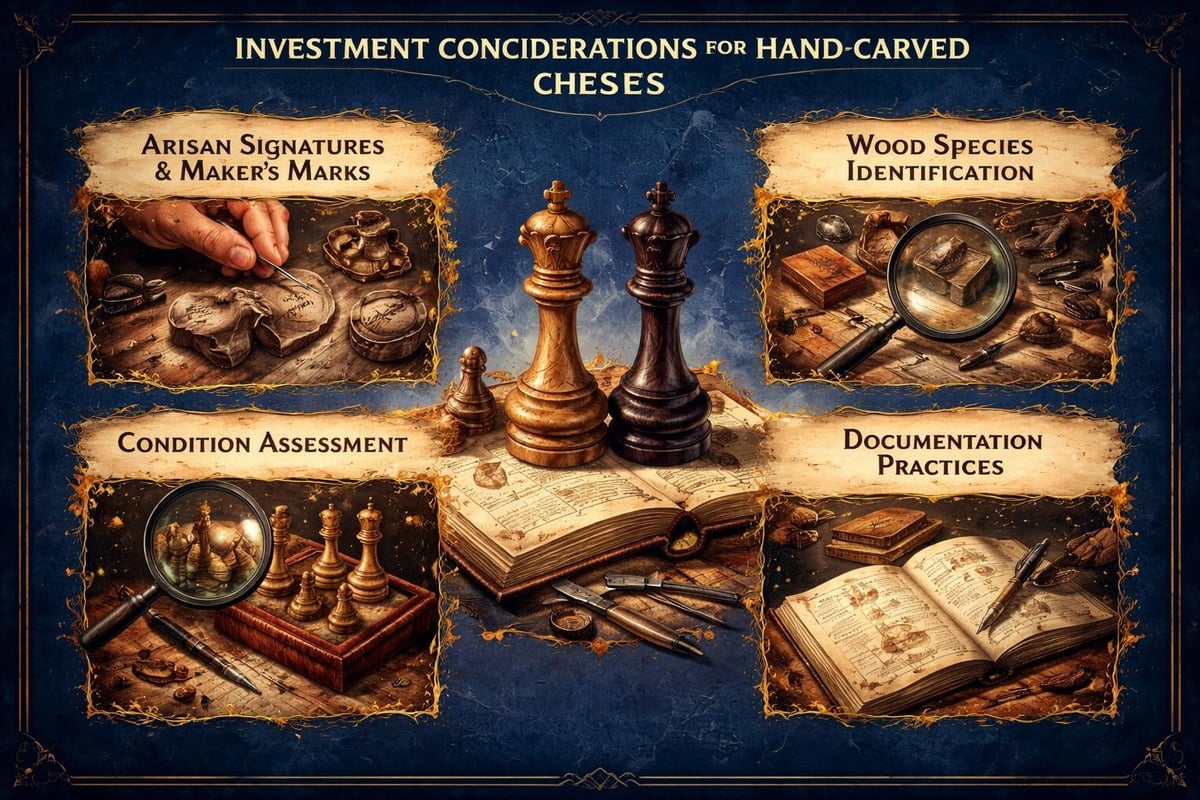
Hand carved chess sets often appreciate in value, particularly those crafted by renowned artisans or featuring exceptional materials. Limited edition sets and historical reproductions can become significant investments for serious collectors.
The Isle of Lewis chess sets available today as modern reproductions honour the medieval originals while offering playable alternatives to museum pieces. These themed reproductions bridge the gap between collectible art and functional game equipment.
| Factor | Impact on Value | Considerations |
|---|---|---|
| Artisan reputation | High | Documented maker increases collectability |
| Material quality | High | Rare woods like true ebony command premium prices |
| Age and provenance | Medium to High | Vintage sets with history are highly sought after |
| Condition | High | Well-maintained pieces retain value better |
| Completeness | Very High | Missing pieces dramatically reduce value |
| Documentation | Medium | Original boxes, certificates enhance worth |
When purchasing hand carved chess as an investment, documentation matters. Keep certificates of authenticity, maker's marks, and purchase records. Photograph your set thoroughly and maintain detailed condition notes.
Today's carvers blend centuries-old techniques with contemporary design sensibilities. While the fundamental processes remain unchanged, modern artisans experiment with unconventional woods, mixed materials, and artistic interpretations that push boundaries while respecting tradition.
Some craftspeople incorporate subtle contemporary touches into classic Staunton designs. Others create theme chess sets that tell stories through their pieces - fantasy characters, historical figures, or cultural symbols brought to life through skilled carving.
The rise of sustainable forestry has also influenced the hand carved chess world. Craftsmanship emphasizing sustainable materials ensures that future generations can enjoy these beautiful sets without depleting precious hardwood resources.
Minimalist modern - Clean lines, simplified forms, emphasis on wood grain
Cultural fusion - Blending traditional regional styles with international design elements
Artistic interpretation - Abstract or stylized pieces that challenge conventional forms while maintaining playability
Historical reproduction - Faithful recreations of famous sets using traditional methods and materials
Even wood chess sets that incorporate modern aesthetics benefit from traditional hand-carving techniques that machines simply can't replicate. The human touch remains irreplaceable for creating pieces with soul and character.
Selecting hand carved chess pieces is a deeply personal decision that should balance aesthetic preferences, playing needs, and budget considerations. Start by determining your primary purpose - will you play regularly, display the set, or both?
For serious players, prioritize ergonomics and size. Pieces should feel comfortable in your hand during long games. Competition-standard sizing typically features king heights between 3.75 and 4.25 inches, perfectly suited to tournament boards.
Collectors might prioritize uniqueness, historical significance, or artistic merit over practical playability. Limited edition sets or pieces featuring exceptional detail work become conversation starters and heirloom treasures.
Questions to guide your selection:
Don't rush your decision. Quality hand carved chess sets represent significant investments that should bring joy for years. Handle different sets in person when possible, noting how the pieces feel and how the wood's natural character speaks to you.
Understanding the craftsperson's mindset adds appreciation for hand carved chess. Master carvers often spend decades perfecting their skills, learning not just technical proficiency but developing an intimate relationship with wood itself.
Each piece of timber presents unique challenges - grain patterns that must be worked with rather than against, knots that require creative adaptation, and colour variations that can enhance or detract from finished pieces. Experienced carvers read the wood, letting its natural characteristics guide their hands.
The knight remains the ultimate test of skill. Historical accuracy and craftsmanship in reproductions like the 1850 London Chessmen demonstrate how talented artisans can recreate intricate details from historical examples with stunning precision.
Many carvers work in small workshops, often family operations where skills pass from generation to generation. This transmission of knowledge ensures traditional techniques survive while incorporating modern insights about wood science, finishing chemistry, and ergonomic design.
Different parts of the world have developed distinctive approaches to hand carved chess. Indian craftspeople, particularly in regions like Amritsar, have become renowned for their Staunton-style sets featuring exceptional detail work and precise proportions. Polish carvers often create sets with bold, sculptural qualities. British artisans tend toward refined, classical interpretations of the Staunton pattern.
Notable carving regions:
Each region's work reflects local wood availability, cultural aesthetics, and carving traditions passed down through generations. This diversity ensures collectors can find sets that resonate with their personal tastes and heritage connections.
Even the finest hand carved chess pieces deserve a board that complements their beauty and craftsmanship. The relationship between pieces and board affects both aesthetics and playability.
Wood chess boards crafted from veneered or solid hardwoods often pair beautifully with carved wooden pieces. Look for boards featuring complementary or contrasting woods that enhance rather than compete with your pieces.
Square size matters tremendously. The standard formula suggests your board squares should measure approximately 2-2.4 times your king's base diameter. This proportion ensures pieces have adequate space without looking lost on oversized squares.
| King Base Diameter | Recommended Square Size | Board Overall Size |
|---|---|---|
| 1.5 inches | 2 inches | 16-18 inches |
| 1.75 inches | 2.25 inches | 18-20 inches |
| 2 inches | 2.5 inches | 20-21 inches |
Consider board thickness too. Premium luxury chess boards typically measure 1.5-2 inches thick, providing substantial presence that matches the weight of hand carved pieces.
Hand carved chess sets make extraordinary gifts for milestones, celebrations, or simply showing someone you care. The thoughtfulness behind selecting a quality set communicates respect for the recipient's interests and appreciation for lasting quality.
For chess enthusiasts, few gifts rival a beautifully crafted set. Even casual players appreciate the artistry and often find that owning quality pieces inspires them to play more frequently and improve their skills.
Materials commonly used in hand-carved chess sets offer options for various budgets and preferences. From affordable sheesham sets perfect for gifting to younger players, to premium rosewood and ebony combinations suitable for serious collectors, there's a hand carved set appropriate for every recipient.
Gift-giving occasions ideal for hand carved chess:
Include care instructions and perhaps a quality storage solution to help recipients preserve their new treasure properly.
Hand carved chess sets embody the perfect marriage of functionality and artistry, transforming the ancient game into a tactile, visual celebration of human skill. Whether you're drawn to traditional Staunton designs or unique themed interpretations, these carefully crafted pieces elevate every match while serving as beautiful reminders of craftsmanship's enduring value. At Sterling Chess, our curated collection features hand-selected sets that honour this tradition, and our team is here to help you find pieces that match your style, budget, and passion for the game.
Leave a comment