

Call Us:
(03) 7037 0931
M-F 9am to 5pm

There's something magical about holding a hand carved chess set in your hands. The weight of the pieces, the subtle variations in grain, the tiny tool marks that tell you a human being spent hours bringing these figures to life. It's not just a game board, it's a work of art that connects you to centuries of tradition. Whether you're a serious player looking for your forever set or a collector drawn to fine craftsmanship, understanding what makes these sets special will help you choose one that'll become a treasured part of your life.
When you invest in a hand carved chess set, you're getting something fundamentally different from mass-produced alternatives. Each piece carries the fingerprint of its maker, quite literally. Artisans spend years perfecting their technique, learning to read the wood grain, understanding how different timbers behave under their tools, and developing the muscle memory that allows them to create consistent yet unique pieces.
The beauty of handcrafted sets lies in their subtle imperfections. No two knights will be absolutely identical, but they'll be close enough to maintain symmetry across the board. This human element adds character that machines simply can't replicate.
Creating a quality hand carved chess set isn't a weekend project. Depending on the complexity of the design and the wood being used, a single set can take anywhere from 40 to 200 hours to complete. The king alone might require 6-8 hours of careful carving, turning, and finishing.
Here's what goes into the process:
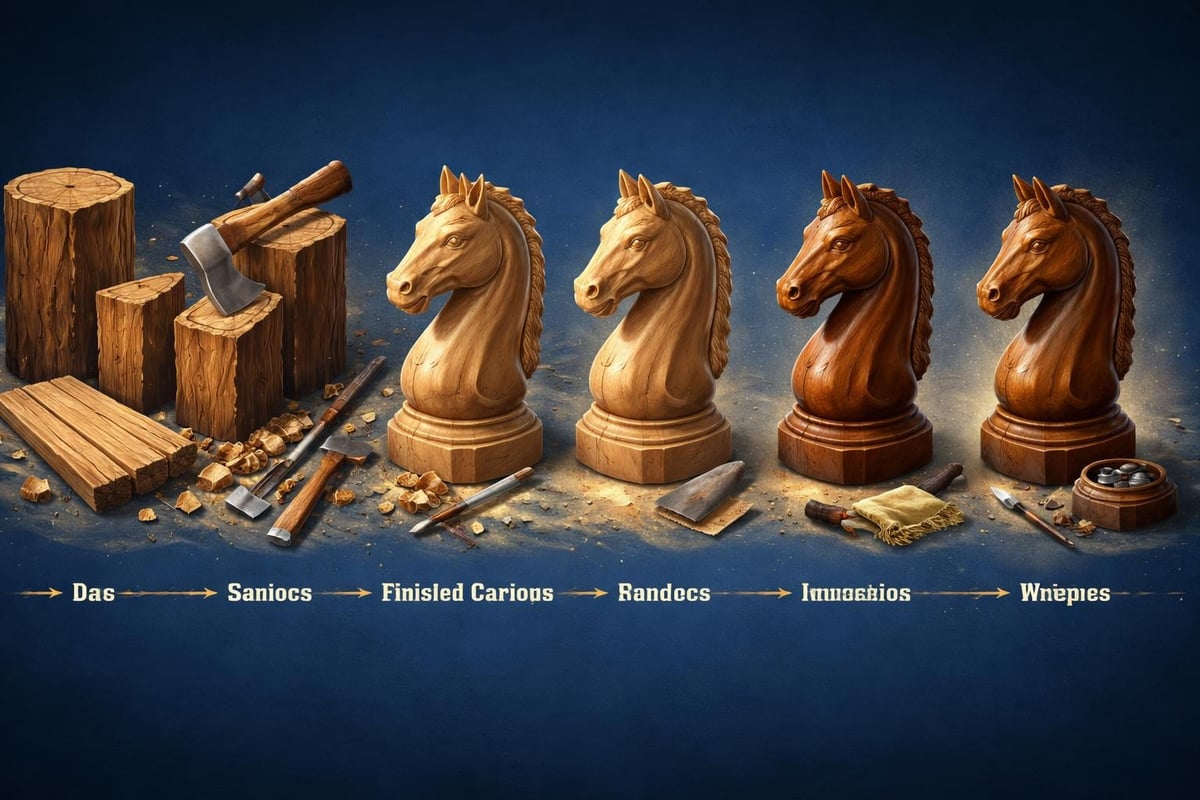
The timber used in your hand carved chess set dramatically affects both its appearance and longevity. Traditional sets often pair contrasting woods, with ebony, rosewood, or walnut representing the dark pieces and boxwood, maple, or holly for the light side.
Premium Woods for Chess Pieces:
| Wood Type | Characteristics | Best For |
|---|---|---|
| Ebony | Dense, dark, incredibly smooth | Traditional Staunton sets, luxury collections |
| Boxwood | Fine grain, pale yellow, holds detail | Light pieces in premium sets |
| Rosewood | Rich brown-red, distinctive grain | Dark pieces with character |
| Sheesham | Durable, affordable, attractive grain | Mid-range quality sets |
| Padauk | Vibrant orange-red, ages beautifully | Unique statement pieces |
The Staunton chess set design, which has been the tournament standard since 1849, showcases these woods beautifully. The clean lines and recognizable silhouettes of Staunton pieces allow the natural beauty of the timber to shine through without overwhelming ornamentation.
Not all hand carved sets are created equal. When you're evaluating potential purchases, knowing how to spot a high-quality handmade wooden chess set can save you from disappointment. The difference between a mediocre set and an exceptional one often comes down to attention to detail.
Look closely at the knights, they're the ultimate test of a carver's skill. The knight should have crisp, defined features with a realistic mane and facial expression. Cheap sets often have mushy, indistinct knights that look more like abstract lumps than horses.
Check the bases of all pieces. They should be perfectly flat and perpendicular to the body, ensuring stable placement on the board. Weighted pieces should feel balanced, not top-heavy or awkwardly distributed.
The finish tells you a lot too. Quality hand carved chess sets have smooth, even finishes that enhance the wood's natural beauty without obscuring the grain. You shouldn't see drips, bubbles, or uneven coating.
While Staunton chess sets dominate tournament play, the world of hand carved chess offers fascinating historical alternatives. The Lewis chessmen, discovered in Scotland in 1831, showcase medieval Scandinavian artistry with their expressive faces and detailed costumes. Modern reproductions of these 12th-century pieces make stunning display sets.
The Makonde chess set from East Africa represents entirely different aesthetic traditions. These sets feature elongated figures with distinctive tribal characteristics, connecting chess to African artistic heritage. Each piece becomes a small sculpture, transforming your chess table into a gallery.
For collectors interested in luxury chess sets, exploring these historical designs opens up a world of possibilities beyond the familiar Staunton silhouette.

Understanding the art of hand-carved chess pieces reveals the incredible skill involved in this craft. Master carvers use a combination of traditional and modern tools, often switching between techniques depending on the piece and wood.
Essential Carving Tools:
The lathe work creates the basic form, establishing proportions and symmetry. Then the real artistry begins. Carvers work the knight entirely by hand, referencing templates but ultimately relying on their experience to bring the piece to life. The bishop's mitre requires precise cuts at specific angles. The king's crown demands steady hands and sharp tools.
Different regions have developed their own techniques. Indian carvers might use different tools and approaches compared to European artisans, even when creating similar Staunton designs. These variations add regional character to the finished sets.
Once you've invested in a quality hand carved chess set, proper care ensures it lasts for generations. Wood is a living material that responds to its environment, so understanding these needs prevents damage.
Keep your set away from direct sunlight, which can fade certain woods and dry them out. Extreme temperature changes aren't great either, especially if you live somewhere with dramatic seasonal shifts. Consistent indoor temperatures work best.
Humidity matters more than most people realize. Very dry air can cause wood to crack, while excessive moisture can lead to warping or mould. If you notice pieces becoming sticky or developing a film, your humidity might be too high.
Maintenance Schedule:
Never use harsh chemicals or abrasive cleaners on your hand carved chess set. Water should be avoided too, stick with products designed for fine wood furniture. A little Renaissance wax goes a long way in protecting the finish while maintaining that lovely natural feel.
Hand carved chess sets occupy an interesting space in the collecting world. Unlike mass-produced sets, quality handmade pieces tend to appreciate over time, especially if they're from recognized artisans or represent specific historical styles. Top historical chess set designs often command premium prices in the collector market.
| Set Type | Initial Investment | Typical Appreciation | Collectability Factor |
|---|---|---|---|
| Master artisan Staunton | $800-$3,000 | Moderate to high | High if documented provenance |
| Limited edition themed | $500-$2,000 | Variable | High for rare themes |
| Regional traditional styles | $300-$1,500 | Steady | Growing interest globally |
| Contemporary artist sets | $600-$5,000+ | Unpredictable | Depends on artist reputation |
The sets that appreciate most reliably share certain characteristics. They're made by known craftspeople who sign or mark their work. They use premium materials like genuine ebony and boxwood. They demonstrate exceptional craftsmanship in the details. And they're properly documented with certificates of authenticity.

Here's something many new collectors wrestle with: should you actually play with a beautiful hand carved chess set or keep it pristine for display? The answer depends on your priorities and the specific set.
Some sets are clearly meant for play. They're robust, well-weighted, and finished with durable materials that can handle regular use. Others are more delicate, with intricate carvings or fragile elements better suited to display. If you're serious about both playing and collecting, consider owning multiple sets.
When you want a hand carved chess set for regular games, look for these features:
The wood chess sets designed for serious players balance artistic merit with practical durability. You shouldn't feel guilty about using them, that's what they're made for.
Exhibition pieces prioritize visual impact over playability. They might feature elaborate carving that's too delicate for regular handling, or historical designs where the pieces aren't immediately recognizable during play. These sets transform chess into sculpture.
Many collectors compromise by displaying their finest hand carved chess set in a prominent location while maintaining separate tournament chess sets for actual games. This gives you the best of both worlds.
The relationship between your pieces and board is crucial, whether you're playing or displaying. Too-small pieces on a large board look lost and feel awkward to move. Oversized pieces crowd the squares and make games frustrating.
The traditional rule suggests the king's base diameter should be 75-80% of the square size. If your board has 2-inch squares, your king base should measure about 1.5-1.6 inches across. This proportion feels right visually and functionally.
Standard Size Categories:
Remember that hand carved sets often have more visual bulk than turned or molded pieces, even at the same nominal height. A chunky, heavily detailed 3.75-inch king might feel more substantial than a sleek 4-inch piece from a different set.
While the fundamentals of carving haven't changed much in centuries, contemporary artisans are finding new ways to interpret traditional designs. Some combine hand carving with selective machine work, using CNC routers for initial shaping before finishing everything by hand. This hybrid approach can reduce production time without sacrificing the human touch in the details.
Others experiment with unconventional wood combinations or incorporate contrasting materials like metal accents or stone inlays. These innovations respect tradition while pushing the craft forward, creating hand carved chess sets that feel both timeless and contemporary.
The theme chess sets category has exploded with creative interpretations too. Artisans carve pieces representing everything from historical battles to fantasy characters, each set telling its own story through carefully crafted details.
The beauty of owning a hand carved chess set extends beyond aesthetics. There's a connection that forms when you play with pieces someone poured their skill and time into creating. Every game becomes a conversation between you, your opponent, and the artisan who made it all possible.
Whether you're drawn to the classical elegance of Staunton chess pieces or the character-filled charm of Isle of Lewis chess sets, choosing a hand carved set means valuing craftsmanship in an increasingly automated world. These pieces remind us that some things are worth taking time to do properly, whether that's carving a perfect knight or contemplating your next move.
The right set becomes part of your chess journey, witnessing your growth as a player, hosting games with friends and family, and maybe one day passing down to someone who'll appreciate the artistry as much as you do. That's the real value in these handcrafted treasures.
A quality hand carved chess set represents an investment in both your playing experience and the timeless craft of woodworking artistry. If you're ready to find a set that speaks to your style and budget, the specialists at Sterling Chess can guide you through the selection process. We've curated collections that honor traditional craftsmanship while meeting the needs of modern players and collectors, ensuring you find pieces you'll treasure for years to come.
Leave a comment