

Call Us:
(03) 7037 0931
M-F 9am to 5pm

So you've decided to learn chess. Brilliant choice! Whether you're drawn to the game's strategic depth, its rich history, or simply want to challenge your mind in new ways, playing chess for beginners is an incredibly rewarding journey. The beauty of chess is that while the rules are straightforward enough to learn in an afternoon, the game offers a lifetime of discovery and improvement. Let's walk through everything you need to know to get started, from setting up your first board to understanding the fundamental strategies that'll have you playing confidently in no time.
Before you can start playing, you'll need to get familiar with your equipment. A standard chessboard consists of 64 squares arranged in an 8x8 grid, alternating between light and dark colours. Here's something many beginners miss: the board should be positioned so that each player has a light-coloured square on their right-hand corner.
Each player starts with 16 pieces:
The back row setup follows a specific pattern. From left to right on each player's side: Rook, Knight, Bishop, Queen, King, Bishop, Knight, Rook. There's a handy memory trick: "Queen on her colour" - the white queen goes on a light square, the black queen on a dark square. All eight pawns line up on the second rank in front of your other pieces.
When you're ready to invest in quality equipment, a proper Staunton brass chess set makes every game feel special and helps you visualise the board more clearly.
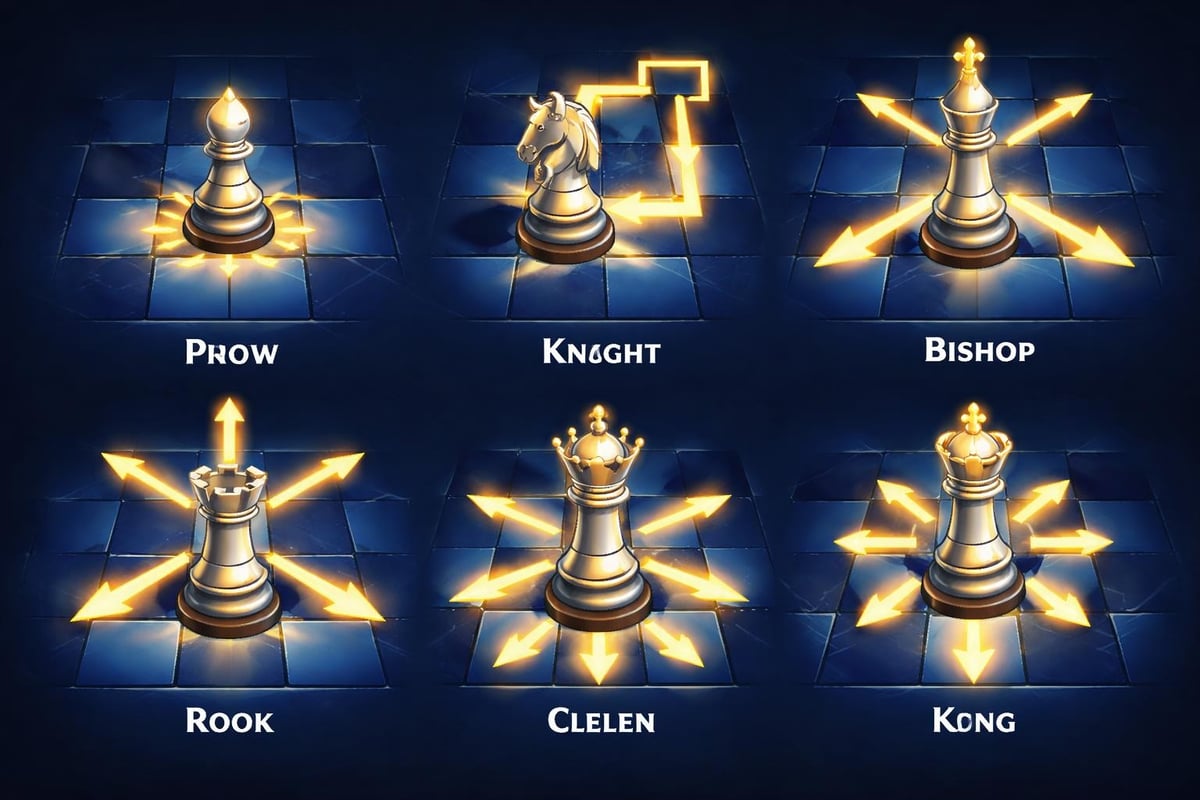
Playing chess for beginners starts with understanding how your army moves. Let's break down each piece's capabilities.
Pawns move forward one square (or two squares on their first move) but capture diagonally. They can't move backward, which makes every pawn push a commitment. When a pawn reaches the opposite end of the board, it promotes to any piece you choose (usually a queen).
Rooks move any number of squares horizontally or vertically. They're powerhouses in the endgame and work beautifully when doubled on a file.
Knights move in an L-shape: two squares in one direction and one square perpendicular. They're the only pieces that can hop over others, making them brilliant for closed positions.
Bishops slide diagonally any number of squares. Each bishop stays on its starting colour forever, which is why you've got one on light squares and one on dark squares.
Queens combine the powers of rooks and bishops, moving any number of squares in any straight line. She's your most versatile attacker.
Kings move one square in any direction. Protecting your king is the whole game - if he's checkmated, you lose.
There are three special moves in chess that trip up many beginners:
The comprehensive rules of chess explain these special moves in detail with helpful diagrams.
Many beginners dive straight into memorising specific opening moves, but that's putting the cart before the horse. Instead, focus on these fundamental principles that apply to virtually every opening.
Control the centre by placing pawns and pieces where they influence the e4, e5, d4, and d5 squares. The player who controls the centre usually controls the game.
Develop your pieces quickly. Get your knights and bishops into the game before moving the same piece twice. Every move in the opening should contribute to your position.
Castle early to protect your king and connect your rooks. This is typically done within the first 10 moves.
Don't bring your queen out too early. She's powerful but vulnerable, and your opponent can develop pieces while attacking her.
| Opening Principle | Why It Matters | Common Mistake |
|---|---|---|
| Centre control | Gives your pieces more mobility | Pushing only flank pawns |
| Piece development | Creates threats and coordination | Moving pawns excessively |
| King safety | Prevents early attacks | Delaying castling too long |
| Queen timing | Avoids wasting tempo | Queen moves on move 2-3 |
The study plan for beginners focusing on openings from Grandmaster Sam Shankland offers brilliant insights into how to approach this critical phase.
Playing chess for beginners isn't just about moving pieces legally - it's about recognising patterns and opportunities. Tactics are short-term sequences that win material or deliver checkmate.
Forks occur when one piece attacks two (or more) enemy pieces simultaneously. Knights are especially good at this.
Pins happen when attacking a piece that can't move without exposing a more valuable piece behind it.
Skewers are like reverse pins - you attack a valuable piece, forcing it to move and exposing a less valuable piece behind it.
Discovered attacks involve moving one piece to reveal an attack from another piece behind it.
Start solving simple tactical puzzles daily. Even spending 10-15 minutes on basic patterns will dramatically improve your pattern recognition. The step-by-step roadmap for beginners includes excellent tactical training resources.
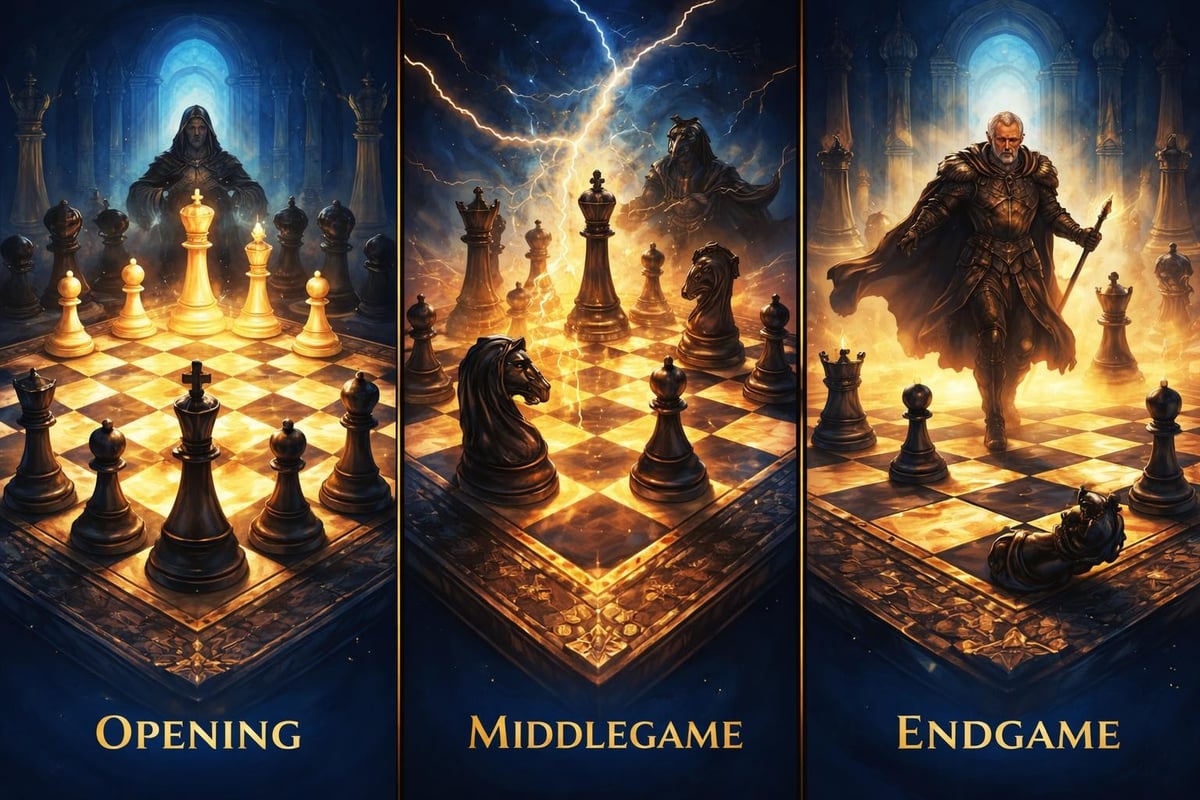
Every chess game has three phases: opening, middlegame, and endgame. Understanding what you're trying to achieve in each phase is crucial.
Once you've developed your pieces and castled, you're in the middlegame. This is where planning becomes essential. Look for:
When most pieces are traded off, endgame technique becomes critical. Basic principles include:
The classic book Bobby Fischer Teaches Chess uses a programmed learning approach that's perfect for grasping these fundamental concepts.
Everyone makes mistakes when they're learning, but knowing the common pitfalls helps you progress faster.
Moving without a plan. Before touching a piece, ask yourself: "What am I trying to accomplish with this move?"
Ignoring your opponent's threats. After your opponent moves, always check: "What are they threatening?"
Trading pieces randomly. Only trade when it improves your position or when you're ahead in material.
Neglecting pawn structure. Weak pawns become targets in the endgame. Avoid creating isolated or doubled pawns without good reason.
Playing too fast. Use your time to calculate and think. Chess rewards patience.
The ten fundamental chess principles provide excellent guidance on building sound positional understanding.
Your playing experience is significantly enhanced by quality equipment. When you're playing chess for beginners, having a board and pieces you enjoy looking at makes practice sessions more pleasurable.
Consider these factors when selecting your first serious chess set:
For those wanting the perfect combination of tradition and functionality, the Renaissance chess pieces with walnut finish board offers stunning craftsmanship that elevates every game.
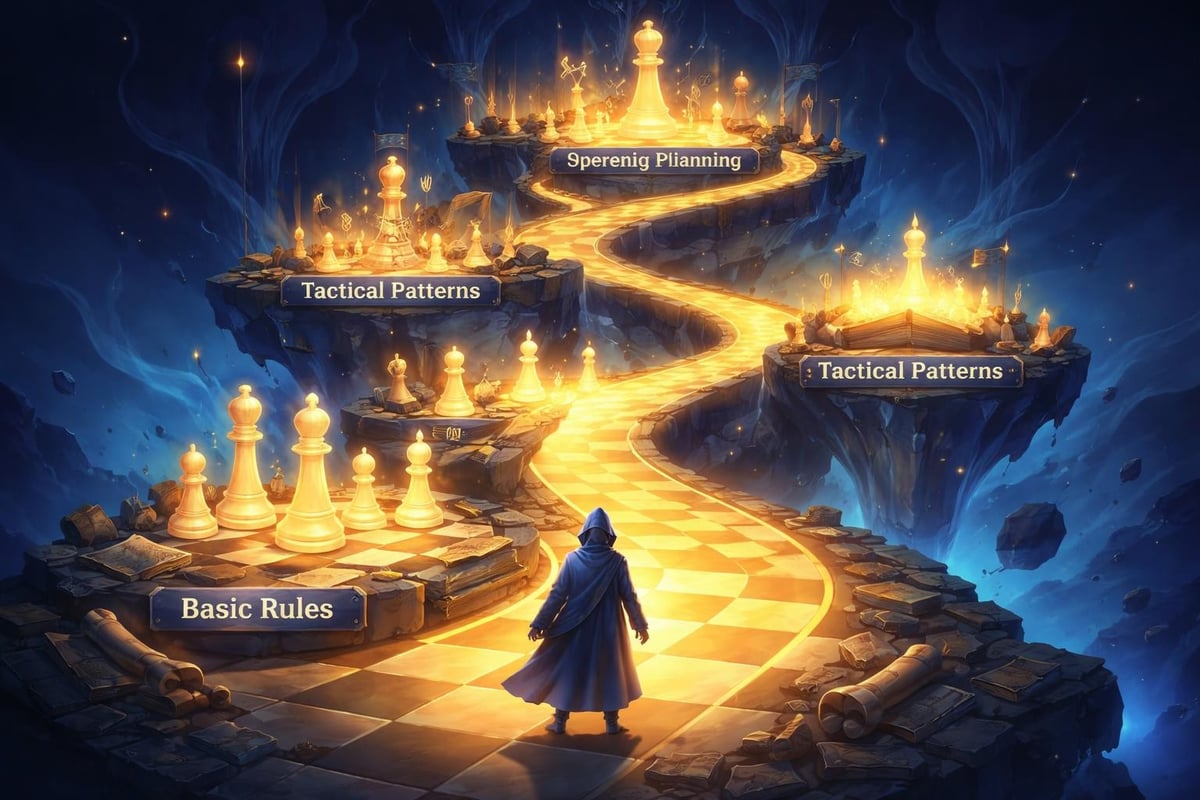
Improvement in chess comes from deliberate, focused practice. Here's how to structure your learning for maximum benefit:
Play regularly against opponents slightly better than you. You'll learn more from losses than wins, as long as you analyse them afterward.
Study your games. Review every game you play, looking for where you went wrong and where you missed opportunities. The general overview of chess strategy provides context for understanding positional concepts.
Work on tactics daily. Even 15 minutes of puzzle-solving sharpens your calculation skills. Online platforms like Chessity's beginner lessons offer interactive training that makes learning engaging.
Learn one opening well for White and one for Black. You don't need to know 20 openings - deep understanding of one system beats shallow knowledge of many.
Study endgames. While it seems counterintuitive, endgame knowledge helps you play better middlegames because you understand which endgames to aim for.
| Practice Activity | Time Investment | Skill Development |
|---|---|---|
| Tactical puzzles | 15 min daily | Calculation, pattern recognition |
| Playing games | 2-3 games weekly | Overall experience, time management |
| Game analysis | 20 min per game | Understanding mistakes, finding improvements |
| Opening study | 1 hour weekly | Confident starts, understanding plans |
| Endgame training | 30 min weekly | Technique, king activity |
The habits you form when playing chess for beginners will stick with you throughout your chess journey. Start with these practices:
Touch-move rule: If you touch a piece, you must move it (if legal). This teaches you to calculate before touching pieces.
Write down your games using algebraic notation. This creates a record for later analysis and improves your board vision.
Shake hands before and after every game. Chess is a gentleman's game, and good sportsmanship matters.
Set up a consistent practice schedule. Regular, shorter sessions beat occasional marathon sessions.
Join a chess club or community. Learning alongside others accelerates improvement and makes the journey more enjoyable.
For serious practice at home, consider a professional chess clock to simulate tournament conditions and improve your time management skills.
Learning to read and write chess notation opens up a world of resources. It's simpler than it looks:
Once you can read notation, you can study master games, follow along with instructional books, and analyse your own games more effectively. The practical chess tips article offers additional guidance on improving your analytical skills.
Improvement in chess is gradual and nonlinear. Set achievable milestones:
First month: Learn all the rules, including special moves. Play through at least 20 games, focusing on applying opening principles.
First three months: Solve 500+ tactical puzzles. Learn one solid opening for White and Black. Win your first game by checkmate.
First six months: Reach a basic rating level on an online platform. Understand fundamental endgames like king and queen versus king.
First year: Join a local chess club or tournament. Develop a study routine that includes tactics, games, and opening theory.
Remember that everyone progresses at different rates. The journey itself is rewarding, regardless of your rating. The basic rules and objectives provide essential insights into what you're working toward.
Playing chess for beginners is just the start. As you progress, you'll want to expand your resources:
Books: Start with beginner-friendly texts that explain concepts clearly. Look for books with plenty of diagrams and exercises.
Online platforms: Websites offering puzzles, lessons, and play against players of all levels worldwide.
Video content: Many grandmasters share instructional videos that break down complex concepts into digestible lessons.
Personal coaching: Once you've got the basics down, a coach can identify your specific weaknesses and create a tailored improvement plan.
Tournament play: Nothing accelerates learning like playing rated games where something's on the line.
The key is consistent engagement with the game. Even 30 minutes daily will produce remarkable improvement over time.
Playing chess for beginners opens the door to a lifetime of strategic thinking, creative problem-solving, and endless fascination. Whether you're looking to compete seriously or simply enjoy beautiful games at home, having quality equipment makes every session more enjoyable. At Sterling Chess, we're passionate about helping players at every level find chess sets that inspire them to keep learning and playing. Our hand-selected collection combines traditional craftsmanship with modern design, offering pieces and boards you'll be proud to display and play on for years to come.
Leave a comment