

Call Us:
(03) 7037 0931
M-F 9am to 5pm

Chess is booming across the US, and more players than ever are jumping into uscf chess to test their skills. Whether you're brand new or chasing your next rating jump, understanding the basics of uscf chess is key for anyone serious about competition.
This guide will break down everything you need to know for 2026. We’ll cover official rules, how the rating system works, joining and playing in events, practical improvement tips, and resources to help you thrive.
Ready to level up your game? Let’s dive in and start your uscf chess journey today.
The US Chess Federation, better known as USCF, sits at the heart of the American chess scene. Founded in 1939, its mission is to promote, organise, and support chess across the United States. Whether you're a casual player or aiming for the big leagues, understanding USCF chess is vital for anyone serious about the game.
USCF chess membership comes in several types, catering to all ages and situations. There are scholastic memberships for students, adult and senior options, and even family plans if you want to get the whole crew involved. Each membership gives you access to official tournaments, a personal USCF rating, exclusive publications, and discounts on equipment. For a detailed breakdown of what you get with each option, check out the USCF membership benefits page.
The impact of USCF chess goes well beyond individual players. The federation organises national tournaments, manages the official rating system, and sets the rules that guide competitive play. USCF chess standards are recognised across the country, making it the go to authority for fair and consistent competition.
USCF chess also maintains a close relationship with FIDE, the international chess federation. This partnership ensures that USCF events stay in line with global standards, and American players can compete internationally without a hitch. The federation also collaborates with regional chess organisations, bringing the community together from local clubs to the world stage.
Members get a stack of helpful resources, too. The USCF website offers tournament calendars, rating lookups, and archives of past games. There are regular newsletters, online forums, and direct support for questions or issues. These tools make it easy to stay informed, track your progress, and connect with other chess fans.
USCF chess has seen impressive growth lately, with membership numbers climbing year after year. For example, in 2023, the federation reported over 100,000 active members, a clear sign of chess's rising popularity in the US. This growth means more opportunities, stronger competition, and a vibrant, supportive community.
At its core, USCF chess is the cornerstone of competitive play in America. Joining the federation opens doors to official events, a global network, and endless chances to improve your game. If you're serious about taking your chess to the next level, being part of the USCF is a must.
Chess is booming in the US, and if you want to take your game to the next level, knowing the ins and outs of uscf chess rules is a must. The US Chess Federation has its own set of regulations, slightly different from what you might see internationally. Let’s break down what you need to know so you can play confidently, avoid penalties, and focus on winning your next tournament.
At its core, uscf chess follows the same traditional chess rules you know and love, but there are some unique twists to be aware of. The USCF adapts the standard rules from FIDE (the international chess body), with a few updates and clarifications to suit American tournaments.
One big difference is how draw offers are handled. In uscf chess, you can only offer a draw on your own move and before touching a piece, which helps keep things fair and clear. The touch-move rule is also strictly enforced: if you touch a piece, you must move it if it’s legal to do so.
For 2026, the USCF has clarified rules about electronic devices. Players must keep phones and smartwatches off during games, and penalties for violations are clearly defined. These updates are designed to keep the game honest and hassle-free.
Knowing the specific uscf chess rules isn’t just about avoiding trouble; it’s about playing with confidence. When everyone’s on the same page, disputes are rare, and you can focus on your strategy instead of the rulebook.
USCF chess tournaments come in a few classic formats: Swiss, round-robin, and knockout. The Swiss system is the most popular, pairing players with similar scores each round. Round-robin means everyone plays everyone else, while knockout is a straight elimination.
Time controls are a big deal in uscf chess. You’ll see classical games (like 90 minutes per player), rapid (10–60 minutes), blitz (5–10 minutes), and even bullet (under 5 minutes). Each has its own vibe and challenges.
Here’s a quick look at typical USCF time controls:
| Format | Time Control Example | Suitable For |
|---|---|---|
| Classical | 90 min + 30 sec delay | Serious matches |
| Rapid | 25 min + 5 sec increment | Club events |
| Blitz | 5 min + 3 sec increment | Fast-paced fun |
| Bullet | 2 min per player | Online events |
USCF allows both digital and analog clocks, but digital models are preferred for accuracy and easy time delay settings. If you’re gearing up for your next event, check out the Chess Clocks for Competition collection for gear that meets USCF standards.
Choosing the right format and time control can make a big difference in your uscf chess experience. Faster games test nerves, while longer formats reward deep thinking. Try different styles to find what fits you best.
Even in well-run uscf chess events, disputes can pop up. The most common issues are illegal moves, running out of time, or mistakes in notation. If this happens, don’t worry—the tournament director is there to help.
Say someone makes an illegal move. In uscf chess, the director will usually restore the position and add extra time to the opponent’s clock. If a player’s flag falls, meaning they run out of time, that’s usually an automatic loss unless the opponent doesn’t have mating material.
If you disagree with a director’s ruling, you can file an appeal. Most tournaments have a simple process for this. For example, at a recent national event, a player thought their opponent’s phone vibrated during the game. The director checked, confirmed the rules, and made a fair decision based on uscf chess guidelines.
The best advice? Stay calm, be respectful, and keep communication open. Good sportsmanship is just as important as knowing the rules. When everyone works together, uscf chess tournaments are more enjoyable for all.
Understanding how the uscf chess rating system works can feel a bit like learning a new language. But once you get the basics, it’s actually pretty straightforward and incredibly motivating. Your rating isn’t just a number, it’s a snapshot of your chess journey and a badge of your progress in the uscf chess community.
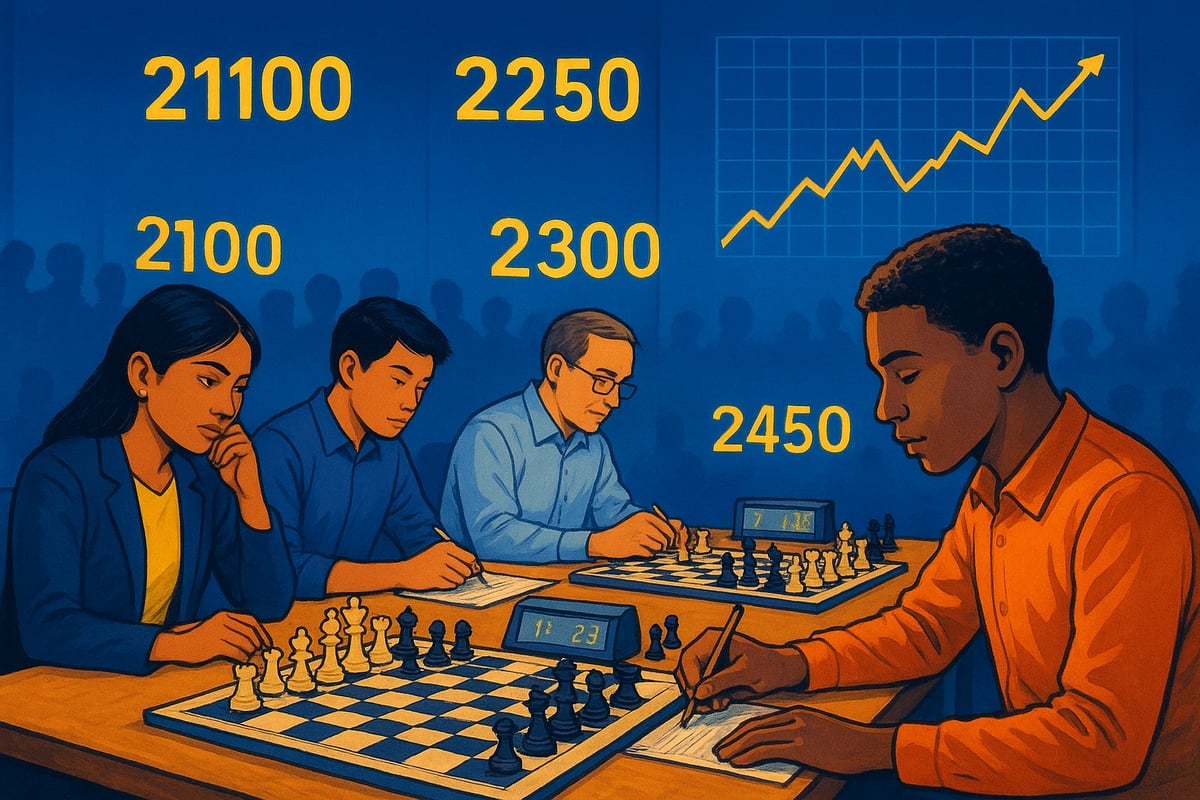
A uscf chess rating is a numerical estimate of your playing strength, calculated after each rated game you play. When you join the USCF, you start with either no rating or a provisional rating, which quickly adjusts as you play your first few events. After you’ve played enough games, your rating becomes “established” and starts reflecting your true skill level.
The calculation itself is a bit of maths magic. Basically, after each tournament, your rating goes up if you perform better than expected, and drops if you don’t do as well. The USCF uses a specific formula that factors in your opponents’ ratings, game results, and even the number of games you’ve played. If you’re curious about the nitty gritty, check out the USCF rating system specifications for the full breakdown.
Let’s say you enter your first uscf chess tournament and win two games, lose one, and draw one against players with similar ratings. Your rating might start at 1200, and after the event, you could jump to 1280 based on your results. This instant feedback keeps players motivated and helps you measure your improvement over time.
Remember, your uscf chess rating isn’t just a number, it’s a tool for tracking your progress and setting new goals.
The uscf chess rating system is divided into classes, each representing a different skill level. As your rating climbs, you’ll move through these classes, and if you reach the top, you might even earn an official title. Here’s a quick look at the rating ladder:
| Rating Range | USCF Class | Typical Title |
|---|---|---|
| 100-399 | Class J | Novice |
| 400-799 | Class I | Beginner |
| 800-999 | Class H | Intermediate |
| 1000-1199 | Class G | Intermediate |
| 1200-1399 | Class F | Intermediate |
| 1400-1599 | Class E | Intermediate |
| 1600-1799 | Class D | Advanced |
| 1800-1999 | Class C | Advanced |
| 2000-2199 | Class B | Expert |
| 2200-2399 | National Master | Master |
| 2400+ | Senior Master | Elite |
To move up, you simply need to keep playing uscf chess games and improve your results. For example, a recent USCF report showed that the majority of members fall between Class D and Class B, with only a small percentage reaching National Master level.
Climbing the uscf chess ladder takes time, patience, and a love for the game. Each class is a milestone, and every new rating is a reason to celebrate your progress.
Ready to climb the uscf chess ranks? Here are some tried-and-true strategies to boost your rating and keep tabs on your growth:
One great example is a player who saw their uscf chess rating jump by 200 points in a year simply by playing every month and reviewing each game. Consistency is key, and even small improvements add up over time.
You can track your progress using the official USCF website, which lets you view your rating history, recent results, and upcoming events. Remember, every game is a new opportunity to learn, grow, and reach the next level in uscf chess.
Getting involved in uscf chess tournaments is a huge step for any player, whether you’re just starting out or want to test your skills on a bigger stage. The process is easier than you might think, and it opens up a world of competitive and social opportunities. Here’s a simple guide to help you join and make the most of your uscf chess journey.
Joining the uscf chess community starts with becoming a member. First, head to the official US Chess Federation website and find the membership section. Here, you’ll see several options, including Scholastic (for students), Adult, Senior, and Family memberships.
The online registration process is straightforward:
You can renew your membership each year and manage everything from your online dashboard. The portal is user-friendly, showing your rating, membership status, and tournament history at a glance. Being a member is essential for anyone serious about uscf chess, as it unlocks access to official rated events, exclusive resources, and a supportive chess community.
Once you’re a member, you’ll want to find uscf chess tournaments to play in. The easiest way is to browse the USCF events calendar online. You can filter by date, location, and tournament type to find something that fits your schedule. Local chess clubs, schools, and community centres often host regular events too, and they’re great for meeting other players.
Registering is usually as simple as selecting the tournament, filling in your USCF ID, and paying the entry fee online. Make sure you check the deadlines—some popular events fill up fast. Tournament listings include important info like format (Swiss, round-robin, knockout), time control, and location, so you know exactly what to expect.
Playing in regular uscf chess tournaments is the best way to improve your rating and gain experience. Each event is a new opportunity to challenge yourself, learn from others, and enjoy the thrill of competitive play. Don’t forget to read the tournament rules and prepare any required details before signing up.
Your first uscf chess tournament can feel a bit overwhelming, but it’s actually a lot of fun. Expect a full day with several rounds, scheduled breaks, and an awards ceremony at the end. Players usually check in early, and there’s time to set up your board and get comfortable before the games start.
You’ll need to bring your own chess set and clock, though many events have extras on hand. Want to make sure you’re using official gear? Check out this Tournament Chess Sets Collection for sets that meet USCF standards. Good etiquette matters too—be polite, shake hands before and after games, and respect the tournament director’s instructions.
Many new players find their nerves settle after the first round. Being prepared, knowing what to bring, and understanding the flow of the day makes everything less stressful. Remember, every chess master started with their first tournament, so enjoy the experience and focus on learning.
Getting better at uscf chess is about more than just playing lots of games. It’s about smart preparation, good habits at the board, and learning from every result. Whether you’re just starting out or you’ve played in dozens of tournaments, these practical tips will help you find your edge and enjoy the journey.
Solid preparation is the backbone of every successful uscf chess player. Before you even sit down at the board, building a reliable opening repertoire is key. Pick a few openings you’re comfortable with and learn the main ideas, not just the moves. This helps you avoid early blunders and reach middlegames you actually enjoy playing.
Tactics are another cornerstone. Spend time each week solving puzzles and pattern recognition drills. Many top uscf chess players recommend focusing more on tactics than memorising endless lines. Endgame study often gets overlooked, but even knowing a handful of basic king and pawn endings can make the difference between a win and a draw.
Here are some highly recommended resources to boost your skills:
Consistent preparation means you’re not just hoping for good results, you’re building the habits that lead to them.
Once you’re at the event, in-game habits set you apart in uscf chess. Time management is crucial. Learn your preferred pace and stick to it. For classical games, many players use a simple system: spend a little extra time in the opening, manage your clock during the middlegame, and save a few minutes for tricky endgames.
Handling pressure is another big part of uscf chess tournaments. Take a few deep breaths before each round. If you lose, don’t dwell on it. Focus on the next game instead. Top players often use routines, like standing up and stretching between rounds or reviewing a quick checklist before each move, to stay calm and focused.
Adapting to different opponents is a skill in itself. If you’re paired against a higher-rated player, play your best lines and don’t be intimidated. Against lower-rated players, don’t relax too much or take unnecessary risks. Every game is a fresh start, and your attitude can tip the scales in your favour.
After each tournament, reviewing your games is essential for growth in uscf chess. Start by going through the moves without an engine. Try to spot key moments: Where did you feel unsure? Did you miss a tactic? After your own review, use a chess engine to check your analysis and uncover hidden mistakes.
A simple annotated breakdown can look like this:
| Move | What Happened | Lesson Learned |
|---|---|---|
| 12. Nf3 | Missed a fork on d4 | Double-check tactical threats |
| 23. Qg5 | Played too quickly | Take time in critical moments |
Learning from losses is a huge part of uscf chess improvement. Every defeat is a lesson in disguise. Keep notes on common mistakes, and set small goals for your next event.
To track your rating progress, try the USCF rating estimator tool after each tournament. It helps you see where you stand and motivates you to keep pushing forward.
Remember, uscf chess is a journey. The more you analyse, the faster you’ll grow.
Getting the most out of your uscf chess journey means knowing where to find the best resources. The right tools can seriously boost your confidence, help you improve faster, and make every tournament more enjoyable. Whether you’re looking for official info, new study materials, or a great club to join, there’s never been a better time to dive in.
Official USCF Chess Resources
If you’re serious about uscf chess, start with the USCF’s official website. It’s packed with features like a ratings lookup tool, tournament archives, and up-to-date rulebooks. Members can view their game history, check upcoming events, and access digital versions of Chess Life magazine.
The USCF also posts important updates, such as the USCF rating fee increase 2026, so you’ll always know about changes that might affect your tournament plans. The site’s member portal is your go-to for tracking progress, finding answers about rules, and staying connected with the uscf chess community.
Books and Digital Study Tools
There’s no shortage of quality books and online resources for uscf chess players of every level. Beginners love classics like “Bobby Fischer Teaches Chess” and “Chess for Dummies,” while more advanced players often turn to “My System” by Aron Nimzowitsch or “Silman’s Complete Endgame Course.”
Digital tools are just as important. ChessBase, SCID, and online puzzle apps help you train anywhere. If you’re prepping for your next uscf chess event, build your opening repertoire with software, and use annotated databases to learn from masters. Mixing classic books with digital study keeps things fresh and effective.
Online Platforms for Practice
Online chess platforms are a game-changer for uscf chess improvement. Sites like Chess.com and Lichess offer everything from rated games and analysis tools to interactive lessons and themed tournaments. Many USCF events are now hybrid or fully online, and these platforms often integrate with official ratings, letting you see your progress in real time.
The rise in online-rated uscf chess games means you can play serious matches from home, review your performance instantly, and even join national events without travelling. Plus, with live chat and forums, you’ll never feel isolated on your chess journey.
Chess Clubs and Coaching
Joining a club is one of the best moves you can make in uscf chess. Clubs offer regular meetups, in-person tournaments, and a chance to learn from stronger players. Most cities have at least one active club, and many also host USCF-rated events.
If you’re looking for personalised help, coaching is easier to find than ever. Many coaches advertise through the USCF website, local clubs, or social media. They’ll help you set goals, fix bad habits, and get the most out of your uscf chess training. Don’t forget to keep your gear organised with Chess Piece Storage Cases, especially if you’re playing in multiple events.
Top USCF Chess Tournaments and Annual Championships
Every year, the uscf chess calendar is packed with exciting tournaments, from local opens to national championships. Some of the biggest include:
| Tournament Name | Typical Time of Year | Who Can Enter? |
|---|---|---|
| U.S. Open | August | All USCF members |
| National High School | Spring | Scholastic players |
| U.S. Championship | April | Invitation only |
| National Chess Congress | November | All USCF members |
Playing in these events is a rite of passage for many uscf chess fans. They’re a great way to test your progress, meet new friends, and get inspired by top players.
The tech boom has made chess more accessible and thrilling than ever. With so many resources just a click away, there’s nothing stopping you from reaching your uscf chess goals. Dive in, use what’s out there, and watch your skills soar.
Leave a comment