

Call Us:
(03) 7037 0931
M-F 9am to 5pm

Finding the best chess timer can genuinely transform how you play, whether you're competing in serious tournaments or just enjoying weekend blitz games with mates. Unlike casual play where time stretches endlessly, a proper chess clock adds pressure, sharpens decision-making, and brings an entirely new dimension to the game. With digital technology advancing and FIDE standards evolving, the chess timer market in 2026 offers everything from budget-friendly digital clocks to championship-grade equipment that'll last decades. Let's explore what makes a chess timer truly excellent and which models stand out for different types of players.
Before diving into specific models, it's worth understanding what separates a good chess timer from a great one. The history and development of chess clocks shows how these devices have evolved from mechanical pendulum clocks to sophisticated digital instruments with multiple time control options.
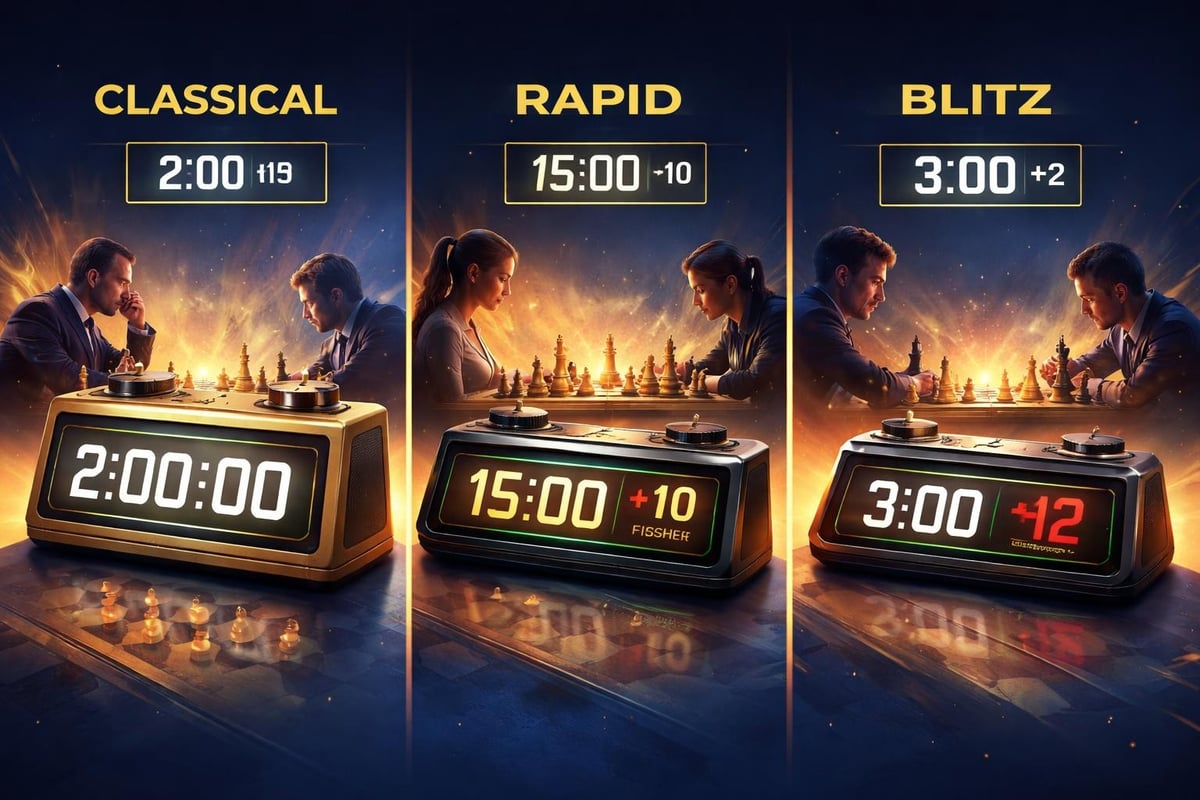
Modern chess timers need to handle various time controls accurately. You'll want something that manages classical games with long sessions, rapid games with increments, and blitz formats where every second matters. The best chess timer offers flexibility across all these formats without complicated button sequences.
When shopping for a chess timer, several essential features separate the exceptional from the merely adequate:
The display matters more than you might think. You'll be glancing at it constantly during games, often in poor lighting or from awkward angles across the board. A crisp, high-contrast display prevents costly mistakes and reduces eye strain during marathon sessions.
For serious tournament players, FIDE approval isn't just a nice-to-have feature. Official FIDE regulations specify which clocks meet international standards, ensuring your practice equipment matches what you'll use in rated competitions.
The DGT 3000 represents the pinnacle of professional chess timing. Available in both standard red and elegant wood finish versions, this model combines championship functionality with stunning aesthetics. Tournament directors worldwide trust it, and for good reason.
| Model | FIDE Status | Key Features | Best For |
|---|---|---|---|
| DGT 3000 | Approved | 25 time settings, connectivity | Championship play |
| DGT 2500 | Approved | Enhanced display, 5 memory slots | Tournament players |
| DGT 2010 | Official | Simple operation, reliable | Club competition |
| DGT 1002 | Entry-level | Bonus timer, affordable | Home practice |
The DGT 2500 strikes an excellent balance between professional features and user-friendliness. Its enhanced display offers better visibility than older models, while the memory function lets you save favourite time controls for quick access. This makes it the best chess timer for players moving from casual to competitive chess.
Meanwhile, the DGT 2010 maintains its reputation as a workhorse. Released years ago, it's proven itself in countless tournaments. The straightforward interface means you won't fumble with settings when nerves are high. It's also notably more affordable than newer models whilst still carrying FIDE's official approval.
Not everyone needs championship-grade equipment, and that's perfectly fine. For club players, home practice, and casual competitive games, several excellent options deliver reliable performance without the premium price tag.
The DGT 1001 series offers two colour options - black and white - with clean aesthetics and straightforward operation. These timers handle the essential time controls beautifully whilst remaining budget-friendly. They're particularly popular with scholastic chess programs and home players building their first serious chess setup.
Even in affordable models, certain features dramatically improve the experience:
The DGT 1002 Bonus Timer adds increment functionality at an entry-level price point. This makes it arguably the best chess timer for players transitioning from casual games to time-controlled practice. The bonus (increment) feature prevents the frantic scramble of sudden-death time controls whilst maintaining pressure and pace.
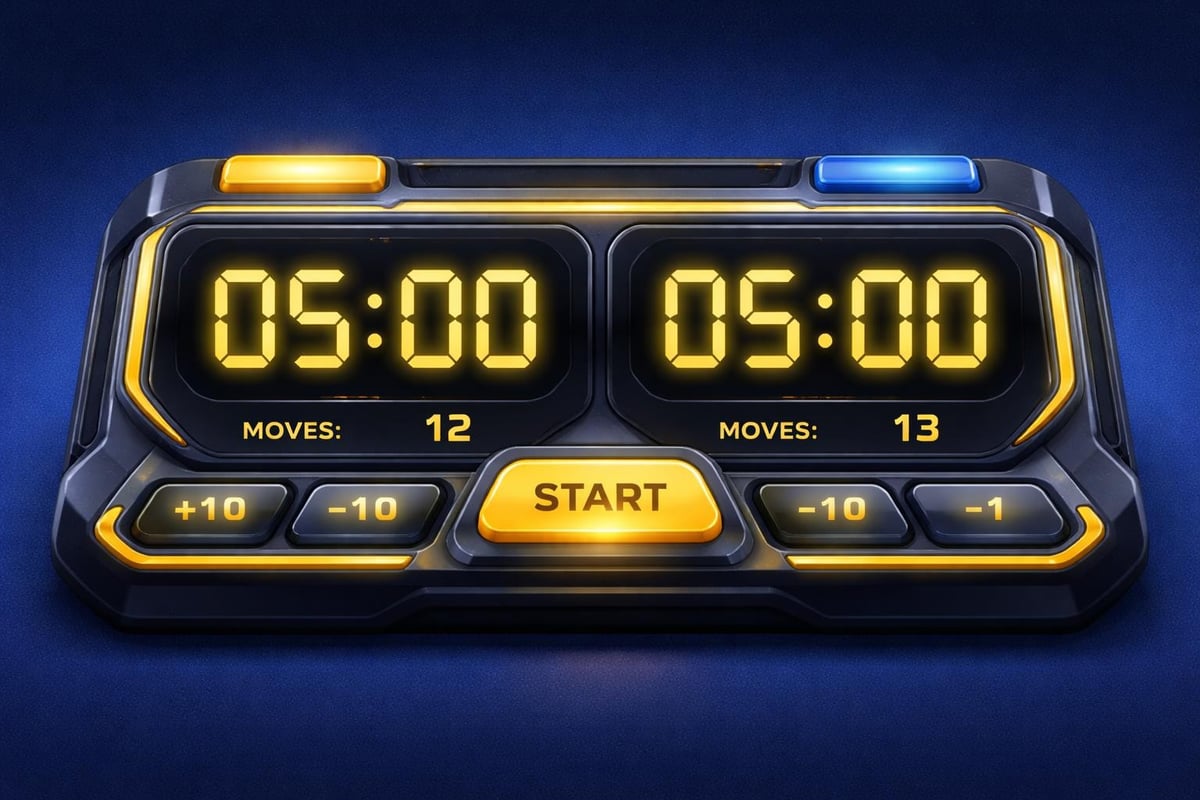
While digital timers dominate modern tournament play, mechanical analog clocks retain devoted fans. The satisfying click of a mechanical clock, the visual drama of falling flags, and the absence of batteries create unique appeal.
However, for practical purposes in 2026, digital is almost always the better choice. Here's why:
Digital Advantages:
Analog Strengths:
For tournament play governed by standard chess tournament regulations, digital timers have become essential. The flexibility to handle modern time controls makes analog clocks impractical for serious competition, though they remain wonderful display pieces and conversation starters.
The latest generation of chess timers includes connectivity features that seemed like science fiction a decade ago. The DGT 3000's advanced capabilities include compatibility with electronic boards, enabling automatic game recording and online broadcasting.
This connectivity transforms how we experience chess. Imagine playing a serious game whilst software automatically records every move, calculates time usage patterns, and creates a complete game record for later analysis. For content creators and serious students of the game, these features justify the premium investment.
Electronic boards like the DGT Pegasus and DGT Centaur connect seamlessly with compatible timers. This integration creates an ecosystem where your over-the-board games automatically sync with chess databases and analysis engines.
The connectivity also enables remote play on physical boards. You can play against opponents worldwide whilst maintaining the tactile pleasure of moving real pieces on a real board - the timer coordinates everything perfectly.
If you're organizing events or managing a chess club, your requirements differ significantly from individual players. Reliability becomes paramount when you're responsible for multiple simultaneous games.
FIDE's clock selection criteria offers insight into what professional arbiters prioritize. Consistency across devices matters enormously. When running a tournament, you want identical timers behaving identically, eliminating disputes about equipment performance.
Bulk purchasing considerations include:
Many tournament directors consider the DGT 2010 the best chess timer for club use due to its proven reliability and continued availability. Stocking spares and replacements remains straightforward even years after purchase.
A quality chess timer represents an investment that should serve you for decades. Proper care extends lifespan dramatically whilst maintaining accuracy and reliability.
Essential maintenance practices:
Battery choice matters more than most people realize. Quality alkaline batteries provide reliable power and consistent voltage. Rechargeable batteries work but require monitoring as their voltage characteristics differ. Some timers perform poorly with rechargeables, so check manufacturer recommendations.
Regular cleaning prevents button failures. The microscopic dust and oil from fingers accumulates over time, eventually causing sticky or unresponsive buttons. A slightly damp cloth on the case and occasional contact cleaner application keeps everything functioning smoothly.
Choosing the best chess timer depends entirely on your specific situation. A scholastic chess coach needs different features than a tournament player, who wants different things than a casual home enthusiast.
For serious competitive players, FIDE approval isn't negotiable. The DGT 2500 offers the sweet spot of championship features with excellent usability, making it our top recommendation for players regularly competing in rated tournaments.
Club players and home enthusiasts find tremendous value in the DGT 1002 Bonus Timer. It delivers essential tournament functionality without premium pricing, making it accessible whilst maintaining quality standards.
| Player Type | Recommended Timer | Priority Features |
|---|---|---|
| Tournament Competitor | DGT 2500/3000 | FIDE approval, reliability |
| Club Player | DGT 2010/1002 | Versatility, value |
| Scholastic Programs | DGT 1001 series | Durability, simplicity |
| Collectors | DGT 3000 Wood | Aesthetics, prestige |
| Home Practice | DGT 1002 | Affordability, features |
Remember that the best chess timer for you might not be the most expensive or feature-rich option. Consider how you'll actually use it, what time controls you typically play, and whether tournament legality matters for your chess activities.
Many players in 2026 split time between online platforms and over-the-board play. This creates unique timing considerations. Online platforms handle timing automatically, but practicing with a physical timer develops different skills and muscle memory.
Using a physical timer during online games might seem redundant, but it provides valuable benefits. The physical act of pressing the clock reinforces good time management habits. It also simulates tournament conditions more accurately than purely digital play.
Some players use timers creatively during online training. Setting independent time limits for specific opening study, tactical puzzles, or endgame practice imposes helpful discipline. This structured approach often proves more effective than open-ended study sessions.
Price spans a wide range in chess timers, from budget models under fifty dollars to premium equipment exceeding several hundred. Understanding this spectrum helps avoid both overspending and false economy.
The cheapest timers sacrifice reliability and features that become frustrating quickly. Spending slightly more for established brands like DGT provides dramatically better long-term value. These timers last decades rather than years, justifying the initial investment through longevity alone.
However, diminishing returns appear at the high end. Unless you need specific professional features like electronic board connectivity or broadcast capabilities, mid-range timers serve perfectly well. The DGT 2010 proves this point - despite being an older design, it remains entirely adequate for serious competitive play.
Cost-benefit analysis:
Consider total cost of ownership rather than just purchase price. A timer requiring frequent battery changes or replacement after a few years ultimately costs more than quality equipment with longer lifespan and better energy efficiency.
Modern chess timers serve multiple purposes beyond simply tracking game time. Many players use them for structured training sessions, time management practice, and even non-chess activities like debates or cooking.
The versatility of programmable time controls enables creative applications. Setting asymmetric time allocations creates interesting training scenarios. Giving yourself less time against weaker opponents or computer engines simulates tournament pressure whilst maintaining challenge.
Some coaches use timers to structure lesson segments, ensuring balanced coverage of openings, tactics, strategy, and endgames. The disciplined time allocation prevents lessons from wandering into unproductive tangents.
Whether you're preparing for your first tournament or upgrading decades-old equipment, choosing the best chess timer enhances every aspect of your chess experience. The right timer brings consistency to your practice, confidence to your competition, and precision to every game. At Sterling Chess, we stock a carefully curated selection of professional chess timers from DGT, all chosen for their quality, reliability, and value. Our team of chess specialists is here to help you select the perfect timer for your playing style and competitive goals, ensuring you're equipped with tools worthy of the beautiful game we all love.
Leave a comment