

Call Us:
(03) 7037 0931
M-F 9am to 5pm

Ever wondered how long a chess game really lasts, and how timing can make or break your strategy? You might be surprised to learn that the average chess game duration can range from just a few minutes in blitz to several hours in classical matches.
In this guide, we'll explore everything you need to know about chess game duration, from the different time controls to the latest trends shaping the chess world in 2026.
You'll discover practical tips for managing your clock, find out what affects how long a game takes, and get answers to common timing questions. Ready to sharpen your skills and play smarter? Read on for expert insights that can give you a real edge.
Ever wondered why some chess games fly by in minutes, while others seem to last forever? The answer lies in chess time controls. These rules set the pace for every match, shaping not only how long you’ll sit at the board but also your entire approach to strategy and tactics. Understanding chess game duration starts here, with the basics of time management in chess.
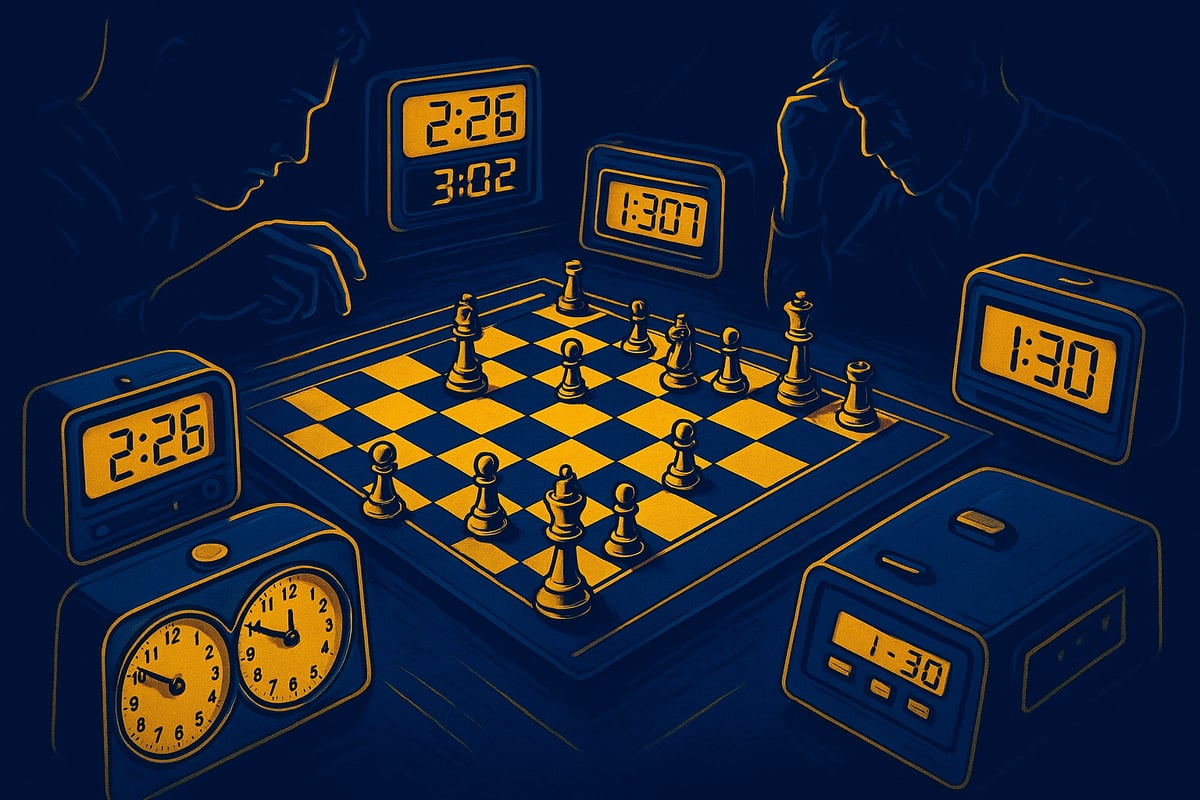
Chess time controls are the rules that decide how much time each player gets to make all their moves. They’re like the shot clock in basketball or the timer on a quiz show, keeping the action moving and making sure nobody stalls.
There are five main types you’ll see:
The chosen time control sets the stage for chess game duration, forcing players to adapt their thinking speed and risk level.
Let’s break down how these formats stack up for chess game duration:
| Format | Typical Time per Player | Average Game Length | Style of Play | Example Event |
|---|---|---|---|---|
| Bullet | <3 minutes | 2-4 minutes | Ultra-fast, tactical | Online Bullet Arenas |
| Blitz | 3-10 minutes | 6-20 minutes | Fast-paced, aggressive | FIDE World Blitz Championship |
| Rapid | 10-60 minutes | 20-80 minutes | Balanced, flexible | FIDE Rapid Championships |
| Classical | 60+ minutes | 2-6 hours | Deep, strategic | Major OTB Tournaments |
| Correspondence | Days/weeks | Weeks/months | Highly analytical | ICCF Online Events |
As you can see, chess game duration can swing from a few heartbeats to a full afternoon depending on your chosen format.
Online chess has exploded in popularity, and with it, the way we experience chess game duration has changed. Sites like Chess.com and Lichess offer a dizzying range of time controls, with blitz and bullet leading the pack for sheer volume of games played.
According to Chess.com Time Control Statistics, blitz and rapid games are the most popular formats, especially among younger players and streamers. Over-the-board (OTB) tournaments, meanwhile, usually stick to classical or rapid time controls, valuing deep calculation and endurance.
The platform you choose can really shape your chess game duration. Online play is often faster, thanks to instant move registration, no need for physical clock pressing, and a global pool of players always ready for a quick match.
Modern chess clocks often use increments or delays to refine chess game duration. An increment gives you a few extra seconds after each move, so you’re less likely to lose on time in a complex endgame. Delays create a buffer before your clock starts ticking down, which can ease time pressure during intense moments.
Both settings are designed to make games fairer and more exciting. They encourage players to keep thinking, even when the seconds are slipping away. Whether you’re playing online or OTB, understanding these features will help you manage your chess game duration more confidently.
Ever noticed how the same chess board can lead to games that last just minutes, or stretch on for hours? That’s because chess game duration is influenced by a whole bunch of factors, from who’s playing to how they play. Let’s break down what really shapes how long a chess game lasts.
The skill level of players has a massive impact on chess game duration. Grandmasters often play at a brisk pace, especially in familiar positions, but their games can still last longer due to deep calculation and complex endgames. Amateurs, meanwhile, might play faster in the opening but slow down when things get tricky.
Aggressive players tend to seek quick attacks, which can lead to shorter games if the attack works or fails early. Defensive players, on the other hand, might stretch out the battle, looking for small advantages over many moves.
Here’s a quick table to compare:
| Player Type | Typical Game Duration | Style Impact |
|---|---|---|
| Grandmaster | Longer | Deep calculation |
| Amateur | Shorter or variable | Blunders, quick moves |
| Aggressive | Shorter | Risk, fast attacks |
| Defensive | Longer | Slow, careful play |
In professional matches, the average move count is often above 40, while club games might wrap up in 30 moves or less. All these differences add up to big swings in chess game duration.
The environment where you play also changes chess game duration. In tournaments, strict rules define minimum and maximum game lengths, and chess clocks are always in play. Players must manage their time carefully to avoid losing on the clock.
Casual games at home or online are often more relaxed. Some people skip using clocks altogether, while others use quick time controls for fun. In formal events, like recent FIDE tournaments, players have to stick to official time controls which can make games last several hours.
Tournament settings encourage slower, more careful play, while casual matches can be over before you finish your coffee. Whether you’re playing for a trophy or just for bragging rights, the setting matters for chess game duration.
Believe it or not, how you start your game plays a big role in chess game duration. Sharp openings, packed with tactics, can lead to quick wins or losses if someone slips up. Solid, strategic openings usually set the stage for longer, more methodical battles.
The depth of opening theory also matters. If both players know the first 15 moves by heart, the game might speed along until the real fight begins. But if you’re both in uncharted territory, expect things to slow down as you figure out your next steps.
For more on how your opening can shape the entire flow of play, check out this guide on chess game opening strategies.
Nothing changes chess game duration quite like the ticking of the clock. As time runs low, even top players can get nervous. This is called time trouble, and it often leads to rushed decisions and unexpected blunders.
When the pressure’s on, mistakes stack up fast. Players might miss simple tactics, overlook mate threats, or even forget their own plans. Some thrive under pressure, while others struggle to keep their cool.
Staying calm and focused is key. The mind works differently when you’re racing the clock, and that stress is a big reason why chess game duration can swing so wildly, especially in faster formats.
Ever sat down for a quick chess match, only to find yourself still playing half an hour later? Or maybe you’ve blitzed through a game in under two minutes? The truth is, chess game duration can swing wildly depending on the format you pick. Let’s break down the main types, so you’ll know exactly what to expect no matter how you play.
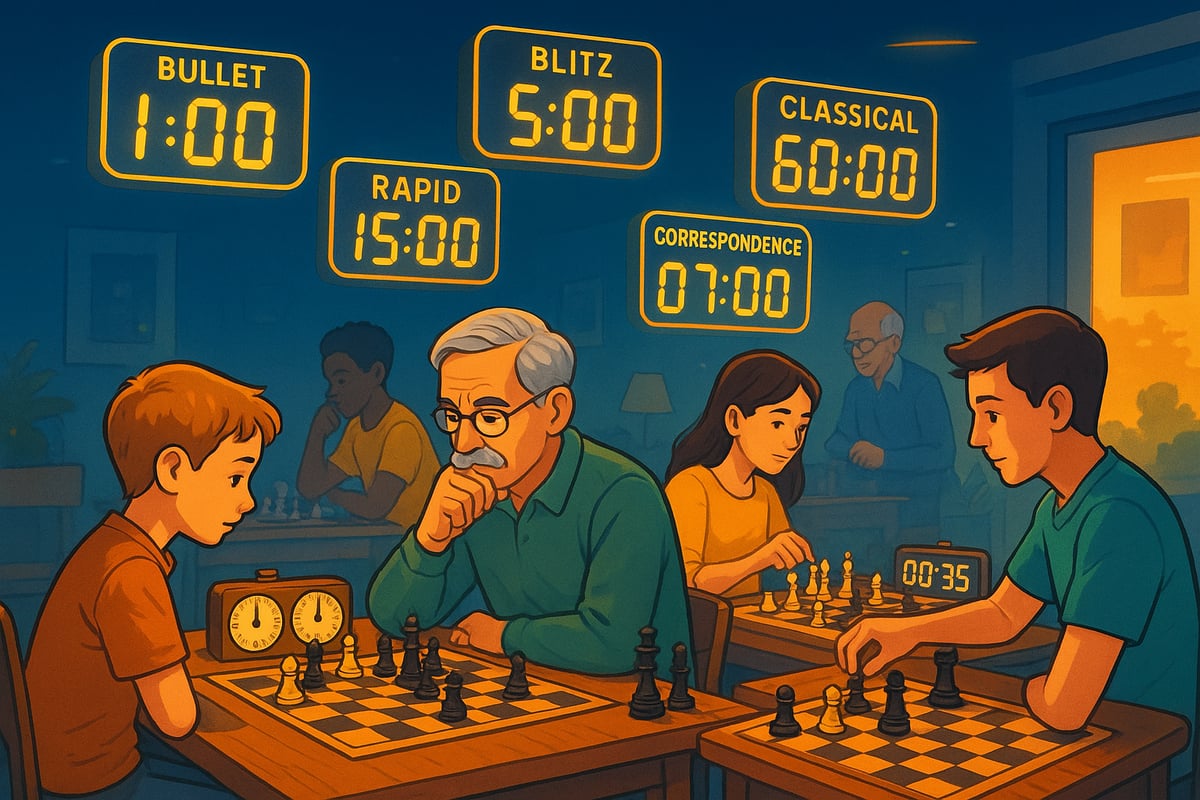
When it comes to lightning-fast chess, bullet and blitz take the crown. Bullet games are the real adrenaline rush, with each player getting less than three minutes for all their moves. Blitz slows things down just a tad, offering three to ten minutes per side.
Here’s what you can expect:
Success in these formats comes down to fast thinking and simple tactics. There’s little time to ponder, so instinct and a strong opening repertoire pay off. For many online players, this is the go-to for quick fun and a fast chess game duration.
Rapid chess fills the gap between blitz and classical. Each player gets anywhere from ten to sixty minutes. That means games can last from twenty minutes up to two hours, depending on the specific time control and whether increments are used.
Key features of rapid play:
Players often use rapid formats for practice or when they want a serious contest without the marathon of classical chess. Chess game duration here is ideal for those wanting a balance between speed and depth.
Classical chess is the format most people picture when they think of high-level tournaments. Time controls typically range from 60 minutes per player up to two hours, often with a 30-second increment per move. Games can stretch out to four, five, or even six hours in some cases.
Here’s a quick table to compare formats:
| Format | Typical Time per Player | Total Game Time | Average Moves |
|---|---|---|---|
| Bullet | <3 min | 2–5 min | 30–40 |
| Blitz | 3–10 min | 6–20 min | 40–45 |
| Rapid | 10–60 min | 20–120 min | 40–60 |
| Classical | 60+ min | 2–6 hours | 40–80 |
| Correspondence | Days–weeks | Varies (weeks) | 40–100+ |
In classical games, players have the luxury (and challenge) of deep calculation. The chess game duration here is shaped by both time controls and the level of competition. If you’re keen to dive deeper, the Classical chess time controls post breaks down the specific rules and setups used in major events.
Correspondence chess is a different beast entirely. Instead of minutes, players have days, sometimes even weeks, to make each move. In the digital age, most correspondence games happen online, but the spirit remains unchanged.
The chess game duration in correspondence play is by far the longest. It’s all about patience, planning, and enjoying the journey rather than the finish line.
Finally, let’s talk about the differences between online and OTB chess. Online platforms like Chess.com and Lichess have made shorter formats hugely popular, with millions of games played daily. Online games tend to be quicker overall, partly thanks to easier access, instant pairing, and no need to physically move pieces.
OTB chess, especially at the tournament level, often uses longer time controls, leading to longer chess game duration. There’s also the added pressure of playing face-to-face, which can affect pacing and decision-making. Anti-cheating measures, digital clocks, and tournament rules all play a role in shaping how long games last in each setting.
Regardless of where you play, understanding the expected chess game duration for your chosen format helps you prepare, manage your time, and enjoy every move.
Ever get caught out by the clock, wondering how to handle the pressure of chess game duration? You're not alone. Managing your chess time is a skill that can seriously boost your results, no matter what format you play. Let's break down six practical steps you can use to stay cool, play smart, and make every second count.
Before you sit down for a game, take a moment to check the time control. Different formats have a huge impact on chess game duration, from lightning-fast blitz to marathon classical matches. Knowing what you're up against helps you pace yourself, avoid nasty surprises, and pick the right strategies.
If you're playing online, double-check the settings for increments or delays. In over-the-board events, read the tournament rules carefully. Understanding your time control is the first step to making the most of your chess game duration.
Having a solid set of openings ready can shave precious minutes off your chess game duration. If you know your first few moves by heart, you'll save time for the critical moments later on. This is especially important in blitz and rapid formats, where every second counts.
Pick openings that suit your pace. If you're comfortable with sharp lines, go for it. Prefer solid, slow-building positions? That's fine too. The key is choosing openings you know well, so you don't burn through your chess game duration on move five.
Good time management is like having an extra piece on the board. Try using tricks like the "two-minute drill" where you practice making decisions quickly, or batching your moves for simple positions. These habits can dramatically improve your chess game duration management.
Train with different settings, like increment or no increment, to get comfortable in all scenarios. The more you practice under varied conditions, the less likely you'll panic when the clock starts ticking in a real game of chess game duration.
It's easy to freeze up when your chess game duration is running out. But panicking leads to mistakes and missed chances. Keep your cool with simple breathing exercises or a quick mental reset. Remind yourself that even the pros face time trouble sometimes.
Look up famous time-trouble saves for inspiration. Knowing that others have pulled off miracles in the final seconds makes it easier to trust your instincts and play your best, no matter what your chess game duration looks like.
Embrace digital tools to track and manage your chess game duration. Online platforms offer built-in clocks, and you can review your games to spot time-wasting habits. If you play in person, investing in a reliable chess clock makes a world of difference. Check out the Best chess clocks for timing to find a model that suits your style.
Analyse your games for time patterns. Are you spending too long in the opening? Rushing the endgame? Learning from your own data is one of the fastest ways to master chess game duration.
Top players like Magnus Carlsen and Hikaru Nakamura are masters at squeezing the most from their chess game duration. Watch how they manage their clocks in tense situations, and try to pick up their habits. Many grandmasters share their strategies in interviews and streams, so there's plenty of insight to be found.
Case studies from recent tournaments reveal that even elite players make adjustments based on their time control. By learning from the best, you can adapt your own approach and get the edge in your next chess game duration battle.
Ever feel like chess is speeding up? You’re not alone. The world of chess game duration is changing fast, shaped by tech, player habits, and new tournament rules. Let’s dive into what’s hot for 2026.
Fast chess is everywhere right now. Blitz and bullet formats are stealing the spotlight, especially on streaming platforms like Twitch and YouTube. In 2026, more players are jumping into games that finish in minutes, not hours.
Participation rates for blitz and bullet have skyrocketed. Data from major sites shows that over 65% of online games now use these quick formats. This shift is making chess game duration shorter and more intense, with players loving the adrenaline rush.
Shorter games mean sharper tactics and more surprises. For many, the thrill of making rapid decisions is what keeps them coming back for more.
Major chess tournaments aren’t stuck in the past. Organisers are shaking things up with hybrid time controls and new, exciting formats. Events like Armageddon and Fischer Random are now part of the mainstream.
For instance, the FIDE World Cup 2025-2026 Regulations outline several innovative time controls, blending classical and rapid phases. This has a big impact on chess game duration, creating matches that are both unpredictable and strategic.
Hybrid formats are designed to keep players on their toes and audiences engaged. It’s a win-win for everyone involved.
Tech is changing how we play and watch chess. Digital boards, smart clocks, and AI-driven analysis are speeding up the game. Online platforms can now automatically flag slow play, which keeps chess game duration within expected limits.
AI tools help players prep and analyse games faster than ever. With instant feedback, players can spot time trouble patterns and adjust their strategy on the fly.
Even over-the-board events are adopting digital solutions, making sure that matches flow smoothly and delays are kept to a minimum.
Who’s playing determines how long games last. Surveys in 2026 show that younger players prefer faster formats, while older players still enjoy classic, slower games. Mobile chess apps have made it super easy to play quick matches on the go, which further shortens chess game duration for casual players.
Age, experience, and lifestyle all play a part. The flexibility of online platforms lets everyone find a format that fits their schedule, whether it’s a five-minute blitz or a deep, hour-long battle.
These trends are shaping the chess scene, making it more diverse and accessible than ever.
2025 and 2026 have been big years for new ideas in chess. Tournament organisers are rolling out fresh time controls and testing experimental formats at major events. Some of these changes are inspired by data, like the insights found in FICS 2025 Game Statistics, which highlight how player behaviour is evolving.
These innovations are changing chess game duration in real time. Spectators and players alike are loving the variety and unpredictability that comes with new formats.
As the chess world keeps evolving, expect even more surprises in how games are timed and played.
Ever found yourself wondering how long a chess game might last, or what really impacts chess game duration? You’re not alone. Here are answers to the most common timing questions, so you can play smarter and make the clock your friend.
Chess game duration varies a lot depending on the format. Bullet games are lightning-fast, often wrapping up in less than 3 minutes. Blitz games usually last 3 to 10 minutes. Rapid games fall in the 10 to 60 minute range, while classical games can stretch well over an hour. Online platforms like Chess.com and Lichess show most casual games last between 5 and 15 minutes. Over-the-board games, especially in tournaments, tend to run longer due to stricter time controls and more thoughtful play.
If you’re curious about other timing questions, check out these Frequently asked chess questions for more info.
Time controls shape your approach and can change your chess game duration drastically. In blitz or bullet, you’ve got to think on your feet, rely on instinct, and avoid deep calculations. In classical, players have the luxury to analyse, plan, and avoid mistakes. Many players switch up their strategies based on the clock, choosing simpler plans when time is short. If you’re playing rapid or classical, you can take calculated risks, while blitz demands quick, practical moves. The clock isn’t just a tool, it’s a powerful strategic weapon.
The record for the longest chess game ever belongs to Nikolić–Arsović, Belgrade 1989, clocking in at a whopping 269 moves and lasting over 20 hours across multiple sessions. This marathon set the benchmark for extreme chess game duration. Other notable games have approached this mark, but none have yet surpassed it. If you love trivia, you can find more fascinating details in the Longest Chess Game Records.
Increments and delays are extra time features that directly impact chess game duration. An increment adds a set number of seconds (like +2 or +10) to your clock after every move. A delay, on the other hand, pauses your clock for a few seconds before counting down. Both options help prevent players from losing on time in dead-even positions, and they encourage more accurate play in time scrambles. Most online games use increments, while delays are common in some over-the-board tournaments.
A chess game duration can end with a draw if the player whose time runs out is not checkmated or doesn’t have enough material to checkmate. According to FIDE rules, if you run out of time but your opponent cannot possibly mate you with any series of legal moves, the game is declared a draw. However, if your opponent has enough mating material and your time expires, you lose. This rule keeps things fair and prevents technical wins when checkmate isn’t possible.
Pros take chess game duration seriously and tailor their training to the clock. For blitz and bullet, they work on fast calculation, pattern recognition, and opening traps to save time. For classical formats, they focus on deep analysis, endgame studies, and long-term planning. Many grandmasters practise with digital clocks and even simulate time pressure situations. Training for rapid and blitz often involves playing lots of short games to build intuition and get comfortable with the pace.
Improving your chess game duration skills is easier than ever thanks to modern tools. Digital chess clocks let you practise different time controls at home. Online platforms like Chess.com and Lichess provide detailed stats on your average move time and time usage patterns. Apps like ChessClock and various training programs also help you spot where you’re losing precious seconds. Analysing your games with these tools can highlight habits and help you manage your clock better.
Chess game duration has shifted a lot in the digital age. Blitz and bullet have exploded in popularity, especially online, where fast games fit busy schedules. Tournaments now experiment with hybrid and rapid time controls, making chess more accessible and viewer-friendly. The rise of streaming and mobile apps means more people play quick games on the go. Even classical tournaments have shortened time limits to keep things exciting for both players and fans.
Leave a comment