

Call Us:
(03) 7037 0931
M-F 9am to 5pm

Ever found yourself second-guessing which way the chessboard goes, or where each piece belongs before a match? Whether you’re brand new or just want a refresher for 2026, getting the chess game pieces set up right is the first step to playing with confidence.
This guide is your all-in-one manual for mastering the art of chess game pieces set up. Why does it matter? A correct setup is the foundation for every epic battle and clever strategy you’ll play out.
Here’s what you’ll find inside: a deep dive on the chessboard’s layout, how to spot and place every piece, a step-by-step setup walkthrough, tips to dodge common mistakes, advanced setup moves for serious players, and advice for keeping your set in top shape.
Ready to level up your chess game pieces set up and start every game strong? Let’s jump in and make sure you never miss a beat at the board.
Setting up your chessboard is the first step to a successful chess game pieces set up. Whether you’re just starting out or dusting off your skills for 2026, knowing the board’s layout is essential. Get this right, and you’ll build a strong foundation for every match. Let’s break down the details so you’re never second-guessing your board again.
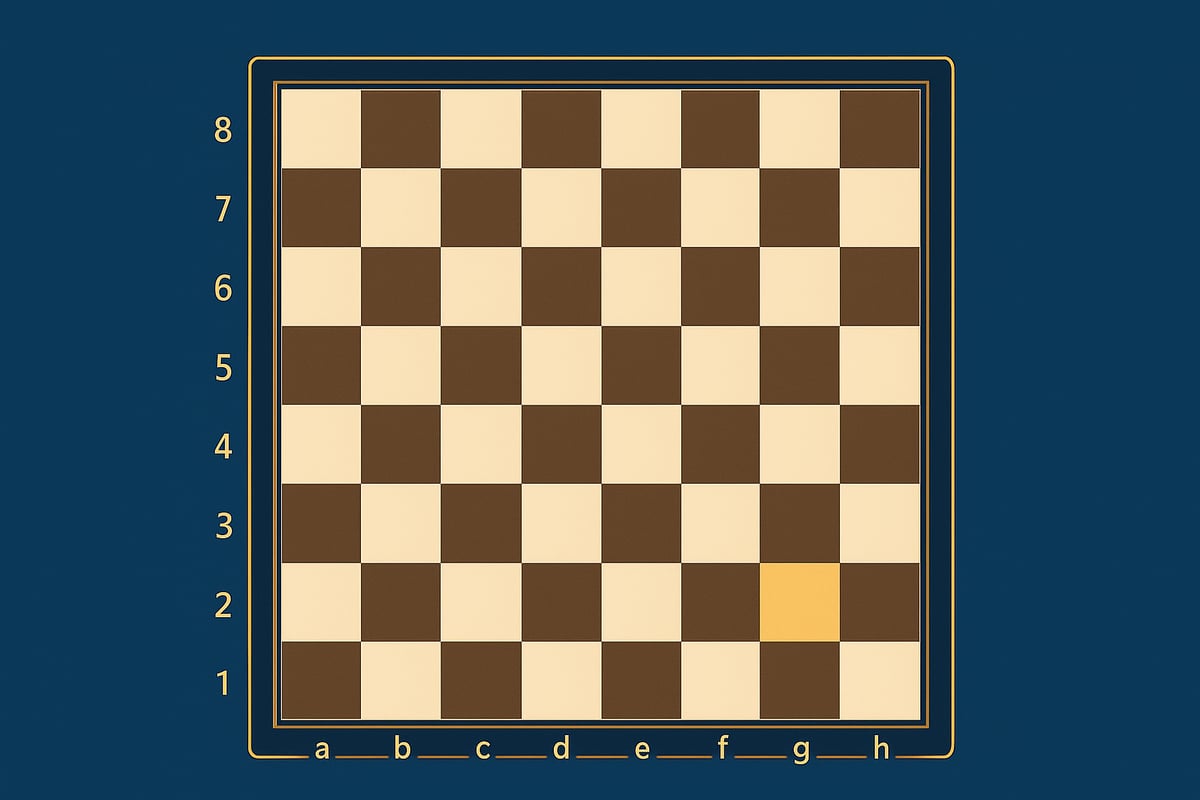
A classic chessboard has 64 squares, arranged in an 8x8 grid. Each square alternates between light and dark colours, making it easy to spot patterns and plan your moves. The board should measure the same length on each side, so it’s always a perfect square.
If you’re using a tournament board, the squares are usually between 50–60mm on each side. This sizing helps keep things comfortable and ensures the board doesn’t feel cramped or too spread out. For official guidelines on dimensions and proportions, check out the FIDE Standards for Chess Equipment.
A proper chess game pieces set up starts here, with the right board size and square arrangement. This consistency makes switching between boards at clubs or tournaments feel seamless.
Have you ever wondered which way to face the board? Here’s the golden rule: the bottom-right square must always be light for both players. This tiny detail is crucial for a correct chess game pieces set up. Stand behind your side and check — if the square in the bottom-right corner isn’t light, simply rotate the board.
For White, the first rank (closest to you) runs from a1 (left) to h1 (right), while for Black, it’s a8 to h8. This orientation ensures both sides are mirrored, making piece placement easy and accurate.
A simple mistake like flipping the board can cause confusion and even lead to disputes in clubs or tournaments. Always double-check before you start placing pieces. A correctly oriented board is the first step toward a confident chess game pieces set up.
Chess notation might look confusing at first, but it’s actually pretty straightforward. The vertical columns are called files, labelled from a to h (left to right from White’s perspective). The horizontal rows are ranks, numbered 1 to 8 (bottom to top).
Here’s a quick reference table:
| File | a | b | c | d | e | f | g | h |
|---|---|---|---|---|---|---|---|---|
| Rank | 1 | 2 | 3 | 4 | 5 | 6 | 7 | 8 |
This labelling helps with accurate chess game pieces set up and makes it easy to record moves during play. If you want to follow grandmaster games or participate in tournaments, getting comfortable with notation is a must.
Consistent chess game pieces set up matters for every level of play. In tournaments, incorrect setup can cost you points or even a match. Clubs and online communities also expect everyone to follow the same setup rules for fairness.
FIDE tournament regulations always require the same orientation, and digital chess tools often highlight the bottom-right square to guide you. Common mistakes include placing the board sideways or mixing up files and ranks. To avoid this, use a pre-game checklist or digital setup aid.
A well-set board means you’ll never lose a game before it even starts. Make double-checking your chess game pieces set up a habit, and you’ll always be ready for action.
Setting up your chess game pieces set up the right way is the first step to playing a proper match. Before you move a single pawn, it's key to know what each piece does, where it belongs, and why each spot matters.
This section will break down the six chess game pieces set up types, show you how to recognise them in any set, and guide you through placing them perfectly for your next game.
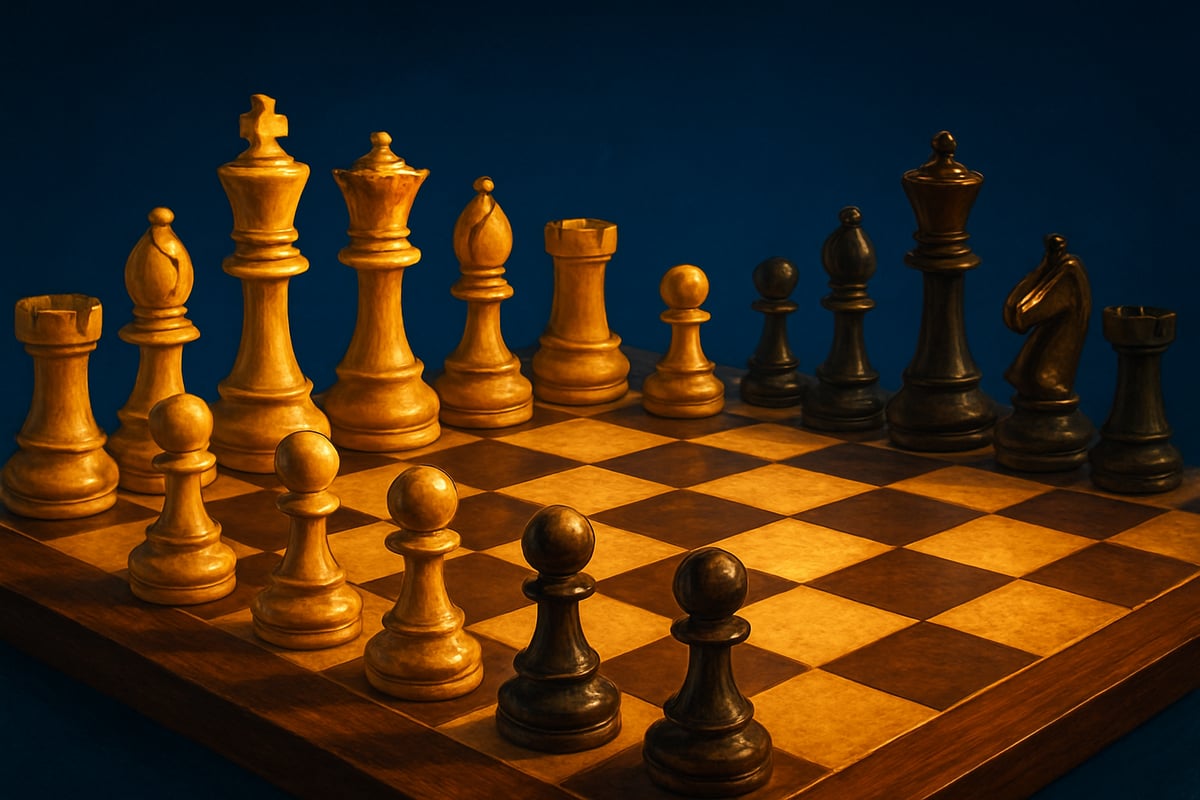
Every chess game pieces set up starts with six unique types: king, queen, rook, bishop, knight, and pawn.
Let’s take a quick look at what each one does and why it matters:
| Piece | Moves | Value | Starting Squares (White/Black) |
|---|---|---|---|
| King | One square any way | ∞ | e1 / e8 |
| Queen | Any direction, any | 9 | d1 / d8 |
| Rook | Straight lines | 5 | a1, h1 / a8, h8 |
| Bishop | Diagonals | 3 | c1, f1 / c8, f8 |
| Knight | L-shape | 3 | b1, g1 / b8, g8 |
| Pawn | Forward (1 or 2) | 1 | a2-h2 / a7-h7 |
The king is your most important piece. Lose it, and the game is over. The queen is the most powerful, zooming across the board in any direction. Rooks control open lines, bishops cut through diagonals, knights hop in L-shapes (great for tricky attacks), and pawns are your frontline, ready to promote or defend.
In opening theory, knowing your chess game pieces set up helps you control the centre and develop smoothly. For example, bishops and knights usually come out first, while rooks often stay put until castling.
Not all chess game pieces set up look the same. While the classic Staunton style is the go-to for tournaments, you’ll find themed sets, digital boards, and modern designs everywhere in 2026.
Here’s how to spot each piece:
If you’re missing a piece, use a similar size and shape from another set or find a replacement. For collectors, some 2026 chess game pieces set up feature eco-friendly materials, weighted bases, or even tactile marks for accessibility.
Design can affect gameplay clarity, especially online or in themed sets. For more on unique designs and luxury options, check out the Luxury Chess Set Australia guide.
Making sure you can quickly recognise every piece in your chess game pieces set up is key to avoiding confusion and mistakes mid-match.
Getting your chess game pieces set up in the right starting position is easier than you think. Start with the rooks in each corner, then put the knights next to them, followed by the bishops. The queen goes on her own colour (white queen on white, black queen on black), and the king fills the last spot.
Here’s a quick mnemonic: “Rooks, Knights, Bishops, Queen, King” from the outside in. Pawns fill the second rank for each player.
A quick checklist for your chess game pieces set up:
Using the official FIDE setup diagram can help you avoid beginner mistakes. Getting this right sets the foundation for good opening strategy, as your pieces will be ready to jump into action from the very first move.
Setting up your chess game pieces set up the right way is the first step to a great game. Even pros know how a rushed setup can throw you off. So, let's break down every step so you can set up like a champ, whether you're at home, in a club, or gearing up for a big tournament.
Before you even touch a pawn, take a moment to get your chess game pieces set up right from the start. A clean, organised board isn’t just for looks—it helps you focus and prevents confusion.
Start with a quick pre-game checklist:
- Wipe down the board and pieces (no dust, no stickiness)
- Check all pieces are present: 16 per side (king, queen, 2 rooks, 2 knights, 2 bishops, 8 pawns)
- Inspect for chips or broken parts
- Place the board so the bottom-right square is light
Missing or damaged pieces? Think about having spares or replacements handy, especially if you’re playing regularly. This bit of care sets the tone for every chess game pieces set up, and you’ll notice how much smoother your matches go.
In clubs and tournaments, organisers often use a similar checklist. It avoids last-minute scrambles and helps everyone get in the zone.
Now, let's get those big pieces in place. The corners are home to your rooks. For white, pop them on a1 and h1. For black, they go on a8 and h8. Easy, right?
Next up, knights. Place them right beside each rook. So, white's knights land on b1 and g1, black's on b8 and g8. Knights are often mixed up with bishops, so double-check their unique shape—horses on the move.
Bishops fill the spots next to the knights. For white, that's c1 and f1. For black, c8 and f8. Here’s a quick table to help you visualise the back rank setup:
| Square | White Piece | Black Piece |
|---|---|---|
| a1/a8 | Rook | Rook |
| b1/b8 | Knight | Knight |
| c1/c8 | Bishop | Bishop |
| d1/d8 | Queen/King | Queen/King |
| e1/e8 | King/Queen | King/Queen |
| f1/f8 | Bishop | Bishop |
| g1/g8 | Knight | Knight |
| h1/h8 | Rook | Rook |
A handy tip: set up the corners first, then work your way in. This pattern makes your chess game pieces set up fast and foolproof. Visual memory tricks, like picturing knights galloping out from the corners, can help cement this layout in your mind.
Now for the stars of the show. The queen always goes on her own colour. For white, she stands on d1 (a white square), and for black, on d8 (a black square). The king then takes the remaining central square—e1 for white, e8 for black.
People often mix these two up, which can throw off the whole chess game pieces set up. To remember, try the phrase: "Queen on her own colour." Double-check by saying it out loud before you start.
Common mix-ups happen even at tournaments, so don’t rush. After placing the queen, place the king right next to her. Here’s a quick rhyme: "Queen wears her own shoes, the king stands beside her." It sounds silly, but it works!
If you’re ever unsure, refer to official diagrams or setup illustrations. Most digital chessboards and club sets follow this exact layout, so it’s always safe to check twice.
Pawns are your front line. Place them on the second rank for each side: white pawns on a2 through h2, black pawns on a7 through h7. This neat row forms the first barrier and sets the stage for your opening moves.
Don’t underestimate the power of a well-placed pawn line. Good pawn structure is a big part of chess game pieces set up and influences your strategy right from the start.
Here’s a quick visual tip: lay out all pawns in a single sweep, starting from the leftmost square to the right. This method not only speeds up the process but also makes it easy to spot any missing pieces.
Getting this part right means your first moves will flow smoothly, giving you a solid foundation for any opening.
You’re almost ready to play. Before that first move, give your chess game pieces set up a final look-over. Use this quick checklist:
- Is the bottom-right square light?
- Are queens on their own colour?
- Are all pawns in the right row?
- Do you have two of each bishop, knight, and rook on each side?
Tournament players always double-check their board before the clock starts. Teaching kids or beginners? Make double-checking a fun habit. It builds confidence and prevents avoidable mistakes.
If you’re unsure or want more troubleshooting tips, check out the Frequently Asked Chess Questions for extra guidance on perfecting your chess game pieces set up.
With this routine, you’ll be ready to play every time—no surprises, just pure focus on the match ahead.
Setting up your chess game pieces set up the right way can feel tricky at first, but it's easier once you know what to watch out for. Let's run through the most common mistakes, why they're a big deal, and how you can dodge them every single time.
Ever set up your chess board and realised something just felt off? You're not alone. The biggest blunders include putting the board the wrong way round, mixing up the queen and king, and swapping the knights and bishops. It happens to beginners and even seasoned players in a hurry.
Here's a quick table showing how often these mistakes pop up:
| Mistake Type | % of Beginner Games (chess.com/lichess.org) |
|---|---|
| Board orientation | 40% |
| Queen/king swap | 35% |
| Knight/bishop mix-up | 20% |
Want a deeper dive into what goes wrong and why? Check out this Common Chess Setup Mistakes guide for more examples and quick fixes.
A wrong chess game pieces set up doesn't just look odd, it can throw off your whole game. Starting with the queen or king in the wrong spot means all your opening strategies go out the window. If your knights and bishops are swapped, you might find yourself making illegal moves or missing out on classic openings.
In club tournaments, one player once started with the board flipped. No one noticed until move ten, and by then, both players were completely confused. It led to a restart and some red faces. Mistakes like these can mess with your confidence and slow down your progress.
You can make your chess game pieces set up foolproof with a few handy tricks. Use mnemonic devices like "queen on her own colour" and double-check the bottom-right square is light. Some apps and digital boards have setup wizards that highlight mistakes before you even start.
Here's a quick checklist:
Teaching kids? Turn setup into a game or a timed challenge. The more you practice, the faster and more accurate you'll get.
Online platforms handle chess game pieces set up automatically, but physical boards are all on you. If you mostly play online, it's easy to forget the basics when you switch to a real board. That's why casual club games often start with a quick setup review.
Some clubs use printed diagrams or digital tools to help everyone get it right. For online play, always double-check your setup when using custom boards or themed sets. No matter where you play, forming a good setup habit will save you time and hassle, making every game smoother.
Getting serious about chess means paying attention to every detail, especially how you handle your chess game pieces set up before the clock starts. Competitive play is all about precision, focus and adaptability. Let’s dive into the key strategies that can help you stay ahead, whether you’re playing in a club, at a national tournament or online.
If you want to set yourself up for tournament success, the first thing to master is regulation compliance. Every official event, from local clubs to world championships, follows strict rules for chess game pieces set up. The board must be oriented so the bottom right square is light, and every piece must be in its exact starting position.
To avoid penalties or disputes, always double-check your setup before play begins. Many players use a mental checklist:
Tournament organisers usually conduct a quick inspection. If you’re unsure, consult the FIDE Laws of Chess 2023, which spell out the official requirements for chess game pieces set up. Following these guidelines ensures you’re eligible to play and that your games are recognised.
Even in casual competitions, sticking to these standards helps build good habits. It also prevents awkward moments where a game needs to be restarted because of a simple setup mistake.
The way you approach your chess game pieces set up can have a big impact on your mental game. Top players often treat setup as a ritual, using the time to settle nerves and focus their minds. Arranging each piece carefully, they visualise opening moves and tune out distractions.
Some grandmasters even have unique habits:
This routine transforms setup from a chore into a moment of preparation. If you’re aiming to improve, try developing your own routine. You’ll find that a mindful chess game pieces set up can boost your confidence and help you start each match with clarity.
No two tournaments are exactly alike, and you’ll often encounter unfamiliar boards or pieces. Being able to quickly manage your chess game pieces set up on a new set is a valuable skill. Travel sets, club boards and digital displays can all feel different at first.
Here are a few tips from seasoned competitors:
With a bit of practice, you’ll adapt to any chess game pieces set up environment, giving you one less thing to worry about when the clock is ticking.
Keeping your chess game pieces set up in top shape helps every match feel special, whether you’re playing at home or heading to a tournament. Let’s chat about the best ways to keep your set looking sharp, lasting longer, and ready for action whenever you are.
If you want your chess game pieces set up to last, regular cleaning is key. Dust and grime can sneak up on wooden, plastic, or metal pieces, making them look dull or even sticky. For wooden pieces, use a soft, dry cloth and avoid water. Every few months, you can use a tiny amount of wood polish, but always check the label first.
Plastic and metal pieces are a bit more forgiving. A damp cloth with mild soap works well, but make sure to dry everything straight away. Never soak your chess pieces, as moisture can cause swelling or rust, especially with wooden sets.
For storage, keep your chess game pieces set up in a dedicated box or bag with soft lining. This stops scratches and helps prevent pieces from getting lost. If you play at a club, you might see members using foam-padded cases or cloth drawstring bags for easy transport and protection.
Here’s a quick comparison of cleaning methods:
| Piece Material | Cleaning Method | Storage Tip |
|---|---|---|
| Wood | Dry cloth, light polish | Padded box or pouch |
| Plastic | Damp cloth, mild soap | Drawstring bag |
| Metal | Damp cloth, dry quickly | Anti-tarnish wrap |
If you’re keen to learn more about caring for wooden boards and pieces, check out the Best Wooden Chess Board Guide for extra tips and tricks.
When you’re moving your chess game pieces set up from place to place, a little planning goes a long way. Start by choosing a sturdy case or bag that fits all your pieces snugly. Foam inserts or molded trays are great for keeping each piece in place and safe from bumps.
If you’re travelling to tournaments, look for cases with secure clasps and handles. Some travel sets even have magnetic boards to stop pieces from sliding around. For casual play at a mate’s house, a simple pouch or zippered bag will do, but make sure it’s padded to avoid chips or scratches.
Always double-check your chess game pieces set up before you pack up. Missing pieces can ruin a game, so count as you put each one away. If your set comes with extra queens or spare pawns, keep them in a separate compartment or pocket to avoid confusion.
Here are a few handy transport tips:
Taking care with transport means your set will always be ready to impress.
Even the best chess game pieces set up can suffer from the odd accident. Maybe a pawn gets lost under the couch, or a rook takes a tumble and chips. Don’t stress, though, because replacing or repairing pieces is easier than you might think.
First, check if your set’s brand offers replacement pieces. Many popular styles, like Staunton, have standard sizes, making it simple to find a match. If you have a unique or vintage set, you might need to get a custom piece made. Some local chess shops offer this service, or you can look online for specialist makers.
For small chips or scratches, a bit of wood filler or superglue can do wonders on wooden or plastic pieces. Just take your time and follow the instructions on the product. If you’re not confident, it’s always best to ask a pro or a handy friend.
When you’re searching for replacements, make sure the new piece matches the size and weight of your original chess game pieces set up. This keeps the board balanced and the gameplay fair. If you’re keen on customisation, you can even order personalised pieces to make your set truly one of a kind.
Your chessboard is just as important as the pieces when it comes to a great chess game pieces set up. To keep it looking its best, clean it regularly with a soft, dry cloth. For wooden boards, a gentle wood cleaner or polish can help maintain the finish, but avoid anything too harsh.
If you own a vinyl or glass board, use a damp cloth and dry it immediately to prevent streaks or water marks. Store your board flat and away from direct sunlight, as heat and light can warp or fade the surface over time.
Accessories like clocks, score sheets, and notation pens also deserve some TLC. Keep clocks in a protective pouch and replace batteries as needed. Store score sheets in a folder to avoid creasing.
If you want more expert advice on board care and picking the right materials, the Best Wooden Chess Board Guide has some handy tips.
With these easy habits, your chess game pieces set up will stay in top condition, making every match smooth and enjoyable.
Leave a comment