

Call Us:
(03) 7037 0931
M-F 9am to 5pm

Ever wondered why chess still fascinates people all over the world? With its rich history and endless possibilities, this classic game never gets old. If you want to level up your skills, it’s crucial to understand the pieces on a chess board and how each one shapes the action.
In this guide, we’re breaking down the eight essential pieces on a chess board, explaining what they do, how they move, and why they matter in modern play. Ready to discover the secrets behind each piece? Let’s dive in and get your chess journey started.
Chess begins with a simple grid, yet this board is the heart of every battle. If you want to master the pieces on a chess board, you’ll need to know the ground rules first. The chessboard isn’t just a playing surface—it’s a map, a battlefield, and the foundation for every strategy.
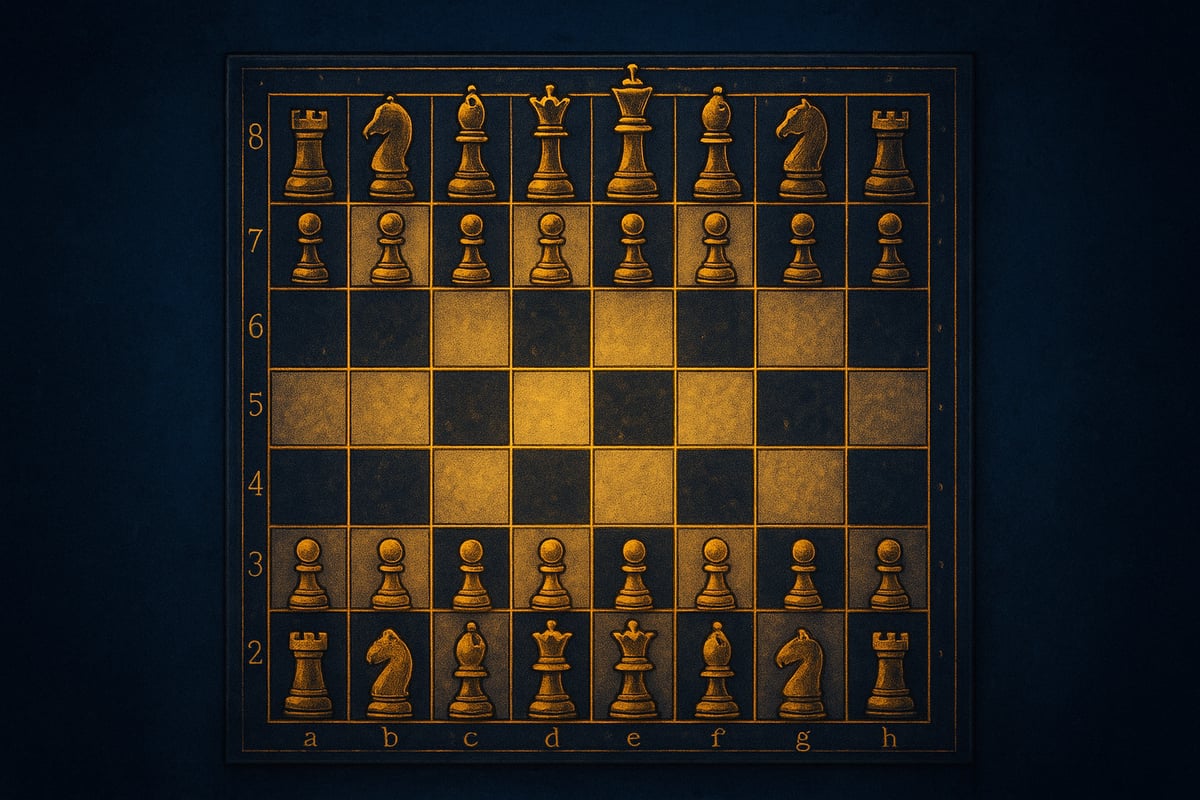
The standard chessboard is made up of 64 squares, arranged in an 8x8 grid. This design dates back centuries and has hardly changed, making it instantly recognisable to players worldwide. Each square alternates between light and dark, forming the iconic checkerboard pattern.
If you line up all the pieces on a chess board, you’ll see how this layout creates endless possibilities. The symmetry and simplicity of the board are part of what makes chess so enduring.
Let’s break down the terminology. Ranks run horizontally, numbered 1 to 8, while files run vertically, labelled a to h. Each square has a unique name, like e4 or d5, which helps players talk about moves and strategies.
The way pieces on a chess board interact with ranks and files can totally change a game. For example, controlling open files with rooks or placing a knight on a central square can put serious pressure on your opponent.
Getting the board orientation right is critical. The bottom right square should always be light, and each player sets up their pieces on the first two ranks. This ensures fairness and consistency, especially in tournaments.
Official tournaments follow guidelines like those in the FIDE standards for chess equipment, which cover everything from square size to board colour. Following these rules lets everyone focus on strategy, not setup mistakes. If you want to play like the pros, start by making sure your pieces on a chess board are set up correctly.
The design of the chessboard shapes every strategy. Knowing where your pieces on a chess board can go, and how they interact with the grid, is essential for planning attacks and defences.
In famous matches, board awareness has often made the difference. Grandmasters like Magnus Carlsen have won games by exploiting weaknesses along open files or diagonals, using their deep understanding of the board’s layout. Even small mistakes in board orientation or piece placement can cost you dearly.
Mastering the pieces on a chess board starts with understanding the board itself. Get comfortable with its layout, and you’ll build a rock-solid foundation for every game.
Understanding the pieces on a chess board is your first step to mastering the game. Each piece has its own personality, movement, and role. Whether you’re brand new or looking to brush up on strategy, getting to know these pieces inside out will make every match more rewarding. Let’s break down each piece and what makes it special.
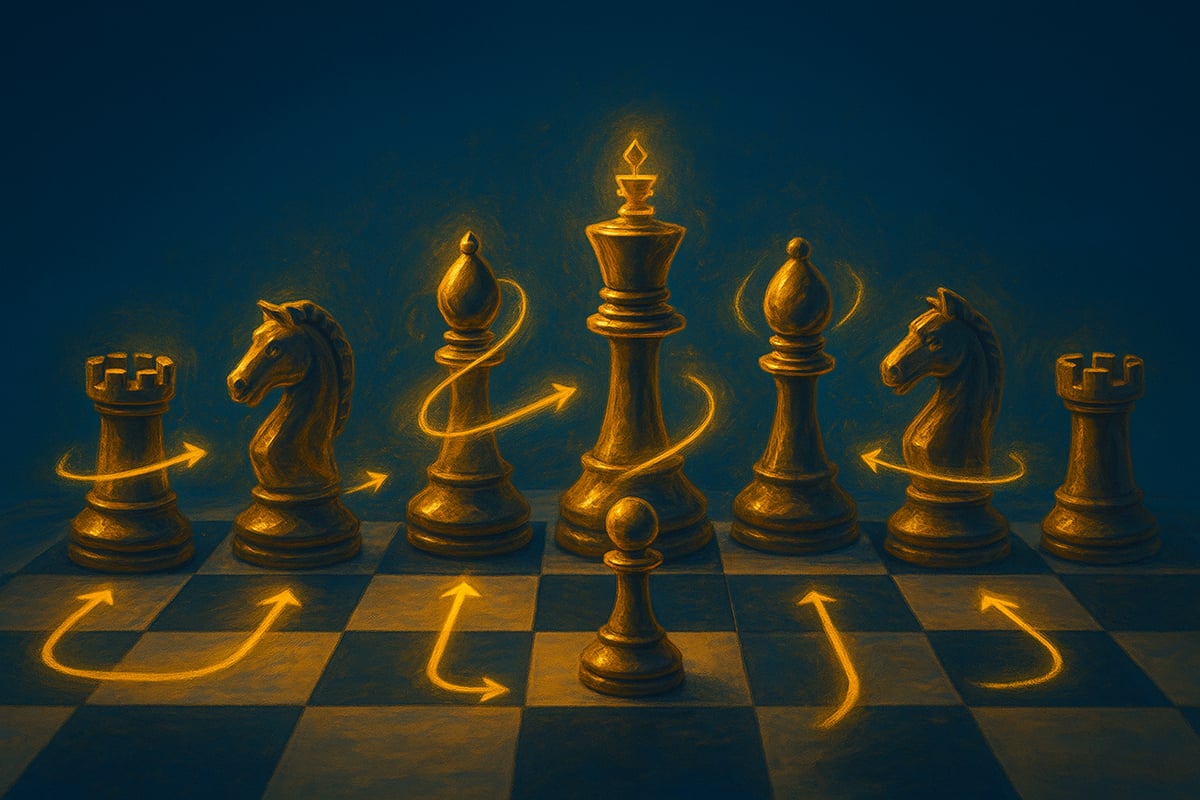
The king is the heart of the game. If you lose your king, you lose the match, so keeping it safe is always your top priority. On a chess board, the king moves just one square in any direction. That might sound limited, but this little guy is the centre of every battle.
There are a few special rules for the king, like castling, which lets you tuck your king away for safety while bringing a rook into play. You’ll also hear terms like check and checkmate. Check is when your king is under threat, and checkmate means there’s no escape.
In the endgame, the king steps up from a shy role to an active warrior, often leading the charge. Some of the most famous championship matches turned on bold king moves in the final stages.
Did you know that, on average, the king moves only a handful of times in grandmaster games? Yet, those moves can decide everything. Modern chess strategy sees the king as more than a target, but as a piece that can help control the board when the coast is clear.
If you want to improve, pay attention to how top players use their kings. Sometimes, a well-timed king walk can catch an opponent off guard and flip the script. The king might not be flashy, but it’s always the most important piece on a chess board.
Meet the queen, the powerhouse of the pieces on a chess board. She’s got the moves, literally! The queen can travel any number of squares vertically, horizontally, or diagonally. This flexibility makes her a force in both attack and defence.
The queen is a game-changer. She can sweep across the board, create threats, and defend weak spots. Players often use her to control large areas and coordinate attacks with other pieces.
Queen sacrifices are legendary. Sometimes, giving up your queen at the right moment can lead to a brilliant victory. Look at classic games where a queen sacrifice turned the tables and stunned the crowd.
At the top level, queens often get traded, especially when players want to simplify the position. Stats show queen exchanges are common in high-stakes matches, but the timing is everything.
Modern players use the queen not just for brute force, but also for subtle threats. The trick is to use her power wisely, not recklessly. A well-placed queen can dominate, but if she’s overextended, she can become a target herself. That’s why understanding the queen’s role among the pieces on a chess board is crucial for your game.
The rook is a heavyweight among the pieces on a chess board. It moves any number of squares along ranks or files, making it perfect for controlling open lines.
One of the rook’s key roles is in castling, a move that improves both your king’s safety and your rook’s activity. Once the centre clears, rooks come alive, especially when placed on open files or the seventh rank, where they can cut off the enemy king and gobble up pawns.
Rook endgames are everywhere in tournament play. In fact, more than half of all professional endgames involve at least one rook. Rook mobility is prized, and 2026 chess engines show that active rooks often decide the outcome.
Double rooks working together are a nightmare for opponents. They can line up on the same file or rank, doubling their power. If you want to win more games, learn to coordinate your rooks and use them aggressively.
If you’re curious about the design and feel of different rooks, check out this Weighted chess pieces overview for insights into what makes a rook satisfying to play with.
Bishops are the long-range snipers of the pieces on a chess board. Each player starts with two, one on light squares and one on dark squares. Bishops move diagonally, slicing across the board and controlling key lines.
The colour complex matters. Your light-squared bishop can only travel on light squares, and the dark-squared bishop stays on the dark ones. Together, they can cover a huge area, especially if you keep both bishops.
Strategically, the bishop pair is a big advantage in open positions. They can work together to dominate the board and pin down enemy pieces.
Memorable games often feature bishops taking control, sometimes sacrificing themselves for a bigger plan. In fact, bishop sacrifices have a surprisingly high success rate, especially when aimed at exposing the opponent’s king.
There’s an ongoing debate in chess circles: bishops or knights? In today’s fast-paced chess, bishops often win out for their range and flexibility. Still, it’s all about how you use the pieces on a chess board to fit your strategy.
If you love surprises, the knight is your piece. It’s the only one among the pieces on a chess board that leaps in an ‘L’ shape: two squares one way, then one square perpendicular.
Knights are famous for their forks, where they attack two or more pieces at once. They’re also great at occupying outposts, especially in the middle of the board, where they become very hard to dislodge.
Some of the most iconic moves in championship games come from knights weaving through defences or delivering unexpected checks. Knights shine in closed positions, where their jumping ability sidesteps pawn blockades.
Data shows that knights are more effective in closed positions, while bishops thrive in open spaces. In the endgame, a knight’s unique movement can catch an opponent off guard, especially if you’re creative with your tactics.
Don’t underestimate the knight. When used well, it can be the trickiest of the pieces on a chess board, turning what looks like a quiet position into chaos.
Pawns might look humble, but they’re the backbone of the pieces on a chess board. Each player gets eight, and they move forward one square at a time, capturing diagonally.
Pawns have some unique tricks. En passant lets you capture an opponent’s pawn in a special way, and promotion turns a pawn into a queen, rook, bishop, or knight when it reaches the other side.
The structure of your pawns shapes the whole game. Chains of pawns can protect each other, while isolated or doubled pawns can become weaknesses. Famous grandmaster games often feature powerful pawn storms, where a wave of pawns crashes through enemy lines.
Promotion is a big deal. In elite tournaments, stats show pawns are promoted in over 60% of games that reach a certain stage. The right promotion can flip the outcome in your favour.
Pawns might not look flashy, but they’re the secret architects of the pieces on a chess board, building the foundation for attack or defence.
Having both bishops on a chess board is called the bishop pair, and it’s a unique asset. Together, they control both colour complexes, covering every diagonal and working as a team.
The bishop pair is especially strong in open positions, where they can slice through enemy lines and hem in the opponent’s pieces. Some classic games show the bishop pair overwhelming even the toughest defences.
Statistically, players with the bishop pair win more often than those with a bishop and a knight. The synergy between two bishops is hard to match, especially when the board opens up.
So when should you keep your bishops, and when should you trade? Modern openings often aim to preserve the bishop pair, but sometimes it’s smarter to swap for a knight if that fits your plan.
Understanding when to use or keep the bishop pair is a key part of mastering the pieces on a chess board, especially as strategies evolve.
Two rooks working together are a powerhouse on the chess board. The rook pair can dominate open files, double up on the seventh rank, and coordinate attacks that overwhelm defences.
Rook lifts, where a rook swings up and over to join the attack, are a favourite tactic in modern play. Doubling rooks on a file or rank multiplies their power and creates threats that are tough to parry.
Endgames with both rooks are common, and stats show that having the rook pair increases your winning chances. The transition from middlegame to endgame often revolves around how you use your rooks.
Knowing when to trade a rook or keep both is a skill that separates good players from great ones. The rook pair is often the deciding factor in tight matches, making them some of the most dynamic pieces on a chess board.
Ever wondered why some pieces on a chess board seem way more important than others? Traditionally, each piece has a standard point value. For example, pawns are worth 1, knights and bishops 3, rooks 5, and the queen is 9. These values help players judge trades and plan strategy. The origins of these numbers go back centuries and are even reflected in official FIDE tournament standards. Still, there’s more to the story than just counting points.
But here’s the twist: activity and placement often matter more than raw numbers. Imagine a knight in the centre controlling loads of squares versus a trapped rook. Suddenly, the “less valuable” piece can become the star. Modern grandmasters love to sacrifice material if it means their pieces on a chess board get active roles or better positions. This is why you’ll see wild sacrifices and exchanges, especially in high-stakes matches.
Chess engines are changing the game, too. Heading into 2026, top chess software doesn’t just see pieces on a chess board as numbers, but measures their impact move by move. Sometimes, a bishop pair is valued higher than two knights, or a pawn storm can be worth more than a rook! These engines are constantly reassessing what’s truly valuable, keeping players on their toes and challenging traditional wisdom.
So, what does this mean for you? It’s not all about who has more pieces on a chess board, but who uses them best. Picture a knight outmanoeuvring a queen because of clever positioning. These moments happen more often than you’d think. If you’re curious about the nitty-gritty of piece value or common questions, check out the frequently asked chess questions page for extra insights. Bottom line: in chess, smart positioning and teamwork can beat raw power almost every time.
Chess in 2026 is looking a little different thanks to the rise of powerful chess engines and AI tools. Players at all levels are rethinking how they use pieces on a chess board. The old textbook rules? They're being rewritten by computer analysis and creative human minds working together. Now, it's not just about memorising openings, but about understanding how each piece can shine in unexpected ways.
Modern chess engines are teaching us new tricks with pieces on a chess board. Instead of just relying on old advice, top players use AI to find surprising moves and piece sacrifices that were once considered risky. Knights and bishops, for example, are no longer just support acts. They're starring in bold attacks and deep defences, thanks to engine-inspired creativity.
AI also helps players spot hidden resources. Now, even pawns and minor pieces can become heroes in the right hands. In fact, some moves that engines recommend have changed how grandmasters look at piece value and coordination.
If you watch the latest tournaments, you'll see pieces on a chess board moving in ways that would shock players from a decade ago. Grandmasters are happy to push their pawns aggressively or put their knights on the rim if it creates real pressure. The stats back this up, too. Opening theory has shifted, with more games featuring early piece activity instead of slow development.
Want proof? Just look at recent events where a well-timed bishop sacrifice or a rook lift turned the tide. Players are embracing dynamic play, not just following old patterns. To keep up, many are keeping an eye on resources like the US Chess rating updates for 2026 to track how these innovations affect competitive rankings.
So, what does all this mean for you and your chess journey? Basically, if you want to master pieces on a chess board, you can't just stick to tradition. You need to be open to experimenting, learning from AI, and watching how the pros adapt their strategies.
The chess world is pushing for better understanding and education, too. In fact, FIDE and ISCF declare 2026 as the Year of Chess in Education, which means there's no better time to dive deeper into each piece's role. Embracing these trends will help you stay ahead, whether you're competing or just playing for fun.
Leave a comment