

Call Us:
(03) 7037 0931
M-F 9am to 5pm

When you're ready to take your chess game seriously, whether you're competing in tournaments or simply want the best playing experience at home, investing in a professional chess set changes everything. It's not just about having fancy pieces - it's about playing with equipment that meets strict standards, feels balanced in your hand, and transforms every match into something special. From the weight of each piece to the precise square size on the board, every detail matters when you're playing at a higher level.
Not every expensive chess set qualifies as professional. The term refers to sets that meet specific tournament standards, particularly those established by international chess federations. A professional chess set follows the Staunton chess set design, which has been the official standard since the mid-1800s and remains the only pattern accepted in serious competitive play.
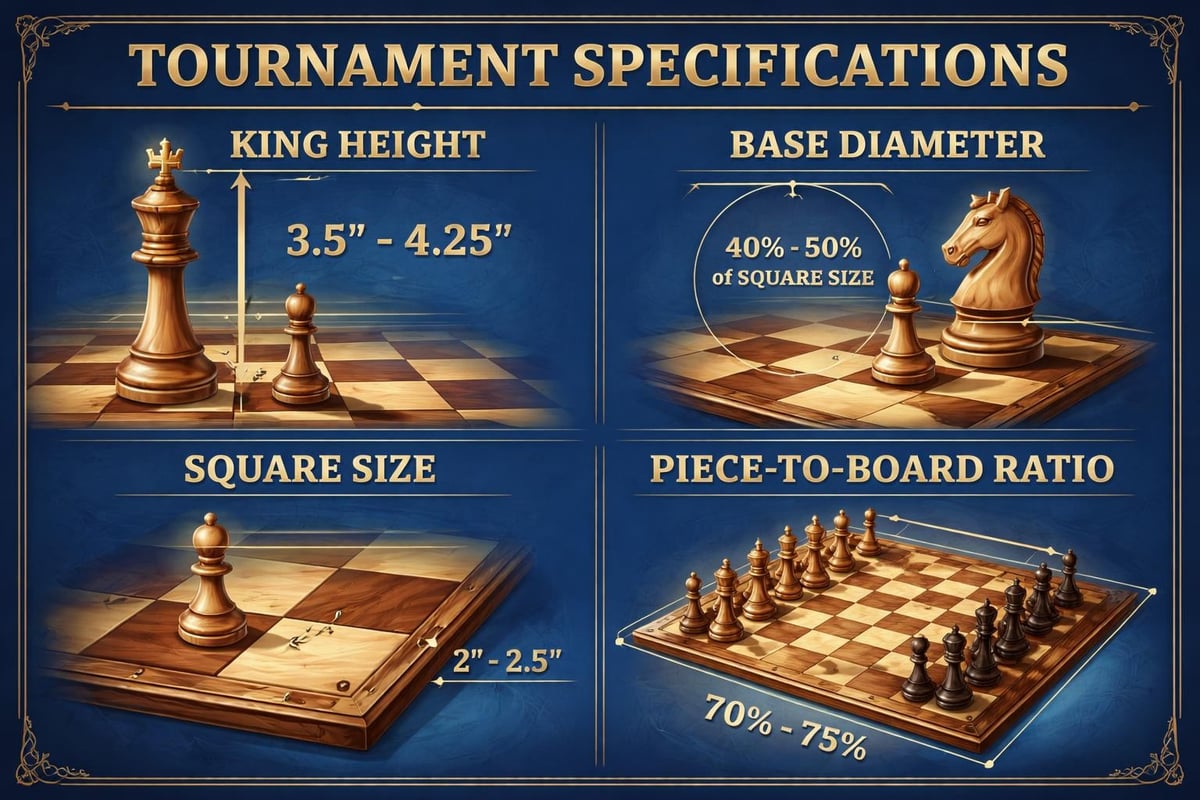
The dimensions aren't arbitrary - they're carefully calculated for optimal gameplay. Here's what separates professional sets from recreational ones:
The ratio between pieces and squares is crucial. The king's base should fit comfortably on a square with room to spare, typically occupying about 75-80% of the square's width. This balance ensures pieces don't feel cramped or lost on the board.
| Component | Professional Standard | Why It Matters |
|---|---|---|
| King Height | 85-105mm | Visibility and proportion |
| Square Size | 50-65mm | Piece-to-board ratio |
| Board Material | Solid wood or stone | Durability and flatness |
| Piece Weight | Weighted bases | Stability during play |
| Felt Padding | High-quality, even application | Smooth movement, board protection |
The material choice affects everything - from how the pieces feel to how long your set will last. Professional sets are typically crafted from premium woods, though modern materials have entered the competitive arena.
Ebonised boxwood and natural boxwood remain the gold standard for tournament play. These dense hardwoods provide the perfect weight, durability, and classic aesthetic that serious players expect. The dark pieces are often ebonised (stained black) boxwood, while the light pieces showcase boxwood's natural honey tones.
Rosewood, sheesham, and ebony also feature prominently in professional sets. Each wood brings distinct characteristics:
For those seeking premium wooden options, the craftsmanship extends beyond just the wood species. Hand-carved details, perfectly turned stems, and intricate finials separate truly professional pieces from mass-produced alternatives.
While wood dominates, some tournament organisers now permit high-quality plastic sets that meet weight and dimension standards. These sets offer advantages for travel and outdoor play, though many purists still prefer traditional materials for serious competition.
The luxury chess set market has also embraced materials like metal, stone, and composite materials, though these typically serve display and casual play rather than tournament use.
Your professional chess set isn't complete without a board that matches the quality of your pieces. Tournament boards must be flat, stable, and properly proportioned.
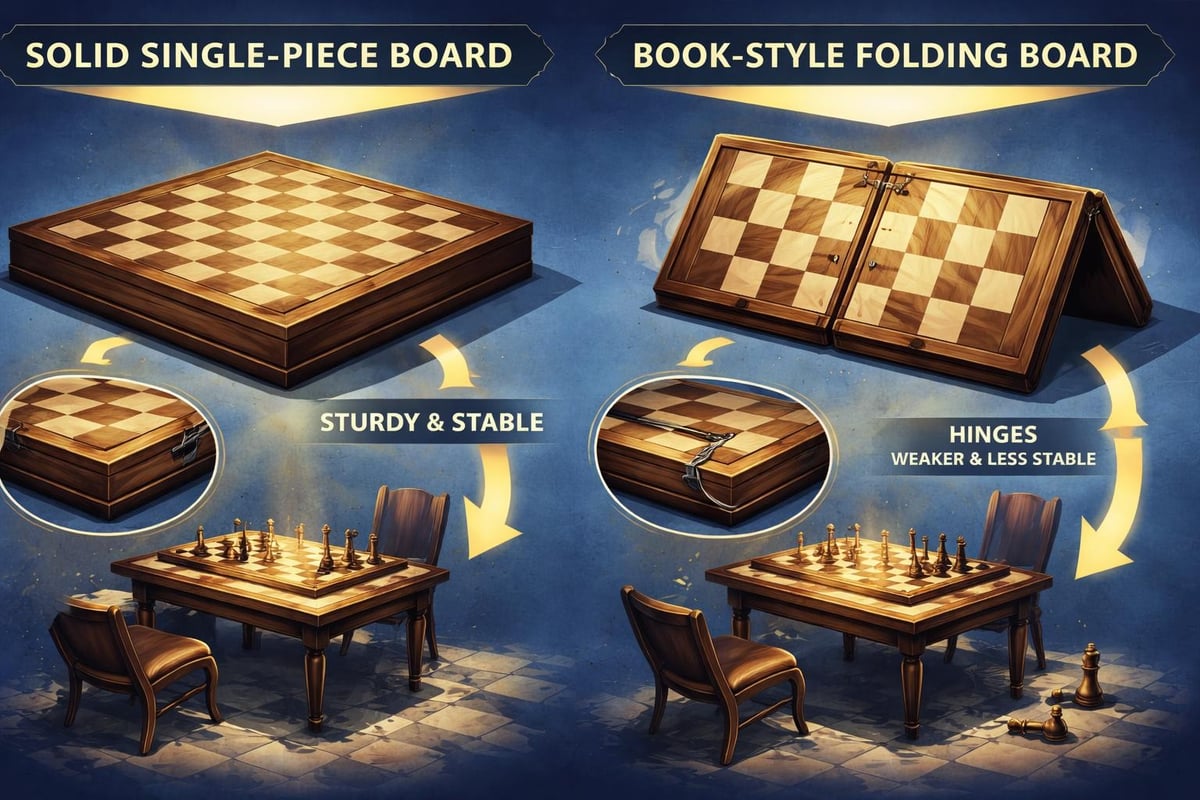
Solid wood construction beats veneer every time for tournament play. A quality board should be at least 15mm thick, with some premium options reaching 20mm or more. This thickness prevents warping and provides the weight needed to keep the board stable during intense matches.
The finish matters more than you might think. A matte or semi-gloss finish reduces glare under tournament lighting, while protecting the wood from moisture and wear. High-gloss finishes might look stunning but can create distracting reflections during play.
Square contrast is another critical factor - you need clear differentiation between light and dark squares without eye strain. The most common combination remains natural wood tones for light squares and dark walnut, ebony, or ebonised wood for dark squares.
| Board Type | Advantages | Disadvantages | Best For |
|---|---|---|---|
| Solid Single-Piece | Maximum stability, no centre line | Less portable, storage challenges | Home play, club venues |
| Book-Style Folding | Portable, built-in storage | Visible centre seam, potential warping | Travel, tournaments |
| Rolled Mat | Extremely portable, lightweight | Not tournament standard, less stable | Casual play, teaching |
Many serious players own both a premium wooden board for home play and a quality folding board for tournament travel.
Walk into any serious tournament and you'll notice how confidently players move their pieces. That confidence comes partly from practice, but also from properly weighted pieces that feel substantial and move precisely.
Weighted pieces prevent accidental movement from table bumps, air conditioning drafts, or quick movements during time pressure. Professional pieces typically have lead or other dense materials added to the base, with total piece weights ranging from 20g for pawns to 80g or more for kings.
The weight distribution affects how pieces feel when you pick them up and set them down. Well-balanced pieces sit flat without rocking and require deliberate effort to move - preventing those frustrating accidental nudges that can occur with lightweight sets.
Before committing to a professional chess set, test these factors:
Many retailers, including specialists like Sterling Chess, provide detailed specifications so you can evaluate these factors before purchasing.
The Staunton pattern isn't just one design - it's a template with variations. Professional players often have strong preferences about specific design elements that affect both aesthetics and gameplay.
The king's crown and cross finial serve as immediate visual identifiers during play. Traditional designs feature four pointed tips on the crown, though some variations use six. The cross should be clearly defined and proportional to the king's height.
Queens traditionally feature a coronet with small spheres, though modern interpretations vary. The key is that the queen should be instantly distinguishable from the king, even in peripheral vision during rapid play.
The knight is where craftsmanship truly shows. A professionally carved knight features crisp details - defined ears, nostril flaring, and a gracefully curved neck. The Staunton-style wooden pieces require skilled artisans who understand both the aesthetic and functional requirements.
Poor knight carving is the fastest way to spot an inferior set. Blurry features, asymmetrical faces, or simplified shapes indicate mass production rather than quality craftsmanship.
Chess federations maintain strict equipment standards for rated play. If you're competing seriously, your professional chess set must meet these current requirements.
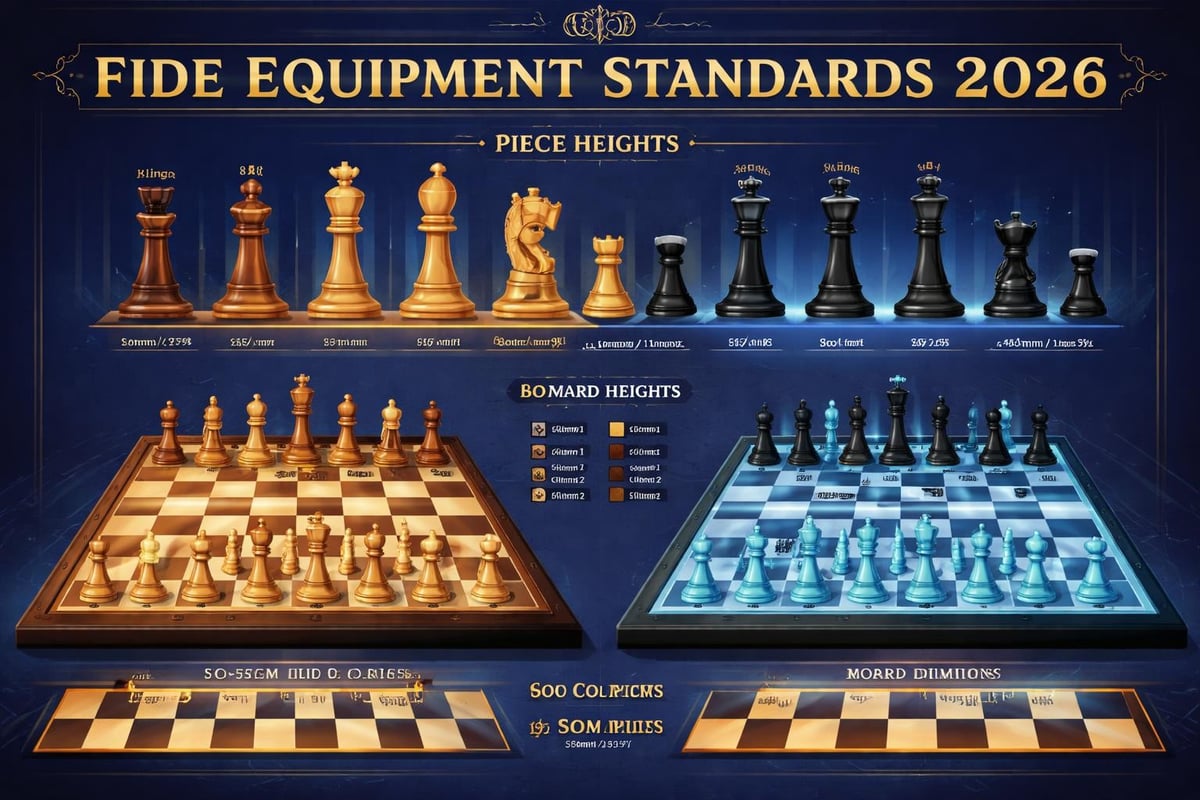
The World Chess Federation (FIDE) specifies that pieces must be Staunton pattern with a king height of 85-105mm. The colour contrast must be clear, with traditional pairings like black/white, brown/white, or dark wood/light wood all acceptable.
Digital boards and electronic sets are gaining acceptance for training and some competitive formats. Sets like the Square Off Pro meet tournament sizing while adding technology features, though they're not yet permitted in classical FIDE events.
Different countries maintain slight variations in their standards. In Australia, most serious club play follows FIDE guidelines, though some casual tournaments may have more relaxed requirements. Always check specific tournament rules before assuming your set qualifies.
Professional chess sets span a massive price range, from a few hundred to several thousand dollars. Understanding what drives these price differences helps you invest wisely.
You can enter professional-quality territory for $200-400 AUD with well-made wooden sets from reputable manufacturers. These sets meet tournament specifications and provide excellent playability, though they may lack the hand-carving and premium woods of higher-end options.
The $400-800 range offers the sweet spot for serious players who want exceptional quality without collecting-grade pricing. Here you'll find beautiful wooden sets with hand-finished pieces, premium boards, and attention to detail that elevates every game. Many competitive players find this range provides everything they need for a lifetime of play.
Above $800, you're entering territory where luxury chess sets blend art with function. These might feature exotic woods, intricate inlay work, or historical reproductions. While beautiful, they're often too valuable for regular tournament use.
| Price Range (AUD) | What You Get | Best For |
|---|---|---|
| $200-400 | Tournament-legal, quality construction | Serious beginners, club players |
| $400-800 | Premium materials, hand-finishing | Competitive players, collectors |
| $800-1,500 | Luxury woods, superior craftsmanship | Serious collectors, display pieces |
| $1,500+ | Museum-quality, rare materials | Investment collectors |
A quality professional chess set deserves proper maintenance. These pieces will outlast you if treated correctly.
Always handle pieces by their stems, not their tops. The finials and crowns are the most delicate parts, particularly on wooden sets. Natural oils from your hands actually benefit wood pieces over time, creating a subtle patina that many players treasure.
Store your set properly when not in use. Pieces should rest in individual compartments or wrapped in soft cloth to prevent scratching. The board needs protection from moisture, direct sunlight, and temperature extremes - all of which can cause warping or cracking.
For boards, occasional treatment with furniture wax or wood conditioner maintains the finish and protects against minor spills. Never use harsh chemicals or all-purpose cleaners on quality wood.
Your professional chess set performs best with proper supporting equipment. Tournament play requires more than just pieces and a board.
Serious play demands accurate time control. Chess clocks range from basic mechanical models to sophisticated digital units with multiple time control options. Digital clocks dominate tournament play in 2026, offering features like delay and increment timing that mechanical clocks can't match.
Budget $50-150 for a quality digital clock that meets tournament standards. The DGT chess timer remains the gold standard, though several manufacturers now offer excellent alternatives.
While digital recording becomes more common, many tournaments still require handwritten game records. Keep a supply of official score sheets and a reliable pen. Some players invest in leather-bound notation books to maintain a permanent record of their games.
If you're taking your professional chess set to tournaments, proper cases are essential. Padded bags protect pieces during transport, while rolled board carriers prevent damage to folding boards. Don't skimp here - a damaged set from poor packing is an expensive lesson.
Most serious players don't stop at one professional chess set. Different sets serve different purposes, and building a thoughtful collection enhances both your play and enjoyment of the game.
This is the set you'll use most - durable, perfectly weighted, and meeting all specifications. It shouldn't be your most expensive set, but it needs to be reliable and comfortable for hours of play. Many players choose a quality wooden folding set in the $400-600 range for this role.
Your home set can be larger and more luxurious than what you'd carry to tournaments. A beautiful solid board with weighted pieces creates an inviting space for analysis and casual games. This is where you might invest in premium boards and pieces that prioritise aesthetics alongside function.
As your appreciation deepens, you might add themed sets, historical reproductions, or sets in unusual materials. These aren't typically for serious play but add character to your collection and make wonderful display pieces between games.
Sourcing quality chess equipment requires knowing where to look. Not all retailers understand the specific needs of serious players.
Specialist retailers bring expertise that general sports or game stores can't match. They understand tournament requirements, can recommend appropriate sets for your skill level, and typically offer better quality control. The staff at dedicated chess shops often play competitively themselves and provide insights beyond what's on the product description.
Online marketplaces offer variety and sometimes lower prices, but quality can be inconsistent. Official tournament sets from reputable manufacturers provide assurance, though you'll pay for that certainty.
Australian chess players benefit from several excellent local specialists who understand the unique needs of players in this region. These retailers typically curate their collections carefully, ensuring every professional chess set meets strict quality standards rather than stocking everything available.
Local specialists also provide better after-purchase support, easier returns if needed, and faster shipping than international alternatives. The slight price premium over importing often proves worthwhile when you need replacement pieces or have questions about maintenance.
Choosing the right professional chess set transforms your playing experience, providing the stability, precision, and aesthetic pleasure that serious chess deserves. Whether you're preparing for your first tournament or upgrading from a recreational set, the details matter - from piece weight to board construction to Staunton design authenticity. At Sterling Chess, we specialise in helping Australian players find sets that meet tournament standards while reflecting their personal style, with expert guidance to ensure you're investing in quality that lasts a lifetime.
Leave a comment